

Alfama District, Lisbon
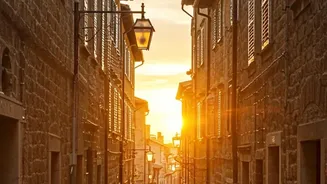
Lisbon's oldest neighbourhood, Alfama, is a captivating labyrinth of narrow, winding alleys, steep staircases, and hidden courtyards that largely pre-date the city's 1755 earthquake. Its medieval layout makes it a challenging but rewarding area to explore
on foot, with every turn revealing tiled facades, small tascas, or the soulful sounds of Fado music drifting from a local restaurant. The district's hilly terrain means a good pair of walking shoes is essential, but the effort is repaid with stunning views from 'miradouros' (viewpoints) like Santa Luzia, which overlooks the Tagus River. Navigating Alfama is an experience in getting delightfully lost, discovering a side of Lisbon that feels untouched by the centuries.
Plaka, Athens
Known as the 'Neighbourhood of the Gods', Plaka rests on the slopes of the Acropolis and is one of the oldest continuously inhabited areas in Athens. Its streets are almost entirely pedestrianised, creating a village-like atmosphere within the bustling capital. A walk through Plaka takes you past neoclassical mansions, Byzantine churches, and ancient ruins like the Roman Agora and Hadrian's Library. The two main arteries, Adrianou and Kydathineon, are lined with shops and tavernas, but the real charm lies in the quieter backstreets. Here you'll find Anafiotika, a tiny, whitewashed enclave that feels like a Cycladic island village transported to the heart of the city.
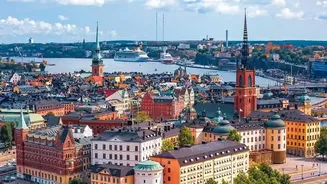
Gamla Stan, Stockholm
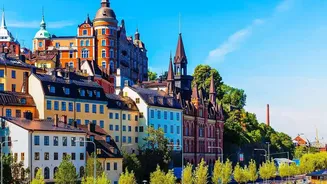
Stockholm was founded on the island of Gamla Stan in 1252, and today it stands as one of Europe's best-preserved medieval city centres. The district is a pedestrian's delight, characterised by its narrow, cobblestone alleys, colourful 17th and 18th-century buildings, and grand squares like Stortorget. A walk here is a journey through Swedish history, passing the Royal Palace, Stockholm Cathedral, and countless small details that tell the stories of the merchants and craftsmen who built the city. While the main street, Västerlånggatan, can be busy, the side alleys offer quiet escapes, including Mårten Trotzigs Gränd, the narrowest street in Stockholm at just 90 centimetres wide.
Old Town, Dubrovnik
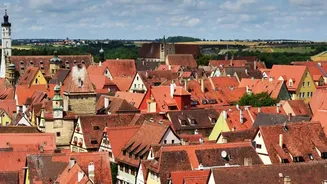
Entirely enclosed by monumental stone walls, Dubrovnik's Old Town is a UNESCO World Heritage site and a completely car-free zone. This makes walking the only way to explore its marble-paved streets, baroque churches, and historic palaces. The main thoroughfare, Stradun, gleams underfoot, but the true essence of the city is found in the steep, narrow alleyways that climb the hillside. A walk along the ancient city walls is an unmissable highlight, offering breathtaking panoramic views of the terracotta rooftops and the shimmering Adriatic Sea. Strict traffic regulations in the surrounding areas ensure the historic core remains a tranquil haven for pedestrians.
Historic Centre, Venice
Venice is perhaps the ultimate walkable city, not by choice, but by design. The historic centre is a unique urban landscape built across 118 islands, connected by over 400 bridges and completely devoid of cars. Here, walking is not just an option; it's the primary mode of transport. The city's 'streets' are a maze of narrow lanes called 'calli' and waterside walkways known as 'fondamente'. Getting lost is an essential part of the Venetian experience, leading to discoveries of hidden squares (campi), picturesque canals, and architectural wonders far from the main tourist routes. The absence of vehicle noise creates a unique soundscape of footsteps, conversation, and the gentle lapping of water.