



Your Life Story on a Shelf
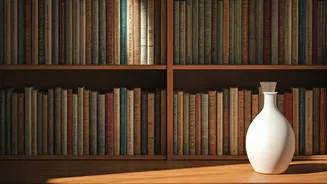
Take a look at that minimalist ceramic vase or the abstract metal knot you bought online. What does it say about you? Likely, it says you saw a trend on Instagram or needed to fill an empty corner. It has no history, no soul. Now, look at a stack of books.
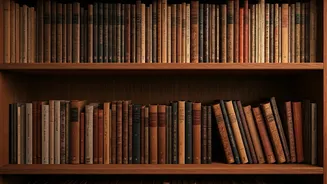
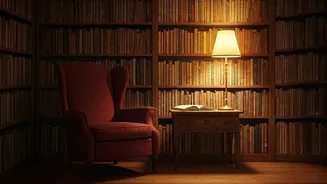
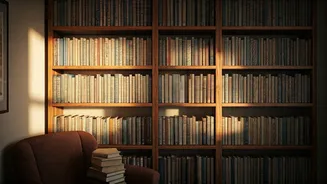
That dog-eared copy of Amitav Ghosh’s *The Glass Palace* tells a story of a journey you once took, either in a train or in your mind. The collection of sci-fi paperbacks reveals your love for other worlds. The cookbook stained with turmeric speaks of shared meals and kitchen experiments. Unlike a mass-produced object designed to be inoffensive, your book collection is a cognitive fingerprint. It’s a deeply personal, ever-changing autobiography displayed for all to see. A home filled with books isn’t just decorated; it’s inhabited by a personality.
The Ultimate Conversation Starter
Imagine a friend visits your home for the first time. They aren’t going to walk over to your mantelpiece and ask, “Tell me the story behind this lovely, factory-made grey orb.” It’s a conversation killer. A bookshelf, however, is a social engine. It’s an open invitation for connection. Guests will inevitably drift towards it, scanning the spines. “Oh, you’ve read this! I loved it.” or “I’ve been meaning to read that, what did you think?” Instantly, you have a bridge to a meaningful conversation that goes beyond small talk. Your books are a map of your mind, and they give your guests a chance to explore it with you. They are a signpost for shared interests and a starting point for debates, recommendations, and the discovery of a kindred spirit.
Decor That Grows With You
The problem with conventional decor is its static nature. The throw pillows, the wall art, the decorative tray—they are frozen in time, representing the person you were on the day you bought them. A book collection, on the other hand, is a living, breathing entity. It ebbs and flows with your life’s currents. The poetry you devoured during a heartbreak might later be joined by books on business strategy or child psychology. Your shelves become a physical timeline of your curiosity, growth, and changing passions. Reorganising a bookshelf isn't a chore; it's an act of self-reflection, rediscovering old friends and making space for new ideas. This dynamic quality makes your home feel alive and authentic, a true reflection of the person living in it, not a static museum of past tastes.
The Beauty of Imperfection
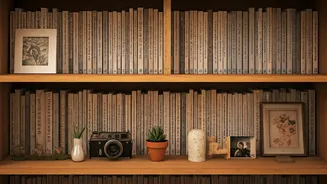
In recent years, a bizarre trend has emerged: books as purely aesthetic objects. We see them on social media, colour-coordinated into a perfect rainbow or, worse, turned spine-in to create a neutral, textured wall. This completely misses the point. It treats books like any other generic decor item, stripping them of their primary function and soul. The true beauty of a home library lies in its lived-in imperfection. It’s in the chaotic stacks on the floor, the mismatched heights and widths of the spines, the cracked covers of beloved favourites. A perfectly manicured bookshelf is a sign of someone trying to project an image. A slightly messy, well-used collection of books is a sign of a life being lived, a mind being engaged, and a home being truly enjoyed.