



A Landmark Discovery in Deep Space
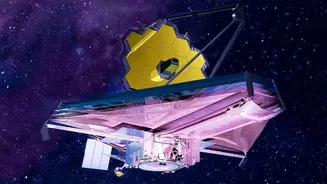
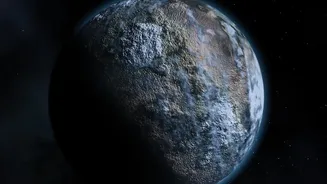
In a testament to its incredible power, the James Webb Space Telescope has potentially identified an atmosphere containing water vapor around a rocky exoplanet. The subject of the study is 55 Cancri e, a 'super-Earth' located 41 light-years away. While
water has been detected on giant gas planets before, finding strong evidence of it on a smaller, rocky world is a significant milestone. This particular detection is notable for the clarity of its signal, giving astronomers some of the best evidence to date for an atmosphere on a rocky planet outside our solar system. The finding pushes the boundaries of exoplanet characterization and opens a new chapter in our quest to understand the worlds orbiting other stars.
What is a Super-Earth?
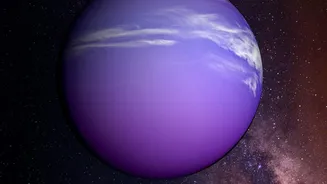
The term 'super-Earth' might conjure images of a bigger, better version of our own world, but it simply refers to a planet's size. These are exoplanets with a mass higher than Earth's but significantly less than that of our solar system's ice giants, Neptune and Uranus. Super-Earths are a common type of planet in our galaxy, yet there are none in our solar system, making them a fascinating mystery. The planet 55 Cancri e is nearly twice the diameter of Earth and about eight times more massive. However, it is far from being a welcoming, Earth-like oasis. It orbits its star at such a close distance that its surface is likely a molten ocean of magma, with temperatures hot enough to vaporize rock.
How Webb Sees the Unseen
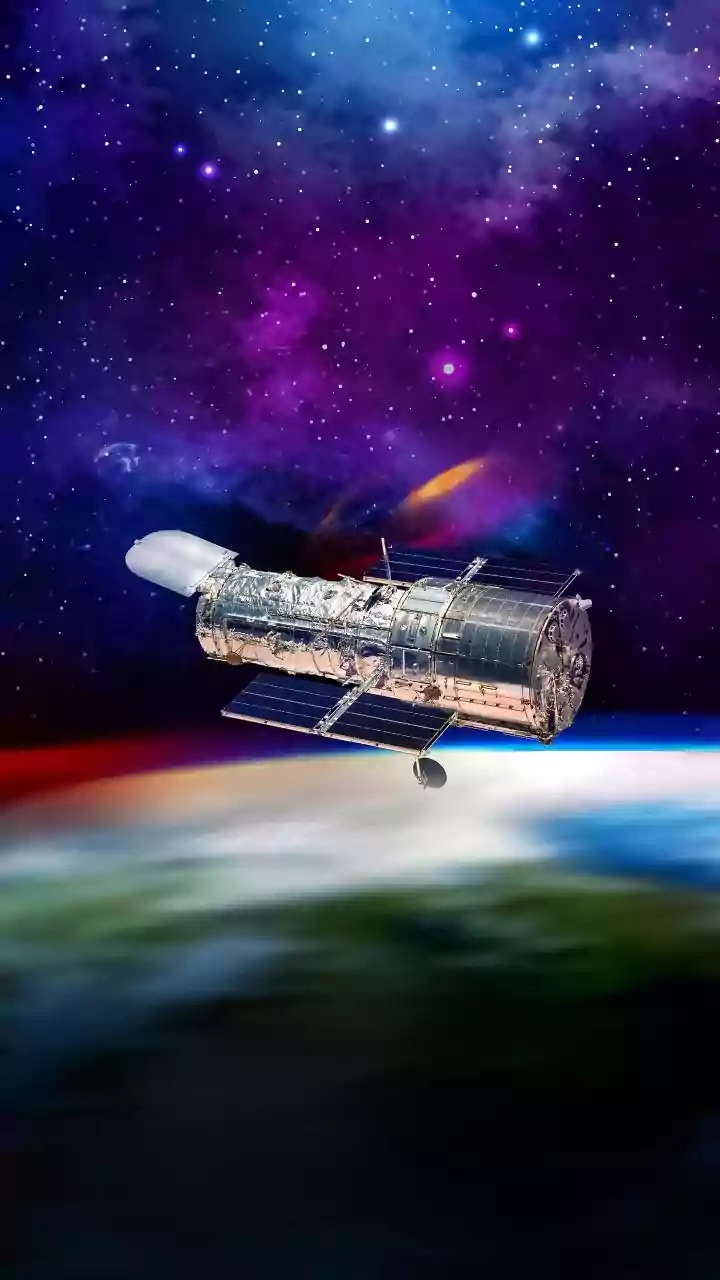
So how does a telescope 1.5 million kilometers away detect something as specific as water vapor? The technique is called transit spectroscopy. As an exoplanet passes in front of its host star from our perspective, a tiny amount of starlight filters through the planet's atmosphere, if it has one. The various gases in that atmosphere absorb specific colors, or wavelengths, of light. This leaves a unique chemical fingerprint—a series of dark lines in the star's light spectrum. JWST's highly sensitive infrared instruments, such as the Near-Infrared Spectrograph (NIRSpec) and MIRI, are perfectly tuned to pick up these fingerprints, which are invisible to other telescopes. The clear lines recorded from 55 Cancri e point to a substantial atmosphere, possibly containing carbon monoxide and carbon dioxide in addition to water vapor.
A Secondary Atmosphere From a Lava World
Given 55 Cancri e's extreme heat and intense radiation from its star, any original atmosphere it had would have been stripped away long ago. Instead, scientists believe they are observing a 'secondary atmosphere' that is being continuously replenished from the planet's interior. The idea is that the vast magma ocean on the planet's surface is constantly releasing dissolved gases, a process known as outgassing. This is similar to how volcanic activity shaped the early atmospheres of Earth and Mars. Though far too hot for life, studying this process on 55 Cancri e could provide invaluable insights into the formation and evolution of rocky planets across the universe.
What This Discovery Means for the Future
While this finding doesn't mean we've found aliens, it is a crucial proof of concept. It demonstrates that the JWST can detect and characterize the atmospheres of rocky exoplanets, a key step in the search for habitable worlds. Every observation helps scientists refine their models and better understand the diversity of planets that exist. Some researchers are still cautious, noting that the water vapor signal could potentially originate from the cool outer layers of the host star itself, rather than the planet. Future observations with other JWST instruments will be needed to confirm the atmospheric source. Regardless, this discovery highlights a new era of exoplanet science, where we are moving beyond simply finding planets to truly understanding what they are like.