






The New Frontiers of Food
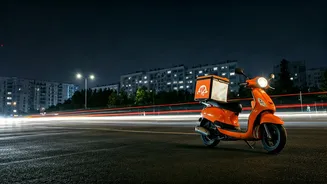
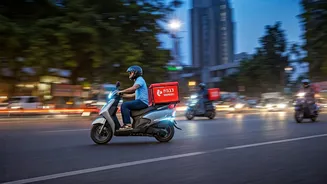
The familiar hum of a delivery driver's scooter is becoming an increasingly common sound after midnight in cities like Lucknow, Jaipur, Surat, and Patna. Major platforms like Swiggy and Zomato, along with quick-service restaurants (QSRs) such as McDonald's
and Domino's, are extending their operational hours to cater to this emerging demand. For instance, about 20% of McDonald's outlets in key non-metro cities now stay open until 3 a.m. This push is not just about food; it's part of a broader quick-commerce expansion. Companies are setting up networks of 'dark stores'—warehouses dedicated to fulfilling online orders—in hundreds of smaller cities to deliver everything from groceries to snacks in minutes. Swiggy's 'Bolt' service, for example, which promises 10-minute delivery, has already been launched in over 500 cities, showing strong traction in non-metro areas.
Why the Sudden Expansion?
Several factors are driving this strategic shift. Firstly, the metro markets are approaching saturation. With intense competition for a finite number of users, companies are looking to India's smaller cities for their next wave of growth. These regions are home to a rising middle class with increasing disposable income, greater smartphone penetration, and a growing appetite for the conveniences once exclusive to urban elites. The COVID-19 pandemic also accelerated the adoption of online ordering habits, which have persisted and grown. Furthermore, changing lifestyles, especially among younger consumers who work and sleep later, have created a natural market for late-night services. This shift is so significant that for some platforms, non-metro cities are expected to soon constitute more than half of their total order volume.
The Unique Challenges of a 2 a.m. Delivery
Expanding into smaller cities is not a simple copy-paste of the metro model. These markets present unique operational and economic hurdles. Lower population density means delivery partners may have to travel longer distances for a single order, increasing costs and delivery times. The pool of restaurants willing to stay open late is also smaller, limiting choice for consumers. To overcome this, some platforms are encouraging the setup of cloud kitchens—cooking facilities without a dine-in option—to increase supply. Profitability is another major concern. Average order values in smaller towns can be 20-30% lower than in metros, making it harder to sustain a business model built on thin margins. As a result, companies are finding that the cost to break even in a non-metro dark store can be 1.5 to 2 times higher than in a major city. There are also infrastructure issues like inconsistent internet connectivity and a continued preference for cash on delivery, which require platforms to build more robust and flexible systems.
Reshaping Local Economies and Lifestyles
The arrival of 24/7 delivery services is having a profound impact on the economic and social fabric of smaller cities. For local restaurants, these platforms provide access to a massive customer base without the need for heavy investment in marketing or a prime physical location. This has spurred entrepreneurship, allowing small, delivery-first brands and cloud kitchens to thrive on lower operational costs. The expansion also creates new employment opportunities for delivery partners in areas where formal jobs may be scarce. On a cultural level, the availability of on-demand services is accelerating a lifestyle shift, aligning the expectations of consumers in smaller towns with those in the metros. The ability to order food, groceries, or medicine at any hour is no longer an urban novelty but an emerging standard, signaling a deeper integration of India's digital economy across its diverse geographies.