





A Sanctuary of Rugged Beauty
Spanning over 192 square kilometres in the Porbandar and Devbhumi Dwarka districts, the Barda Wildlife Sanctuary is a critical protected area just 15 kilometres from the coast. Established in 1979, its primary role was to protect the region's diverse
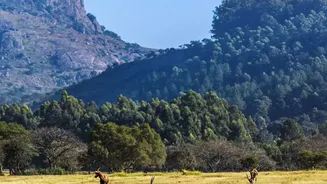
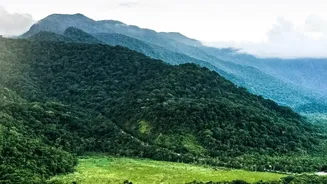
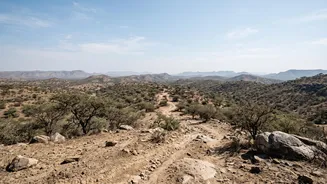
flora and fauna and act as a natural barrier against salinity ingress from the Arabian Sea. The landscape is anything but uniform. It’s a mix of hilly and undulating terrain, with exposed rock formations and seasonal streams that carve through the land. Historically, the area was the private hunting ground for the royal families of Porbandar and Jamnagar, which perhaps explains why it has retained a wild, untamed character.
The Dry Deciduous Forests
The forests of Barda are predominantly of the dry deciduous and tropical thorn variety. This means the trees are adapted to long, dry seasons. Walking through these areas, you will find a rich collection of plant species, with some estimates putting the number at over 650. Key tree species include Teak, Babul, Ber, Jamun, and various types of Acacia. In certain pockets, you can also find stretches of dry bamboo brakes. This dense floral diversity makes the sanctuary one of the most vegetatively rich areas in the state. These forests are not just collections of trees; they are complex ecosystems that provide shelter and food for a multitude of species, from insects to large mammals.
The Sprawling Grassland Plains
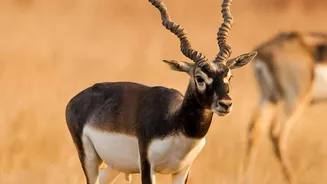
In stark contrast to the dense forest patches are the open grasslands. These savanna-like habitats are crucial for the sanctuary's herbivores. These plains and grassland patches provide essential grazing grounds for animals like the Nilgai (Blue Bull), India's largest antelope, and Chinkara. A recent study highlighted that these grasslands are particularly preferred by the sanctuary's most famous residents within their core territories. The open spaces allow for easier spotting of predators and provide a different set of food resources compared to the forest. The interplay between the forest edge and the open grassland is where much of the sanctuary's wildlife action can be observed, especially during the early morning and late afternoon.
Where Wildlife Thrives in Duality
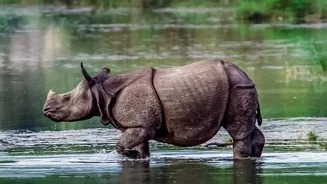
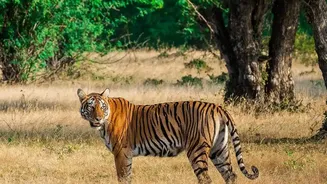
The combination of forest and grassland habitats allows Barda to support a remarkable diversity of fauna. The top predators include the elusive Leopard and Striped Hyena, who use the rocky outcrops and dense cover for shelter. Other mammals like the wild boar, wolf, and golden jackal also call this sanctuary home. The birdlife is equally impressive, with over 200 species recorded, including resident raptors like the Crested Hawk Eagle and a host of migratory birds in the winter months. This rich biodiversity is a direct result of the varied landscape, which offers different niches for different species to thrive.
A New Era for the Asiatic Lion
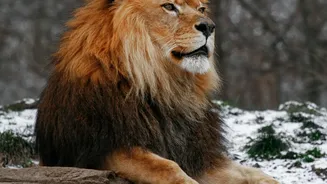
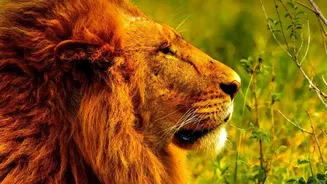
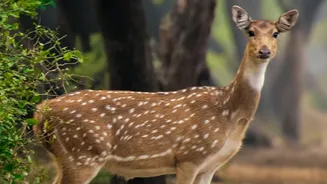
Perhaps the most significant development in Barda's recent history is its establishment as a second home for the Asiatic lion. After being absent for nearly 144 years, lions have made a natural return to Barda, a journey that began with the dispersal of a male lion from Gir in 2023. This was followed by the introduction of several females by the Gujarat Forest Department. Today, a small but growing population of lions, including cubs, roams these habitats. To support them, the forest department has been augmenting the prey base by re-introducing species like Sambar and Chital (spotted deer). The lions have shown a preference for the mixed forests and grasslands, relying heavily on wild pigs for prey. This historic return signals a major victory for conservation and solidifies Barda's importance on India's wildlife map.