



The Core Cardio Question
At its heart, a good cardio workout elevates your heart rate, challenges your lungs, and improves your body's ability to use oxygen. Both traditional aerobics and trampoline-based fitness, also known as rebounding, get this job done. Aerobics often involves
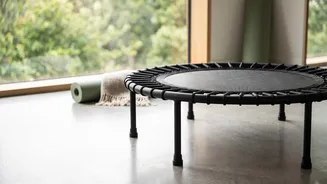
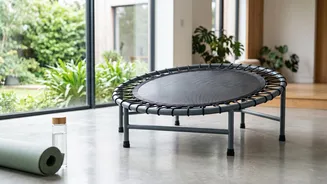
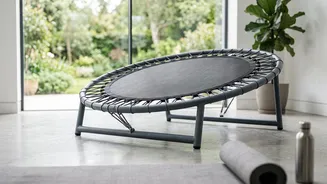
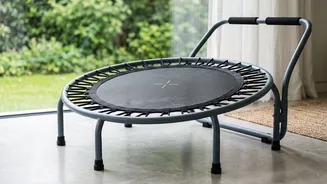
structured, high-energy routines like step classes or dance-based workouts. Rebounding uses a mini-trampoline for a variety of movements, from simple bounces to more complex, coordinated exercises. The headline gives away the secret: the ultimate benefit of either depends less on the activity itself and more on the effort you put in and your ability to do it consistently. An 'okay' workout you do three times a week is infinitely better than a 'perfect' one you quit after a fortnight.
Calorie Burn: Intensity Is King
Many people use calorie burn as a primary metric for exercise. Here, the comparison gets interesting. A high-intensity step aerobics class can burn a significant number of calories, often comparable to or even exceeding a steady run. Likewise, trampolining's calorie burn is highly dependent on intensity. A gentle bounce will burn fewer calories than a vigorous session involving high jumps and strength movements. Some studies suggest that rebounding can be incredibly efficient; one American Council on Exercise study noted that a beginner rebounding workout could burn more calories than jogging. Ultimately, with both activities, pushing the intensity—jumping higher, moving faster, engaging more muscles—is the key to maximising your burn.
A Tale of Two Impacts
The most significant difference between aerobics and trampolining lies in their impact on your joints. High-impact aerobics, with its running, jumping, and hard landings on a solid floor, can be tough on knees, hips, and ankles. For some, this impact is a positive, helping to build bone density. For others, it’s a barrier to consistency due to pain or injury risk. Rebounding, on the other hand, is famously low-impact. The trampoline mat absorbs a huge percentage of the force, allowing for an intense cardiovascular workout without the associated joint stress. This makes it an excellent option for those with joint sensitivities, people recovering from certain injuries, or anyone looking for a more forgiving form of cardio.
Beyond the Bounce: Unique Rebounding Benefits
Trampolining offers some unique physiological benefits that go beyond a standard cardio workout. The constant up-and-down motion is thought to be exceptionally effective at stimulating the lymphatic system, which is crucial for removing toxins and waste from the body. Unlike the circulatory system, which has the heart as a pump, the lymphatic system relies on muscle movement to circulate fluid. The G-force created during a bounce effectively 'pumps' this system, enhancing detoxification and immune function. Furthermore, bouncing on an unstable surface constantly engages your core and stabilizer muscles to maintain balance, improving coordination and proprioception.
The Fun Factor and Long-Term Consistency
This may be the most important factor of all. The best cardio workout is the one you don't dread. Aerobics classes can offer a fantastic sense of community, motivating music, and structured guidance from an instructor, which helps many people stay accountable. However, rebounding has a powerful, almost childlike sense of play. For many, bouncing on a mini-trampoline feels less like a workout and more like fun, making it easier to stick with long-term. It can be done at home, on your own schedule, listening to your own music or a podcast. Consider your personality: do you thrive on the energy of a group, or do you prefer the freedom of a solo session?
Accessibility, Cost, and Getting Started
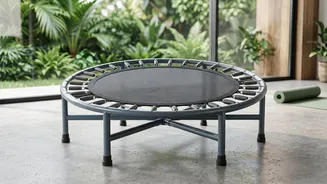
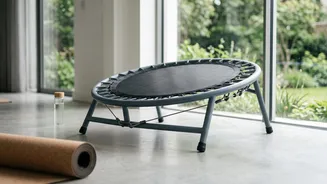
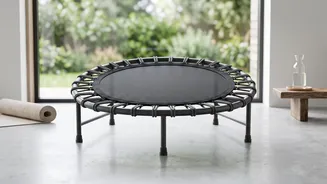
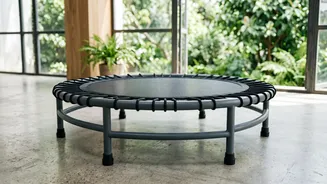
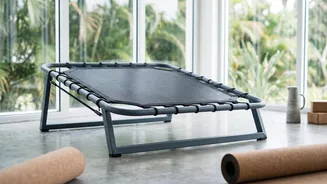
To start aerobics, you might join a gym, find online classes, or simply clear some space in your living room. The initial barrier can be low, though class or gym fees can add up. Rebounding requires a specific piece of equipment: a quality mini-trampoline. While this is an upfront investment, it can be more cost-effective over time than a recurring gym membership. A good rebounder is quiet and small enough for most homes. When choosing, remember that build quality matters; a well-sprung rebounder provides a better, safer bounce than a cheap, overly rigid model.