






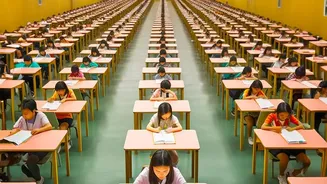
A Tale of Two Campuses
In the 2025-26 academic year, 58 engineering and technical colleges across India began the process of 'progressive closure', halting new admissions. This trend, largely affecting private institutions in states like Uttar Pradesh and Maharashtra, is driven
by consistently low student intake and struggles to meet quality standards set by the All India Council for Technical Education (AICTE). For years, an oversupply of colleges offering generic engineering degrees created a surplus of graduates who lacked the specific skills required by the modern job market, leading to concerns about employability. This has caused a decline in demand for seats at institutions perceived as offering a low return on investment. At the same time, total enrolment in higher education continues to grow, suggesting students are not giving up on education, but are instead making different choices.
The Pivot Towards Practical Skills
Today’s students and their families are increasingly pragmatic, viewing education as a direct pathway to a secure career. This has fuelled a massive shift towards skill-based learning. Rather than just a degree, students now seek courses that promise tangible, job-ready competencies. Surveys confirm this trend, with some showing that a vast majority of Indian employers—as high as 89% in one report—now prioritise practical skills over degrees alone when hiring for entry-level roles. This demand is driven by a skills gap identified in several reports; one noted that only about half of young Indians possess the necessary skills for employment, making candidates with hands-on training highly valuable.
The Skills That Matter Most
The demand isn't for just any technical skill; it’s highly specific. The technology sector remains a primary driver, with intense demand for talent in Artificial Intelligence (AI), data science, machine learning, cybersecurity, and cloud computing. These fields are not just buzzwords; they represent areas where companies are actively hiring and where skilled professionals can command higher salaries. However, the need extends beyond pure tech. Vocational courses in healthcare, manufacturing, and even 'soft skills' like communication and problem-solving are gaining prominence as employers look for well-rounded professionals who can adapt to a changing workplace.
Policy and a New Path Forward
This educational realignment is supported by significant government policy. The National Education Policy (NEP) aims to integrate vocational training into mainstream education, with a goal of exposing at least 50% of learners to vocational education. By breaking down the rigid separation between academic and vocational streams, the policy encourages a more flexible, multidisciplinary approach. This includes initiatives like the 'Academic Bank of Credits', which allows students to earn and transfer credits between different types of institutions, blending traditional coursework with skill-based training. The closure of underperforming colleges can be seen as a market correction that aligns with the NEP's focus on improving educational quality and relevance rather than sheer quantity.