




First, A Speedy Year
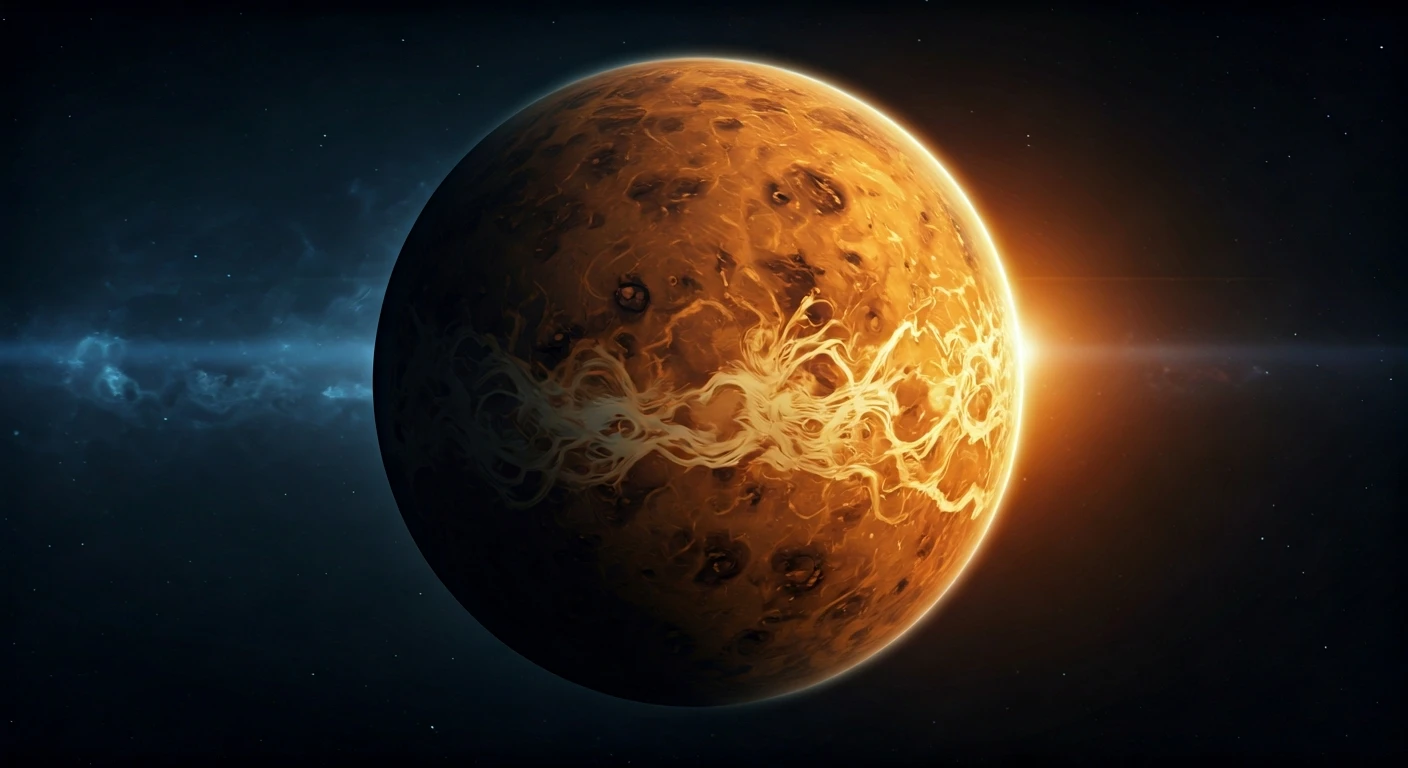
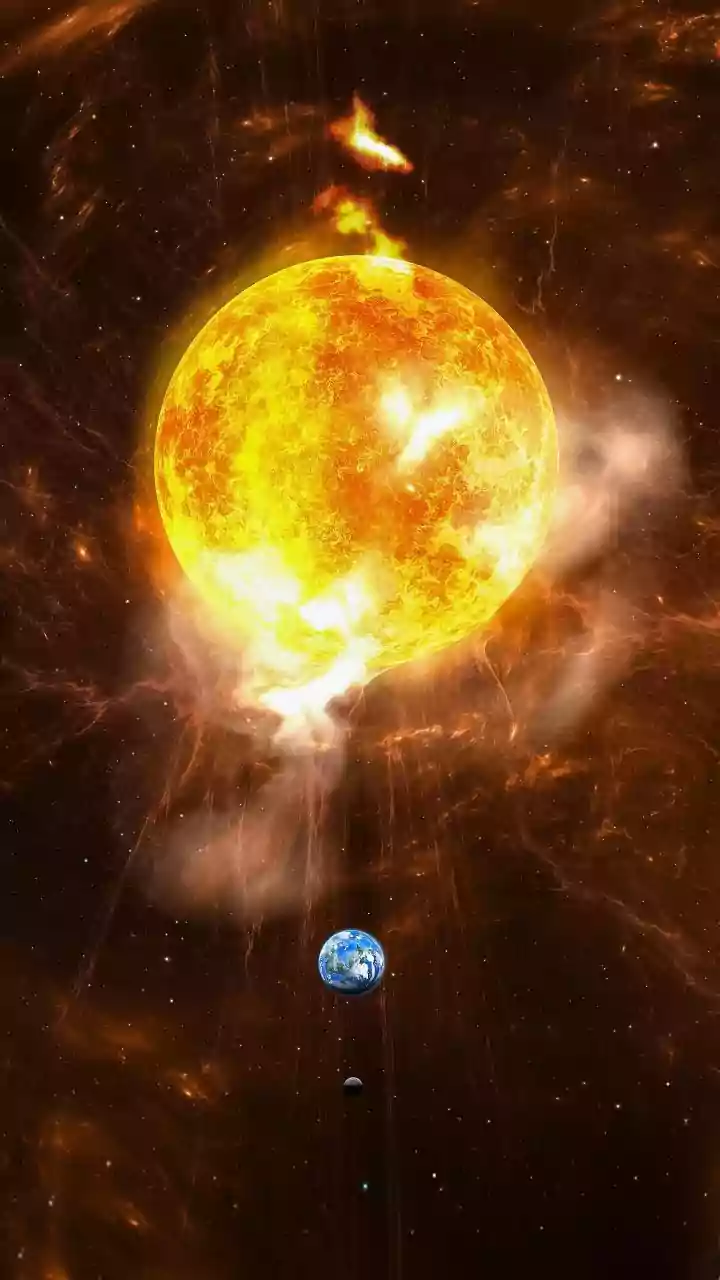
Before we get to its strange day, let’s look at Venus’s year. A year on any planet is simply the time it takes to complete one full orbit around the Sun. Since Venus is the second planet from the Sun—closer than Earth—its orbital path is shorter. It zips
around the Sun in just under 225 Earth days. By comparison, Earth takes a more leisurely 365 days. So, if you were living on Venus, you’d celebrate a new year every 225 Earth days. This part is fairly straightforward: a shorter distance to travel means a shorter year.
The Incredibly Long Day
Here is where things get truly weird. A ‘day’ is defined as the time it takes for a planet to complete one full rotation on its axis. Earth does this in about 24 hours. Venus, however, is the laziest spinner in our solar system. It rotates incredibly slowly, taking a staggering 243 Earth days to complete just one turn. This is what astronomers call a sidereal day. Now, compare the two numbers: a Venusian year is 225 Earth days, but a single Venusian day is 243 Earth days. A day on Venus is literally longer than a year. You would complete an entire orbit around the Sun before the planet has even finished one full rotation.
Sunrise in the West
As if a day longer than a year wasn't strange enough, Venus also spins backwards. Unlike Earth and most other planets in our solar system, Venus has a retrograde rotation, meaning it spins clockwise on its axis. If you could stand on its surface, you would see the Sun rise in the west and set in the east. This backward spin, combined with its orbit around the Sun, creates another interesting quirk. The time from one sunrise to the next, known as a solar day, is about 117 Earth days. So while a single rotation takes 243 days, you'd experience a 'day-night cycle' that lasts 117 days. Still an unimaginably long time, but different from the planet's rotational period.
Why is Venus So Slow and Backwards?
Scientists don't have a single definitive answer, but there are a couple of leading theories. One popular hypothesis suggests that early in its history, Venus was struck by a massive asteroid or planetesimal. A powerful enough collision could have been catastrophic, not only halting its original rotation but actually reversing it and slowing it down dramatically. Another theory points to Venus's incredibly thick and heavy atmosphere. This dense blanket of gas, about 90 times more massive than Earth's, may have created powerful atmospheric tides. Over billions of years, friction between this heavy, churning atmosphere and the solid planet beneath could have acted as a brake, slowing its spin to the crawl we observe today.
Our Twisted Sister Planet
Often called Earth’s “twin” because of its similar size and mass, Venus is more like a twisted sister. Its unique rotation is just one feature of a truly hellish environment. The surface temperature is a scorching 465° Celsius, hot enough to melt lead. The atmospheric pressure is over 90 times that of Earth's, equivalent to being a kilometre deep in our ocean. Clouds of sulfuric acid drift through the sky. The slow day contributes to this extreme climate, as one side of the planet bakes for months while the other is plunged into a long, dark night. It’s a powerful reminder that even planets that seem similar can evolve in wildly different ways.