



The Latest Milestone: Parachutes and More
In a series of recent, crucial trials, ISRO has successfully validated several key safety mechanisms for the Gaganyaan crew module. Much of the recent focus has been on the complex parachute system, which is absolutely vital for the safe return of the astronauts.
One set of tests, the Integrated Main Parachute Airdrop Test (IMAT), involved dropping a mass equivalent to the crew module from an Indian Air Force aircraft to qualify the main parachutes under maximum load conditions. These parachutes are designed to slow the capsule from hypersonic re-entry speeds to a gentle splashdown in the ocean. Another recent success was the validation of the Crew Module Uprighting System (CMUS), a clever system of inflatable bags designed to ensure the capsule flips to the correct orientation if it lands upside down in the sea. These tests are not single events, but part of a long, meticulous campaign to ensure every component works flawlessly when human lives are on the line.
Why Safety is the Hardest Part
Sending a rocket to space is one challenge; bringing a crew home safely is another entirely. For the Gaganyaan mission, safety is paramount, and it's built in layers. The most dramatic is the Crew Escape System (CES), designed to pull the crew capsule and its astronauts away from the rocket in case of a catastrophic failure on the launchpad or during ascent. ISRO has already flight-tested this system in the TV-D1 mission, simulating an abort at high speed and altitude. But safety extends to every phase. The return journey involves a precisely choreographed sequence, starting with the crew module separating from its service module, surviving the fiery re-entry, and then deploying a series of ten parachutes to slow down. This includes apex cover separation parachutes, drogue parachutes for initial stabilisation, and finally the large main parachutes for the final descent. Every step must be perfect.
A Mission of a Thousand Tests
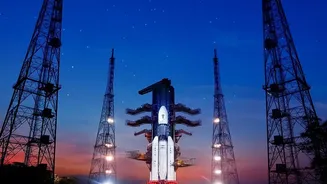
The recent parachute and flotation system tests are just the tip of the iceberg. ISRO has reported that over 8,000 ground tests have already been conducted for the Gaganyaan programme, with development work being approximately 90% complete. This includes static testing of the powerful rocket motors for the human-rated launch vehicle (HLVM3), qualifying the propulsion systems, and developing the Environmental Control and Life Support System (ECLSS) that will provide the astronauts with breathable air and a comfortable environment in the harshness of space. Before any Indian astronaut flies, ISRO plans to conduct multiple uncrewed missions. The first of these, designated G1, will be a full dress rehearsal, testing all the systems in a real-world flight scenario from launch to splashdown and recovery. The success of these uncrewed flights is a mandatory prerequisite for the final crewed mission.
The Human Element: Training for History
While the hardware undergoes rigorous testing, the human component is also in advanced stages of preparation. A group of four Indian Air Force pilots have already completed extensive astronaut training in Russia and are now continuing their mission-specific training in India. This involves familiarising themselves with the Gaganyaan capsule, undergoing simulations of launch and landing, and preparing for any contingency. The newly established astronaut training facility and Gaganyaan Control Centre are central to this effort. The successful tests of the safety systems are not just technical achievements; they are a promise to these chosen few that every possible measure is being taken to ensure their mission is safe. As the hardware is proven and the crew becomes more proficient, the two halves of this historic endeavour are finally coming together.