





The Fiery Problem of Coming Home
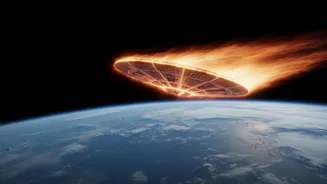
Returning to Earth, or landing on any planet with an atmosphere, is a violent affair. A spacecraft travelling at orbital speeds of over 28,000 kilometres per hour possesses immense kinetic energy. As it ploughs into the upper atmosphere, it rapidly compresses
the air in front of it, generating incredible amounts of heat—up to 1,650 degrees Celsius or more. This is not just friction, but a consequence of ramming air molecules out of the way at hypersonic speeds. Without protection, any vehicle would be instantly incinerated. Traditionally, spacecraft have used rigid, heavy heat shields made of ablative materials that burn away or ceramic tiles that insulate the vehicle. These work well, but their size is limited by the rocket fairing they launch in, which in turn limits the size and weight of the payload they can protect.
A Bigger, Softer Solution
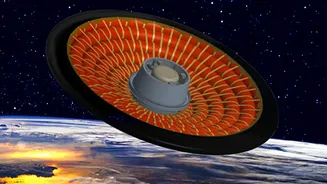
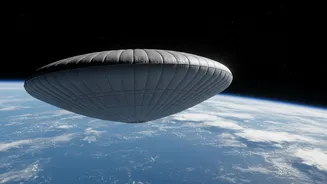
Inflatable heat shields, known as Hypersonic Inflatable Aerodynamic Decelerators (HIADs), solve the size problem. They are packed into a small volume for launch and then inflate like a high-tech air mattress just before re-entry. This allows for a much larger shield than a rocket could otherwise carry. A bigger shield means more drag. By creating a wider surface area, the HIAD starts slowing the spacecraft much higher in the atmosphere, where the air is thinner. This early deceleration leads to a less steep re-entry, significantly reducing the peak heat and forces the vehicle experiences, making the entire process gentler and safer. The successful NASA LOFTID mission in 2022 was a key demonstration of this, showing a 6-meter inflatable shield could survive re-entry from orbital speeds.
The Secret is in the Fabric
So, how does a flexible, inflatable object survive temperatures that can melt steel? The answer lies in layers of incredibly advanced materials. The outermost layer, which faces the intense heat, is a woven fabric made of ceramic fibres, specifically silicon carbide. This material can be spun into a yarn and woven like denim but is engineered to withstand extreme temperatures. Beneath this tough exterior are multiple layers of flexible insulation. These layers act like a high-performance thermos, preventing the searing heat from reaching the inflatable structure itself. Finally, an interior layer acts as a gas barrier, ensuring the hot gases from re-entry don't penetrate and compromise the shield. This entire flexible thermal protection system (FTPS) covers the inflatable structure, keeping it safe.
A Structure Stronger Than Steel
The inflatable structure itself is a marvel of material science. It’s not a single balloon but a stack of concentric rings, or tori, made from braided synthetic polymer fibres that are, pound for pound, up to ten times stronger than steel. When packed, this structure is pliable enough to be folded away. Upon inflation with nitrogen or another gas, these rings become incredibly rigid and are strapped together to form a strong, stable, cone-shaped structure capable of withstanding the immense aerodynamic forces of re-entry. A special high-temperature silicone adhesive coats the rings, giving them a distinct reddish-orange colour and adding another layer of resilience.
Unlocking the Solar System
The advantages of inflatable heat shields are transformative. Because they are lighter and can be packed into a smaller space, they free up mass and volume on the launch vehicle for more payload. This technology is seen as a critical enabler for landing heavier robotic missions and, eventually, humans on Mars. The Martian atmosphere is thin, so a very large drag device is needed to slow a heavy spacecraft sufficiently for a safe landing. Inflatable shields could also be used to land missions on Venus or Saturn's moon Titan. Closer to home, they offer a path to recovering large, reusable rocket components, like engines, and returning cargo or manufactured goods from Earth orbit, potentially lowering the cost of space access for everyone.