




A Marathon on Another World
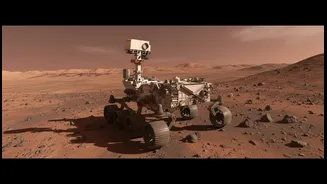
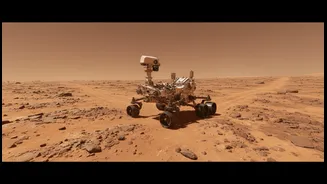
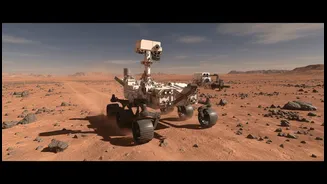
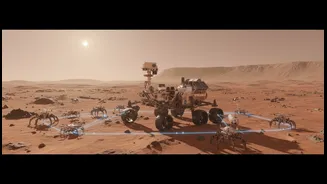
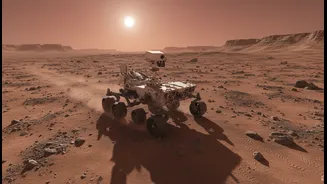
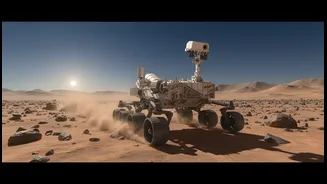
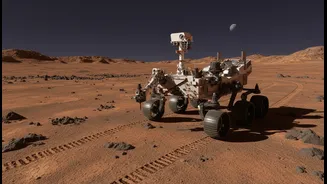
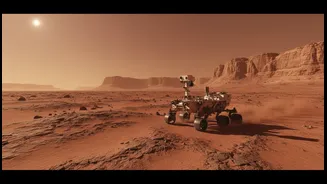
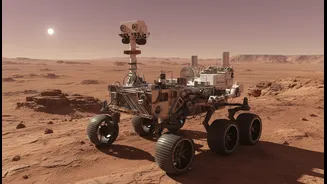
On June 14, 2026, NASA's Perseverance rover officially crossed the marathon distance mark of 42.195 kilometers (26.2 miles) on the surface of Mars. It became only the second robot to achieve this feat, following the Opportunity rover, but it did so in spectacular
fashion—taking just over five years, less than half the time of its predecessor. This achievement isn't just about endurance; it's a testament to a revolutionary leap in autonomous navigation. While human drivers on Earth plot the general route, over 90% of Perseverance's driving is now done autonomously. The rover's sophisticated systems allow it to navigate the treacherous Martian landscape at speeds that, while slow by Earth standards (a top speed of 0.1 miles per hour), have shattered all previous records for extraterrestrial driving. This efficiency means less time spent driving and more time dedicated to its primary mission: science.
Thinking While Driving
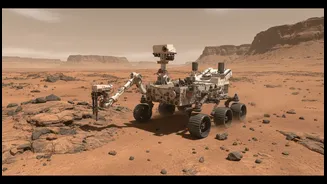
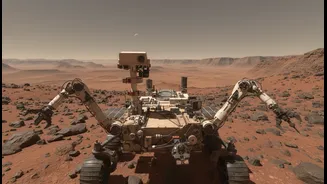
The secret to Perseverance's success is its AutoNav system, a major upgrade from previous rovers. Unlike its predecessor Curiosity, which had to stop, take images, and then plan its next move, Perseverance can 'think while driving'. This is made possible by a crucial hardware advantage: it has two 'brains'. One is the main rover computer, while a second, more powerful processor is dedicated entirely to processing images and navigating. This second computer, originally used to communicate with the Ingenuity helicopter, is over 100 times faster than the rover's main computer. Using its stereo navigation cameras, AutoNav creates a 3D map of the terrain ahead, identifies hazards like sharp rocks or sand traps, and plots the safest path forward in real-time, all while the wheels are still turning.
Safety as the Ultimate Priority
For a billion-dollar mission millions of miles from the nearest mechanic, safety is non-negotiable. AutoNav operates under a strict set of safety rules. The system is constantly running collision checks, looking for terrain that could cause a wheel to drop too far or a rock that might hit the rover's belly. If the system detects a potential hazard that violates its safety parameters, it has immediate veto power to stop the rover and force a recalculation. Until recently, this cautious approach had its own limits. As the rover drove, small errors in its position estimate would add up, creating an expanding 'cone of uncertainty'. Once that uncertainty grew too large, the rover would have to stop and wait for new instructions from Earth. This problem was solved with a new system called Mars Global Localization, which allows the rover to compare pictures of its surroundings to an orbital map, pinpointing its own location to within 10 inches. It’s like giving the rover its own GPS on Mars.
Lessons for Autonomy on Earth
Perseverance's journey offers a powerful case study for developers of autonomous vehicles back on Earth. The challenges are different—the rover doesn't have to worry about traffic laws or pedestrians, but it faces an unpredictable, unmapped environment where a single mistake could be mission-ending. It operates on the principle that it is better to arrive slowly and safely than to risk everything for speed. The entire system is built on a conservative approach, where the autonomy is granted within a carefully defined 'safe zone' established by human operators. They still pick the destination, but the rover handles the moment-to-moment decisions of how to get there safely. This model of supervised autonomy, where AI is empowered to act but constrained by strict safety protocols and human oversight, provides a valuable blueprint. It demonstrates that you can achieve a high degree of useful automation without surrendering to the 'black box' of an algorithm, ensuring that even as systems become more independent, safety remains the ultimate commander.