


The Universe's Ultimate Speed Limit
Everything in our universe is bound by a fundamental rule: nothing can travel faster than the speed of light. It’s the cosmic speed limit, and it’s incredibly fast. In a vacuum, light zips along at approximately 299,792 kilometres per second. That’s fast enough
to circle the Earth more than seven times in a single second. Yet, even at this blistering pace, the sheer vastness of space means that journeys take time.
A Journey of 150 Million Kilometres
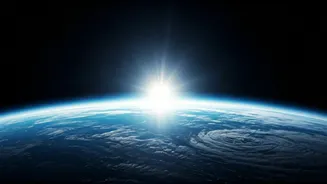
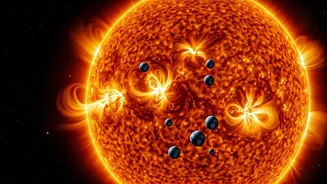
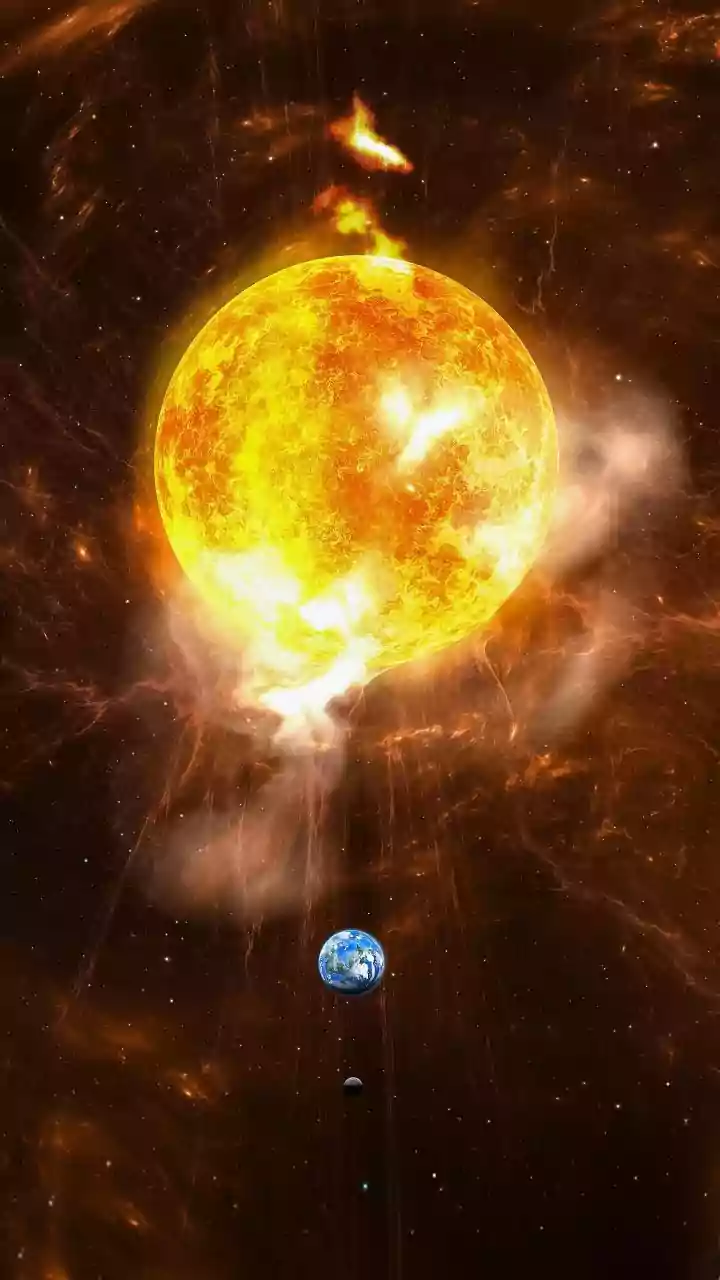
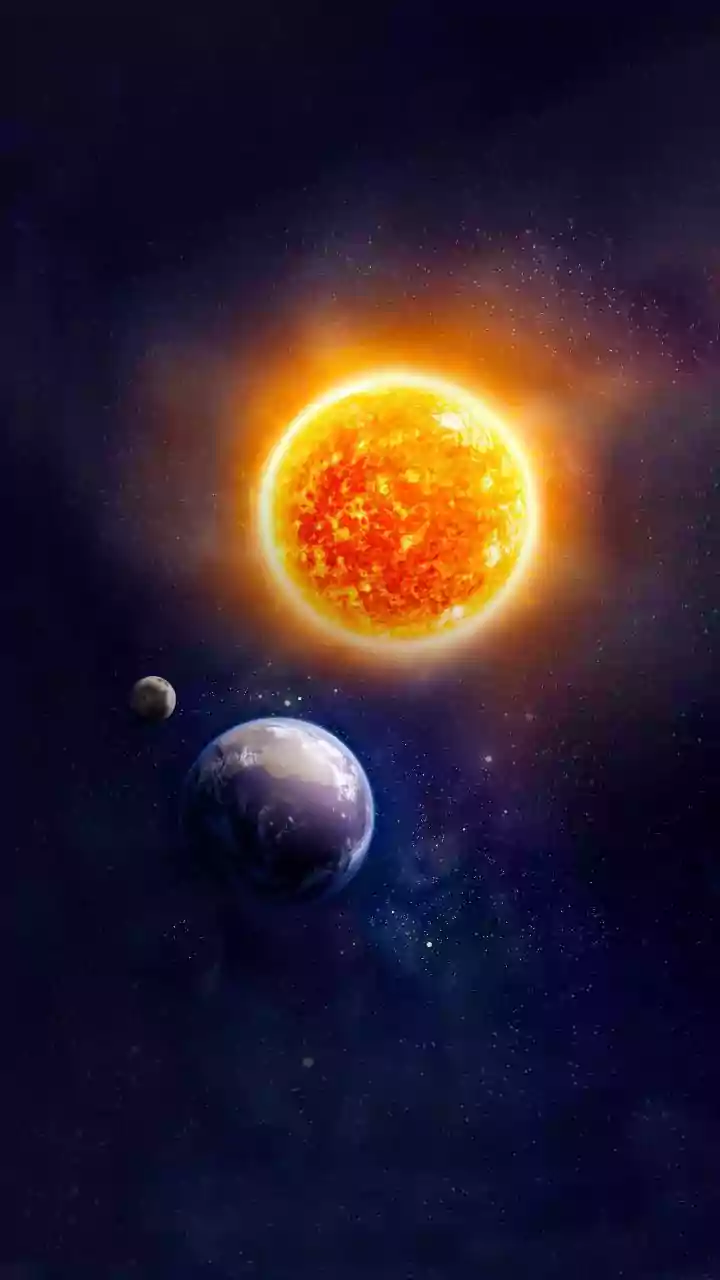
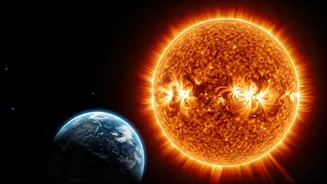
Our sun, the star at the centre of our solar system, is, on average, about 150 million kilometres away from Earth. This distance is so fundamental to our understanding of space that astronomers have a name for it: one Astronomical Unit (AU). To put that number in perspective, if you were to drive that distance in a car at a constant 100 km/h without stopping, the trip would take you more than 170 years. Light, however, makes this journey in a tiny fraction of that time.
Doing the Cosmic Math
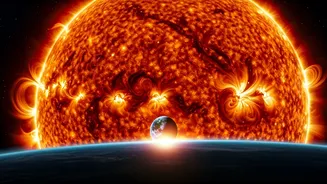
The calculation is straightforward but mind-bending. You take the distance to the sun (150,000,000 km) and divide it by the speed of light (299,792 km/s). The result is approximately 500 seconds. When you convert those seconds into minutes, you get about 8.3 minutes. This is why we say it takes sunlight about eight minutes and twenty seconds to travel from the sun’s surface to the Earth. The light you see right now is not the sun as it is, but the sun as it was over eight minutes ago.
What This Means For Us
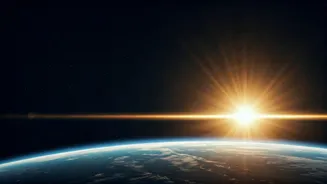
This delay has some fascinating implications. If, hypothetically, the sun were to suddenly vanish, we wouldn’t know about it for eight minutes and twenty seconds. For that entire duration, the Earth would continue to orbit a ghost, and we would still see it shining in our sky, completely unaware that it was already gone. Every time you look at the sun (using proper eye protection, of course!), you are quite literally looking into the past. You are seeing a snapshot of a star that is eight minutes older than the image your eyes receive.
Looking Deeper into Time
This principle extends far beyond our own sun. The nearest star to our solar system, Proxima Centauri, is about 4.2 light-years away. This means the light we see from it tonight left that star 4.2 years ago. When astronomers gaze at the Andromeda Galaxy, the nearest major galaxy to our own, they are seeing it as it was 2.5 million years ago. The light from that galaxy began its journey when our earliest human ancestors were first walking the Earth. In this way, telescopes are not just instruments for seeing across space; they are time machines, allowing us to witness the universe's history with our own eyes.