




Why Choose Low-Impact Cardio?
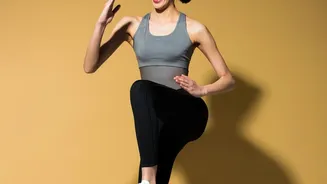
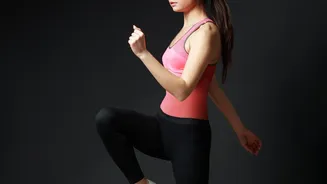
Low-impact cardio refers to any exercise that raises your heart rate while minimizing stress on your joints. Unlike high-impact activities such as running, low-impact workouts ensure at least one foot remains on the ground or that your body weight is supported
by equipment or water. This approach significantly reduces the jarring force on your knees, hips, and ankles, making it an excellent choice for individuals with joint pain, arthritis, or those recovering from an injury. But it's not just for managing pain; it's a smart strategy for anyone seeking long-term fitness. By reducing the risk of injury, these workouts promote consistency, which is the true key to achieving cardiovascular benefits like lower blood pressure and a stronger heart.
Swimming: The Ultimate Joint-Saver
Often hailed as one of the best joint-friendly exercises, swimming provides a full-body workout with virtually no impact. The buoyancy of water supports your weight, taking all the pressure off your joints while providing natural resistance. This unique environment allows you to strengthen your heart, improve circulation, and build endurance. Studies have shown that regular swimmers have a significantly lower risk of death from heart disease and stroke. Different strokes target different muscle groups, allowing for a varied and comprehensive workout every time you hit the pool. Water aerobics offers similar benefits in a fun, group setting.
Cycling: Power Up on Two Wheels
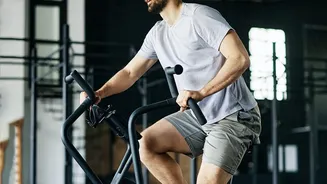
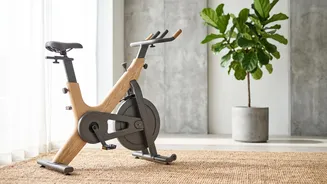
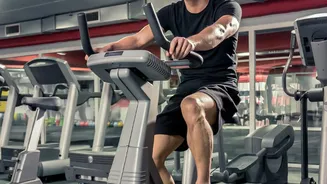
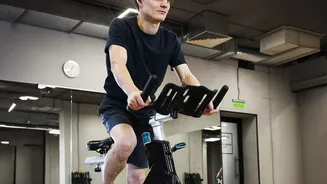
Whether you're on a stationary bike at the gym or exploring trails outdoors, cycling is a fantastic low-impact option. The smooth, circular motion of pedaling is gentle on the knees and hips while effectively engaging the large muscles in your legs. This powerful muscle engagement requires your heart to pump more blood, delivering an excellent cardiovascular workout that can improve stamina and burn calories. You can easily control the intensity by adjusting resistance, speed, or tackling hills, making it suitable for all fitness levels. Plus, it helps build bone density and improves balance.
The Elliptical: A Smooth Operator
The elliptical machine was specifically designed to mimic the motion of running without the associated impact. Because your feet remain on the pedals at all times in a gliding motion, your joints are protected from stress. This makes it an ideal alternative for those who love the feeling of running but need to protect their knees and hips. The elliptical provides a challenging aerobic workout that strengthens your heart and lungs, and many machines feature moving handlebars to engage your upper body for a more comprehensive session. By adjusting the resistance and incline, you can simulate everything from a light walk to a strenuous hill climb.
Rowing: A Full-Body Burn
Don't let the seated position fool you; the rowing machine delivers a powerful, full-body workout that is surprisingly low-impact. A proper rowing stroke engages your legs, core, and upper body, making it one of the most efficient exercises available. The smooth, controlled motion is easy on the joints while challenging your cardiovascular system and building muscular endurance. Because it activates so many muscle groups at once, rowing is highly effective at elevating your heart rate and burning calories, helping to improve overall heart health and fitness.
Brisk Walking: The Accessible Staple
Never underestimate the power of a good walk. Brisk or power walking is one of the most accessible and effective forms of low-impact cardio. There's no special equipment required, and it can be done almost anywhere. To get your heart rate up, focus on increasing your pace, incorporating hills into your route, or simply walking for longer durations. Walking puts significantly less strain on your joints than running but still offers substantial benefits for your heart, circulation, and mental well-being. For even less impact, try walking on a softer surface like a track or a trail instead of concrete.