


From Government Monopoly to Private Marketplace
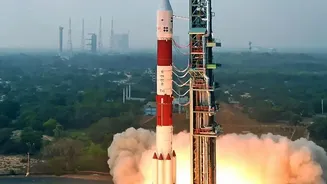
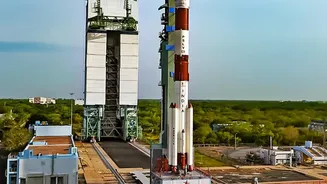
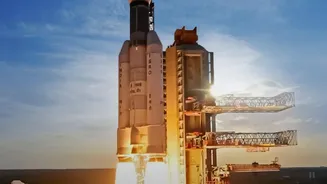
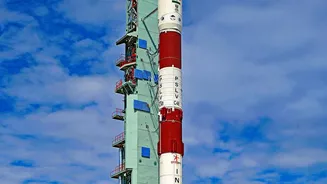
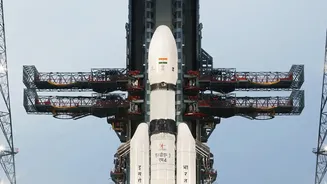
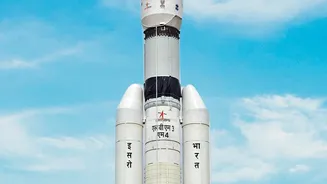
For decades, the Indian space story was written almost exclusively by the Indian Space Research Organisation (ISRO). This changed dramatically with the introduction of the Indian Space Policy in 2023. This landmark policy framework officially opened the entire
space value chain to private companies, or Non-Governmental Entities (NGEs). To facilitate this transition, the government established the Indian National Space Promotion and Authorisation Centre (IN-SPACe). Acting as a single-window agency, IN-SPACe is tasked with promoting, authorising, and supervising the activities of these new players, ensuring they get access to ISRO’s vast infrastructure and expertise. This has shifted ISRO’s role, allowing it to focus more on advanced research and development while private industry takes on manufacturing and operational services.
The Rocket Builders: A New Ride to Orbit
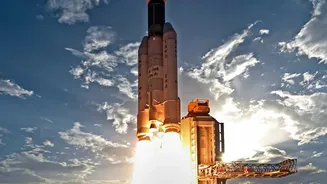
At the forefront of this new wave are the rocket builders, creating homegrown launch vehicles for the booming small satellite market. Hyderabad-based Skyroot Aerospace made history by launching Vikram-S in 2022, India's first privately developed rocket. The company followed this milestone with the successful orbital launch of Vikram-1 in July 2026, making India only the third country with a private orbital launch capability. Another key player is Agnikul Cosmos, incubated at IIT-Madras. Agnikul has garnered attention for its Agnibaan rocket, which is powered by the world's first single-piece 3D-printed engine, the Agnilet. The company successfully tested its suborbital technology demonstrator, SOrTeD, from its own private launchpad, showcasing its capability for on-demand launches. These companies offer a crucial domestic alternative for launching small satellites, a market previously reliant on foreign rockets.
The Satellite Makers: Unlocking Data from the Sky
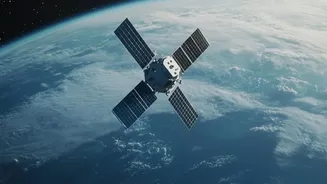
Beyond launch vehicles, a number of startups are focused on building and operating satellites that provide valuable data. Pixxel is a leader in this domain, building a constellation of hyperspectral imaging satellites. Unlike standard cameras, these satellites capture light across hundreds of spectral bands, providing incredibly detailed information applicable to agriculture, mining, and climate change monitoring. After successful demonstration missions, Pixxel began deploying its commercial Firefly constellation in 2025. Meanwhile, Dhruva Space offers a different model, providing "satellite-as-a-service" solutions. The Hyderabad-based company has developed a range of modular satellite platforms, from small CubeSats to larger Microsats, allowing clients to build and launch missions without developing the hardware from scratch. Dhruva Space also provides launch integration and ground station services, offering a full-stack solution for its customers.
Challenges and the Path Forward
Despite the rapid progress and government support, the path for Indian space startups is not without its challenges. The space industry is capital-intensive and inherently risky, with long development timelines before any revenue is generated. While venture funding has been flowing into the sector, sustained investment is crucial for these companies to scale their operations. Furthermore, while the 2023 policy provides a clear vision, navigating the regulatory landscape for approvals and licenses remains a complex process for new entrants. Competition is not just domestic but global, with established players and a plethora of startups worldwide vying for a share of the space economy. However, the collaborative ecosystem being fostered by IN-SPACe, combined with India's inherent cost advantages and deep talent pool of engineers, positions these startups to overcome these hurdles and carve out a significant niche in the global space market.