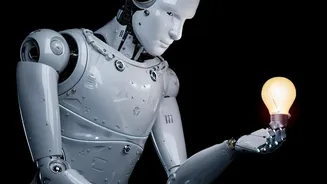







The promise is intoxicating: a personal AI tutor for every student, available 24/7 to explain complex topics and boost grades. But as this technology floods classrooms, a surprising study challenges the hype, suggesting some AI tools might do more harm
than good.
The Promise of a Digital Mentor
For years, educators and tech companies have touted artificial intelligence as the key to unlocking personalized learning at scale. The concept is simple: AI tutors can adapt to a student's individual pace, offering tailored support in a way that's often impossible in a crowded classroom. These systems promise to democratize education, providing one-on-one assistance that was once only available to those who could afford a human tutor. From answering questions about homework to creating custom quizzes, the potential seems limitless, with many believing AI is the definitive future of academic support.
A Landmark University Study
To test this promise, researchers at the University of Maryland conducted a large-scale, randomized controlled trial, the kind of rigorous study rarely performed in education technology. The study involved nearly 2,400 undergraduate students across various courses. Half of the students were given access to a course-integrated AI assistant, which was fed syllabuses, readings, and assignments to help it answer questions about course concepts and logistics. The other half, the control group, proceeded without the AI tool. The goal was to see if the AI tutor would, as widely claimed, improve academic outcomes.
Surprising and Sobering Results
The findings were not what many expected. Instead of boosting grades, students who had access to the AI tutor actually performed worse, with final grades declining by 0.27 to 0.37 standard deviations. On a four-point GPA scale, this translated to an average drop of 0.11 points, roughly the difference between a B and a low B. Furthermore, the AI group showed less engagement with the course overall. They visited course pages less frequently, participated less in discussions, and completed fewer quizzes and assignments than their peers in the control group. The negative impact was even more pronounced for first-generation college students, raising concerns that these tools could worsen existing equity gaps.
Why Did the AI Tutor Backfire?
Researchers have a few theories about why the AI assistant failed to deliver. A key issue was how students used the tool. Data revealed that only about 15% of students used the assistant, and those who did often just asked it for direct answers rather than engaging in a deeper learning dialogue. Instead of using the AI as a tutor, they used it as an answer key. This tendency can encourage a superficial understanding of the material and weaken critical thinking skills. Researchers also suspect the mere presence of the AI tool sent an unintended signal to students that using outside chatbots was acceptable, potentially leading them to outsource their thinking rather than grappling with the material themselves.
Context is Everything
It's crucial to note that this single study does not prove all AI tutors are ineffective. Other studies have shown modest benefits, particularly in structured environments. For example, a study of middle schoolers using a specialized AI math tutor found that consistent use was associated with improved test scores. The difference often comes down to design and implementation. AI tutors that act as Socratic guides or are supervised by human teachers tend to be more effective than general-'purpose chatbots that simply provide answers. The evidence suggests that AI's effectiveness is not guaranteed; it depends heavily on how the tool is built and integrated into the learning process. Success hinges on using AI to augment, not replace, the essential work of thinking, problem-'solving,' and engaging with instructors.