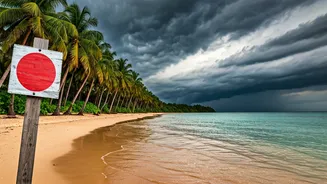









The Financial Fallout of Flooding
Imagine this: you've planned the perfect monsoon getaway. The bags are packed, and hotels are booked. Then, disaster strikes. Heavy rains lead to widespread flooding at your destination. Your train is cancelled, roads are impassable, and the resort you booked is now
an island. Suddenly, your dream vacation becomes a financial nightmare. Non-refundable deposits are lost, and last-minute alternative bookings come with surge pricing. These are the hidden costs of travel disruptions that can derail your budget. Events like these are common during India’s monsoon, turning what should be a relaxing break into a stressful and expensive ordeal. This financial risk is precisely why being proactive is not just a good idea, but an essential part of modern travel.
Your Digital Toolkit for Flood Warnings
Staying ahead of potential floods is easier than ever thanks to a suite of digital tools. The Government of India provides robust services to keep citizens informed. The Central Water Commission (CWC) is the nodal agency for flood forecasting in the country. Its network monitors river levels at hundreds of stations, issuing forecasts with over 90% accuracy. The India Meteorological Department (IMD) provides daily district-wise warnings for heavy rainfall and cyclones up to seven days in advance. For hyper-local and easy-to-understand information, Google's Flood Hub uses AI to provide riverine flood forecasts up to a week in advance, showing which areas may be affected. Finally, the 'Flood Watch India' mobile app, launched by the CWC, consolidates forecasts and real-time water levels from across the country.
How to Interpret the Alerts
Receiving an alert is one thing; knowing what it means for your travel plans is another. The CWC and IMD use a colour-coded system to indicate severity. A 'Yellow' alert suggests being watchful, as a river may be flowing above its normal level. This is a signal to monitor the situation closely. An 'Orange' alert signifies a 'Severe Flood' situation where the river level has touched or crossed the danger mark, updated every three hours. This is a serious warning for travellers to reconsider their plans. A 'Red' alert means an 'Extreme' flood situation, with water levels potentially at or above the highest ever recorded. In this case, travel to the affected area should be avoided at all costs, as widespread disruption and danger to life are likely.
From Alert to Action: A Smart Traveller's Checklist
When a flood alert is issued for your destination, don't panic—act. First, immediately check the cancellation and rescheduling policies for your flights, trains, and accommodations. Many providers are more flexible when official advisories are in place. Contact your hotel or tour operator directly to understand the situation on the ground. They can provide the most accurate, real-time information. If you have travel insurance, review your policy to see if you are covered for cancellations due to natural disasters. It’s also wise to have a Plan B. Research alternative destinations or travel routes that are not in the affected zone. The key is to make informed decisions quickly to minimise both financial loss and personal risk.
The Safety Net of Travel Insurance
Travel insurance is often overlooked for domestic trips, but it's a crucial safety net during the unpredictable monsoon season. When purchasing a policy, don't just look for the cheapest option. Specifically, check for coverage related to 'trip cancellation' and 'trip curtailment' due to natural calamities. This ensures you can get reimbursed for non-refundable expenses if a flood forces you to cancel or cut your trip short. Read the fine print carefully. Some policies may have exclusions or specific conditions for what constitutes a covered natural disaster. A good policy can be the difference between losing all your prepaid expenses and getting a second chance to plan your vacation.