

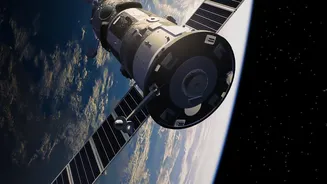

It sounds like a riddle: How can something fall toward Earth forever but never hit the ground? The answer isn't magic, it's orbital mechanics. The secret lies not in escaping gravity, but in harnessing it with incredible speed.
Everything Is Always Falling
First, let's get one thing
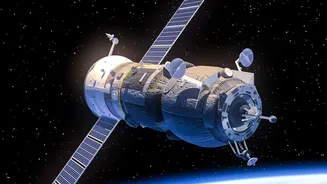
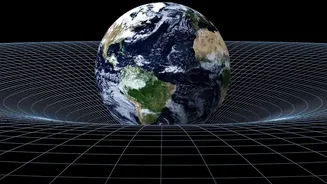
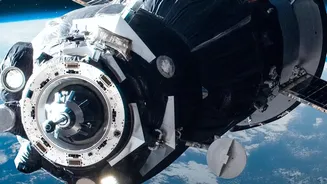
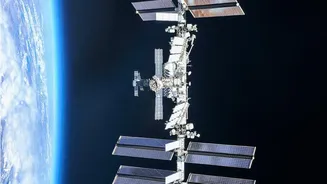
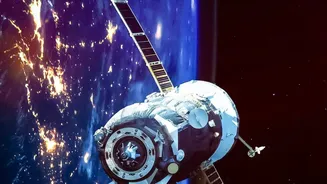
straight: gravity is everywhere. The International Space Station (ISS), orbiting about 250 miles up, still experiences about 90% of the gravity we feel on the surface. So why don't astronauts and their spacecraft just plummet back to Earth? The simple answer is that they are, in fact, falling. An orbit is just a fancy name for a perpetual state of freefall. The trick is that while the vehicle is falling downwards, it's also traveling sideways at an immense speed. This combination of downward pull and forward momentum is the key to understanding how an orbit works.
Newton's Cannonball on a Mountaintop
More than 300 years ago, Isaac Newton devised a brilliant thought experiment to explain this concept. He imagined a cannon placed on top of an impossibly tall mountain, so high it was above Earth's atmosphere, eliminating air resistance. If you fire a cannonball with a small amount of gunpowder, it travels a short distance before gravity pulls it to the ground. Fire it with more force, and it travels farther before landing. But Newton realized that if you could fire the cannonball with exactly the right horizontal velocity, its path would curve downward at the same rate that the Earth's surface curves away. The cannonball would still be falling, but it would never get any closer to the ground. It would be in orbit, perpetually missing the Earth.
The Magic Number: Orbital Velocity
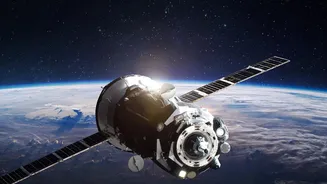
That 'just right' speed is called orbital velocity. For an object in Low Earth Orbit (LEO), like the ISS, this speed is a staggering 17,500 miles per hour, or about 28,000 kilometers per hour. At that speed, the satellite travels so far horizontally in one second that the Earth has curved away beneath it by the exact amount it has fallen due to gravity. This creates a stable path, a continuous freefall around the planet. If the spacecraft were to slow down, gravity would win, and its orbit would decay, causing it to spiral back toward the atmosphere. If it speeds up too much, it could overcome Earth's gravity entirely and fly off into deep space. It's a delicate balance between forward momentum and gravitational pull.
So, Are Astronauts 'Weightless'?
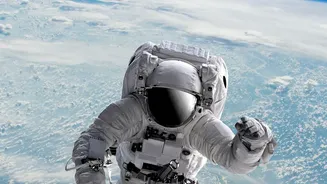
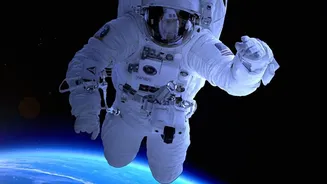
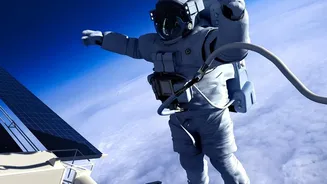
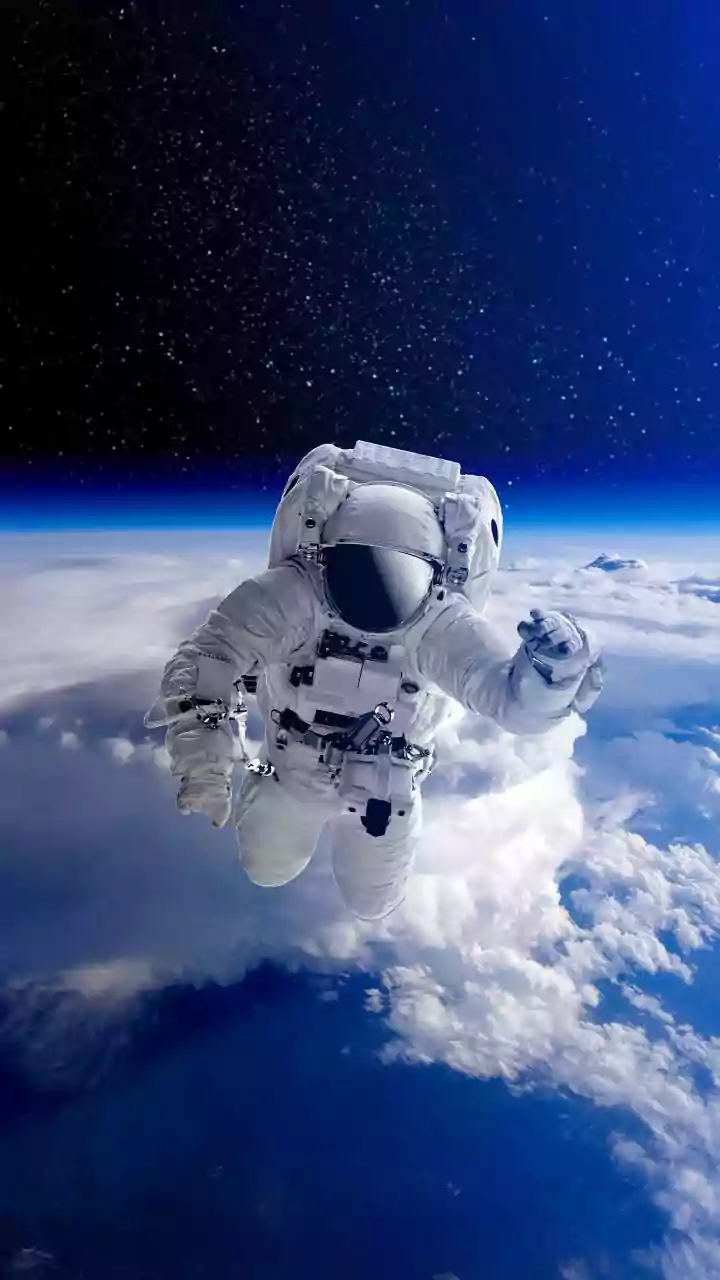
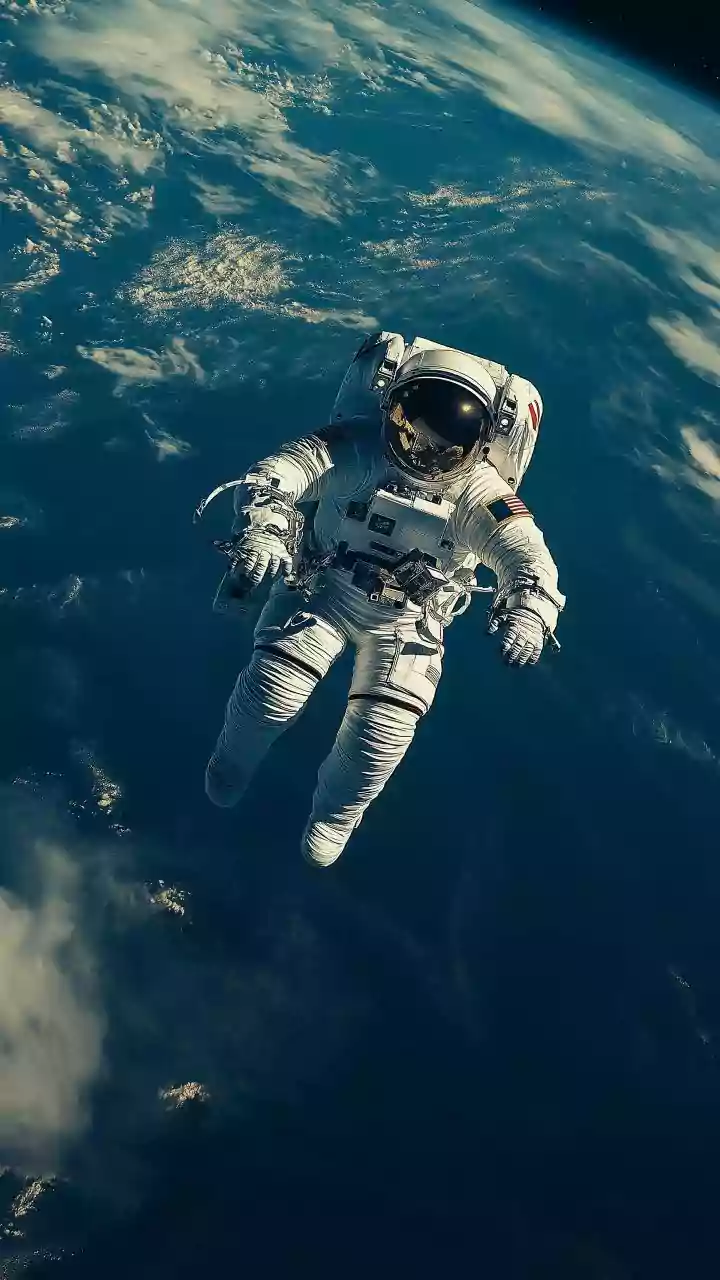
This leads to one of the most common misconceptions about space travel. Astronauts floating around the ISS aren't 'weightless' because there's no gravity. They feel weightless because they, the station, and everything inside it are all falling together at the same rate. It’s similar to the feeling you get at the very top of a roller coaster hill, just before you start to descend. You and the coaster car are briefly in freefall together, and you feel a momentary lift from your seat. Astronauts in orbit are in that state of continuous freefall, creating a constant sensation of weightlessness even as gravity pulls on them relentlessly.