


A New Window on the Cosmos
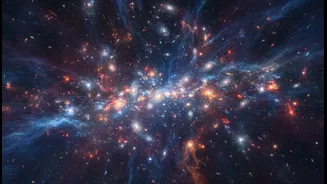
For decades, the Hubble Space Telescope gave us breathtaking views of the cosmos, but much of the universe's baby book remained closed. That’s because the most ancient light, traveling for billions of years, gets stretched out by the expansion of the universe into
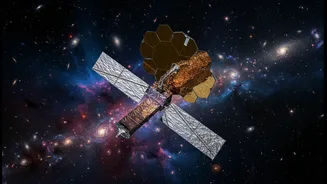
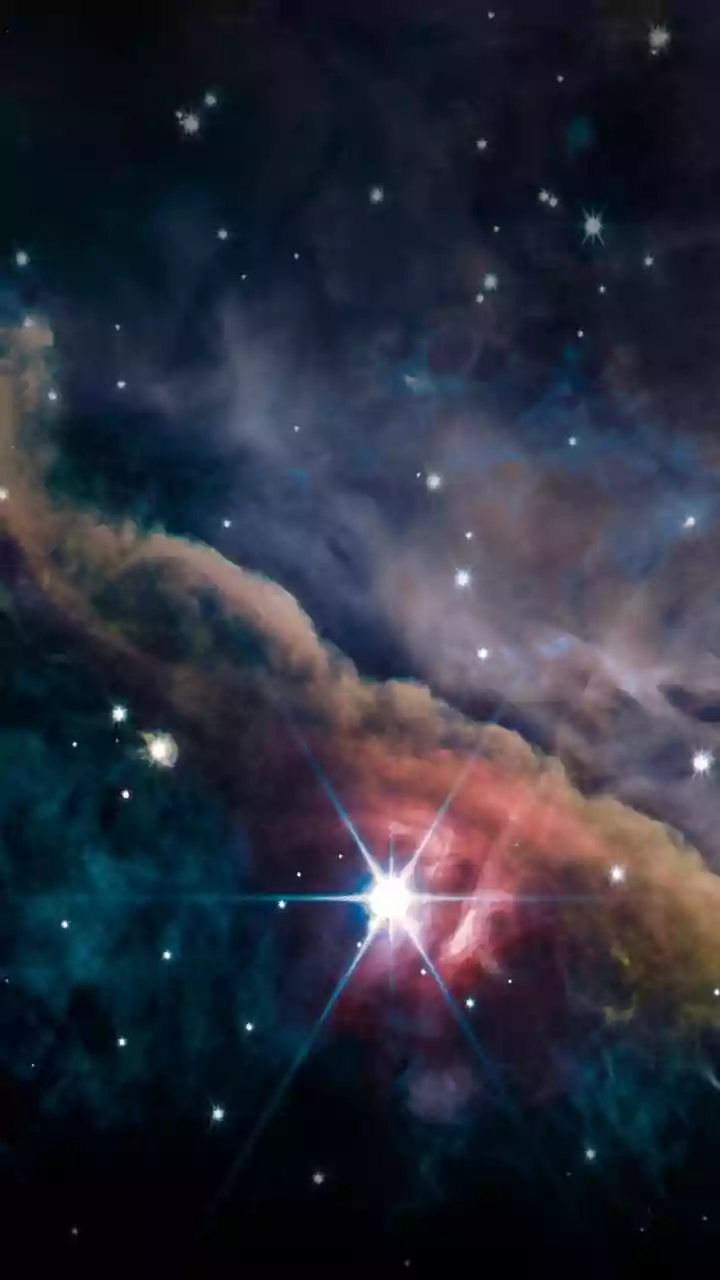
longer, redder wavelengths. The James Webb Space Telescope (JWST) was engineered specifically to capture this infrared light. Its massive, golden mirror acts like a giant light bucket, collecting photons that left their source when the universe was just a fraction of its current age. This infrared vision allows Webb not only to see farther back in time but also to peer through the dense clouds of cosmic dust that act like celestial curtains, hiding the birth of stars and the chaotic cores of galaxies. Where Hubble saw opaque dust lanes, Webb sees a densely packed tapestry of individual stars.
Cosmic Archaeology in Action
This ability to see through dust and capture faint, ancient light turns the JWST into a time-traveling archaeologist. One of its key tools is spectroscopy, the science of breaking light down into its constituent colors, like a prism creating a rainbow. Every element and chemical compound absorbs and emits light at specific, unique frequencies, creating a pattern of bright or dark lines in a spectrum. These patterns are like cosmic fingerprints. By analyzing the spectrum of light from a distant galaxy, astronomers can determine its chemical composition, its temperature, how fast it's moving, and, crucially, its age. It’s through this painstaking analysis that Webb is reading the histories of primordial stars, piecing together how elements heavier than hydrogen and helium were forged in the first stellar furnaces and distributed across the cosmos.
Galactic Mergers as Cosmic Laboratories
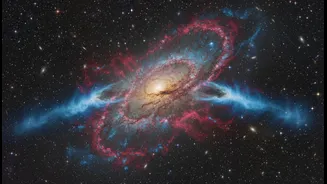
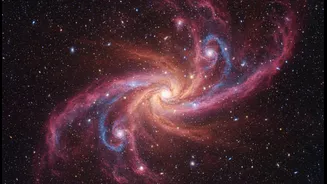
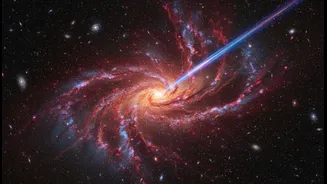
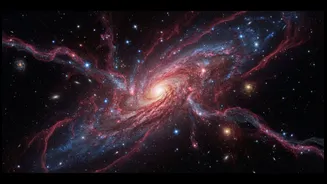
To find the most dramatic examples of star formation, Webb looks for cosmic train wrecks: galactic mergers. When two galaxies collide, their gravitational forces trigger a violent, frenzied burst of star formation, known as a starburst. These events compress vast clouds of gas and dust, providing the raw material for millions of new stars to be born at a rate many times that of a quiet galaxy like our own Milky Way. Recent JWST observations of systems like Centaurus A and others have revealed the hidden structures and aftermath of these mergers in unprecedented detail. These chaotic events are the perfect laboratories for studying the entire lifecycle of stars in fast-forward. By observing these mergers, Webb can trace how the intense bursts of star birth are triggered and, in some cases, how the activity of a central supermassive black hole can ultimately shut it down by blowing the remaining gas away.
Tracing the First Stellar Giants
By combining its infrared sight with the power of spectroscopy and the focus on galactic mergers, Webb is piecing together the story of primordial stars. It has already found evidence for galaxies that were surprisingly mature and massive when the universe was less than a billion years old, challenging earlier models of galaxy formation. In some ancient galaxies, Webb has detected chemical imbalances, such as an unusual excess of nitrogen, that can't be explained by ordinary stars. This provides the first strong evidence for the existence of theorized "monster stars" or primordial stars thousands of times more massive than our sun. These giants would have lived short, brilliant lives before collapsing into the massive black holes that scientists now see in the early universe, solving a long-standing cosmic mystery. Each observation of a galactic merger provides another page in this history, allowing astronomers to reconstruct a timeline of when different types of stars formed and how these cataclysmic events shaped the galaxies we see today.