

The Modern Monument in Kerala
In the Kollam district of Kerala, the legend of Jatayu finds its most monumental expression. Atop a massive rock hill in Chadayamangalam sits the Jatayu Earth's Center, home to the world's largest bird sculpture. This colossal concrete figure, measuring
200 feet long and 70 feet high, depicts the fallen hero, wounded after his fierce battle with Ravana. Local tradition firmly states that this very rock, Jatayupara, is where the noble bird fell after his wings were clipped by the demon king. The name of the town itself, Chadayamangalam, is said to be derived from 'Jatayu-mangalam'. The site is more than just a statue; it’s a sprawling eco-tourism project that combines mythology with adventure activities, a museum, and a temple dedicated to Lord Rama. Visitors can reach the summit via a scenic cable car ride, making it a modern pilgrimage site that pays tribute to an ancient story of valour and the protection of women's honour.
The Divine Command in Andhra Pradesh
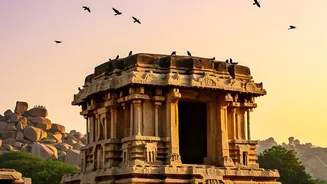
Travel to Lepakshi in Andhra Pradesh, and you will hear a different, yet equally powerful, version of the tale. According to local lore in this historic village, this is where the wounded Jatayu lay dying. When Lord Rama and Lakshmana found him, Rama, moved by his loyalty, granted him moksha (liberation) and uttered the words 'Le Pakshi'—meaning 'Rise, bird' in Telugu. This divine command is believed to have given the village its name. The Veerabhadra Temple, a masterpiece of Vijayanagara architecture, is central to this legend. While it's dedicated to a fierce form of Shiva, the connection to the Ramayana is strong. Near the temple complex, a large, striking sculpture of Jatayu was also installed, cementing the region's place on the Ramayana trail. For devotees and history buffs, Lepakshi offers a blend of architectural marvels and deep mythological resonance.
The Sacred Last Rites in Tamil Nadu
The story of Jatayu doesn't end with his fall. In Tamil Nadu, two significant temple towns are associated with the final, sacred rites performed for the bird king. In Thiruputkuli, near Kanchipuram, stands the Sri Vijayaraghava Perumal Temple. The belief here is that Lord Rama, in his form as Vijayaraghava Perumal, performed Jatayu's cremation at this very spot. The name itself is said to be derived from 'pul' (bird) and 'kuzhi' (pit), referring to Jatayu's cremation pit. The temple's water body is called Jatayu Tirtham. Similarly, the Thirupullabhoothangudi Temple near Thanjavur is another site where devotees believe Lord Rama conducted the last ceremonies for his father's loyal friend, treating him with the reverence due to a family member. These temples underscore the deep respect and emotional weight given to Jatayu's sacrifice in the epic.
The Battleground in Telangana and Maharashtra
While Kerala, Andhra, and Tamil Nadu are linked to Jatayu's fall and final rites, other regions are connected to the battle itself. The Valmiki Ramayana places the events of Rama's exile in the Dandakaranya forest, near the Godavari River. Parnasala, a village near Bhadrachalam in Telangana, is widely believed to be the spot where Sita was abducted by Ravana. It is from here that Jatayu would have launched his brave but doomed attack. A nearby location, Yetapaka, is traditionally known as the place where Jatayu intercepted Ravana's chariot. This region, along with sites around Nashik in Maharashtra, forms a crucial part of the 'Ramayana trail' that traces the path of the protagonists during their exile. These locations remind us that the epic's geography is as vast as its cultural influence.