
The Non-Negotiable Dry Bag
Think of a dry bag not as an accessory, but as the single most important item for a monsoon trek. While a backpack rain cover offers a first line of defence, it won't protect your gear if you slip during a stream crossing or face hours of sustained downpour.
A dry bag is a fully waterproof sack with a roll-top closure that creates a watertight seal. Use it to store your most critical items: electronics, a spare set of dry clothes, and your sleeping bag. Experienced trekkers often use multiple smaller dry bags to compartmentalise gear, ensuring that even if one part of their pack gets damp, the essentials remain perfectly dry. This strategy moves beyond just resisting water to actively managing it.
Banish Dampness with Quick-Dry Clothing
In the high humidity of the Western Ghats, cotton is your worst enemy. Once wet, it stays wet, clinging to your skin and making you feel cold. Instead, your wardrobe should be built around synthetic fabrics like polyester and nylon. These materials are moisture-wicking, meaning they pull sweat and rain away from your skin and allow it to evaporate quickly. A lightweight, quick-dry t-shirt and trekking pants will keep you far more comfortable than their cotton counterparts. Always pack at least one full spare set of clothes in a dedicated dry bag. Changing into warm, dry garments at the end of a rainy day is a massive morale and comfort booster.
Grippy Footwear for Slippery Trails
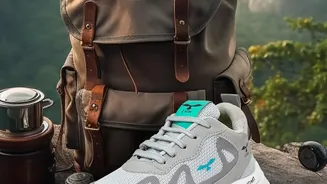
Monsoon trails in the Ghats are notoriously muddy, rocky, and slippery. Your choice of footwear can make or break your trek. Look for trekking shoes with deep lugs and a high-traction sole designed for wet conditions. While waterproof boots sound ideal, many trekkers prefer fast-draining, non-waterproof shoes. This is because once water gets inside a waterproof boot (from a deep puddle or running down your leg), it stays there, turning your shoe into a swamp. Fast-draining shoes get wet but also dry out much faster. Whichever you choose, pair them with moisture-wicking socks—never cotton—and consider bringing waterproof gaiters to prevent water and mud from getting in from the top.
The Unseen Challenge: Leech Protection
For many, the biggest psychological hurdle of a Western Ghats monsoon trek is the prevalence of leeches. While their bites are harmless—they don't transmit disease and are anaesthetic, so you often don't feel them—they can be unsettling and bleed profusely due to an anticoagulant. Prevention is key. Wearing long trousers tucked into your socks is a basic first step. For better protection, invest in a pair of leech-proof socks, which are tall, thick socks that create a barrier up to your knees. Some trekkers also apply salt, tobacco oil, or insect repellent around their shoes and socks as a deterrent. If you do get a bite, don't pull the leech off; gently break its suction with a fingernail, let the wound bleed, and then clean it with an antiseptic.
Essential Extras for Safety and Comfort
Beyond the big-ticket items, a few smaller pieces of gear are crucial. A headlamp is non-negotiable for navigating in the low light of a dense forest or if your trek extends after dusk. A waterproof poncho can be a great alternative to a rain jacket, as it provides better ventilation and also covers your backpack. Pack a basic first-aid kit that includes antiseptic for leech bites, bandages for blisters, and any personal medications, all stored in a waterproof case or ziplock bag. Finally, high-energy snacks like nuts and energy bars are vital for keeping your fuel levels up on long, demanding trails where rain can make stopping for a full meal difficult.