








A Lifeline from the Stars
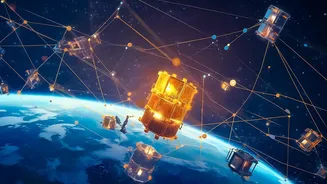
Since the early days of Russia's full-scale invasion in 2022, SpaceX's Starlink has become the backbone of Ukraine's battlefield communications. When Russian attacks decimated terrestrial internet and cellular networks, thousands of portable Starlink terminals
provided a crucial, secure link for soldiers, drone operators, and government officials. This capability has been indispensable, enabling everything from coordinating drone strikes to ensuring civilians in war-torn regions remain connected. The system, particularly its military-grade version known as Starshield, is used for command and control, intelligence sharing, and operating the drones that have become a signature weapon in this conflict. One Ukrainian commander bluntly stated that without Starlink, they might have already lost the war.
The Source of the Unease
President Zelenskyy's recent concerns stem from sudden and unexpected restrictions imposed on the service. Ukrainian officials reported that a speed limit of approximately 161 km/h (100 mph) was placed on Starshield terminals, which occurred without warning. This directly impacts fast-moving drones, including interceptors designed to shoot down Russian jet-powered Shahed drones. Zelenskyy stated that his team conducted tests, finding that the speed limits were specific to Ukraine and did not apply in neighboring EU countries, leading him to believe it was a deliberate 'planned operation'. This has created a palpable sense of betrayal and vulnerability, as a critical defence tool was suddenly hobbled.
A History of Unpredictability
This is not the first time Ukraine has faced uncertainty regarding Starlink. The service's availability is ultimately controlled by SpaceX and its mercurial CEO, Elon Musk, creating a single point of failure for a significant part of Ukraine's defence apparatus. In 2022, Musk reportedly denied a Ukrainian request to extend Starlink coverage to Russian-occupied Crimea for a planned drone attack on a port, fearing complicity in a major act of war. While Musk has since clarified that the military-grade Starshield is controlled by the US government, the recent speed restrictions have reignited fears that access could be throttled or cut off at any moment due to political pressures or the decisions of a single individual. This dynamic gives a private company and its owner immense leverage in an international conflict.
The Search for Alternatives
The latest disruptions have intensified Ukraine's and Europe's search for alternatives to reduce this dependency. Ukrainian officials have stated they are exploring other options, including the satellite network being built by Amazon and OneWeb, owned by Europe's Eutelsat. However, leaders across Europe acknowledge that there is no immediate, comparable replacement for Starlink's scale and capability. EU foreign policy chief Kaja Kallas noted that while Europe needs to develop its own sovereign capabilities, in the short term, Starlink remains a necessity for Ukraine. The challenge is immense, as competitors lag in the number of satellites, and their terminals can be more expensive and less portable than what SpaceX offers. Russia is also actively working on its own satellite network, Rassvet, adding another layer of technological urgency.
A New Era of Geopolitical Power
Ukraine's situation with Starlink is a stark illustration of a new reality in modern warfare and geopolitics. The conflict has demonstrated that a private technology company can hold as much, if not more, sway over a nation's ability to defend itself as traditional state allies. This sets a dangerous precedent, where battlefield capabilities can be influenced by corporate decisions or the political leanings of a tech billionaire. President Zelenskyy's unease is not just about a technical issue with a communications provider; it's a recognition of a fundamental shift in power, where critical national security infrastructure lies in the hands of a private, foreign entity, making long-term strategic planning fraught with unprecedented uncertainty.