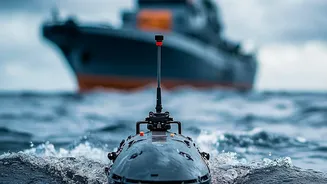



The dream of self-driving ships navigating the world's oceans is closer than ever, but one major hurdle remains: safety. How can we test these complex systems without risk? Researchers at IIT Madras have unveiled a groundbreaking answer.
The Quest for Autonomous Seas
For decades, the
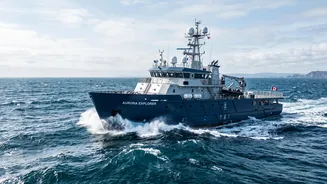
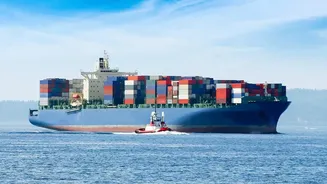
maritime industry has been the backbone of global trade, carrying over 80% of goods worldwide. Now, it stands on the brink of a technological revolution: the era of Maritime Autonomous Surface Ships (MASS), or self-driving vessels. The promise is enormous. Autonomous ships could significantly reduce operational costs by optimising fuel consumption and reducing the need for large crews. More importantly, they could make the seas safer. With human error implicated in an estimated 60% of shipping accidents, automation offers a path to more reliable and predictable navigation. However, the journey from concept to reality is fraught with challenges. The ocean is an unpredictable environment, and testing an unproven autonomous system on a massive container ship is a complex, expensive, and potentially hazardous undertaking.
Introducing SeaNav: A Digital Ocean in a Lab
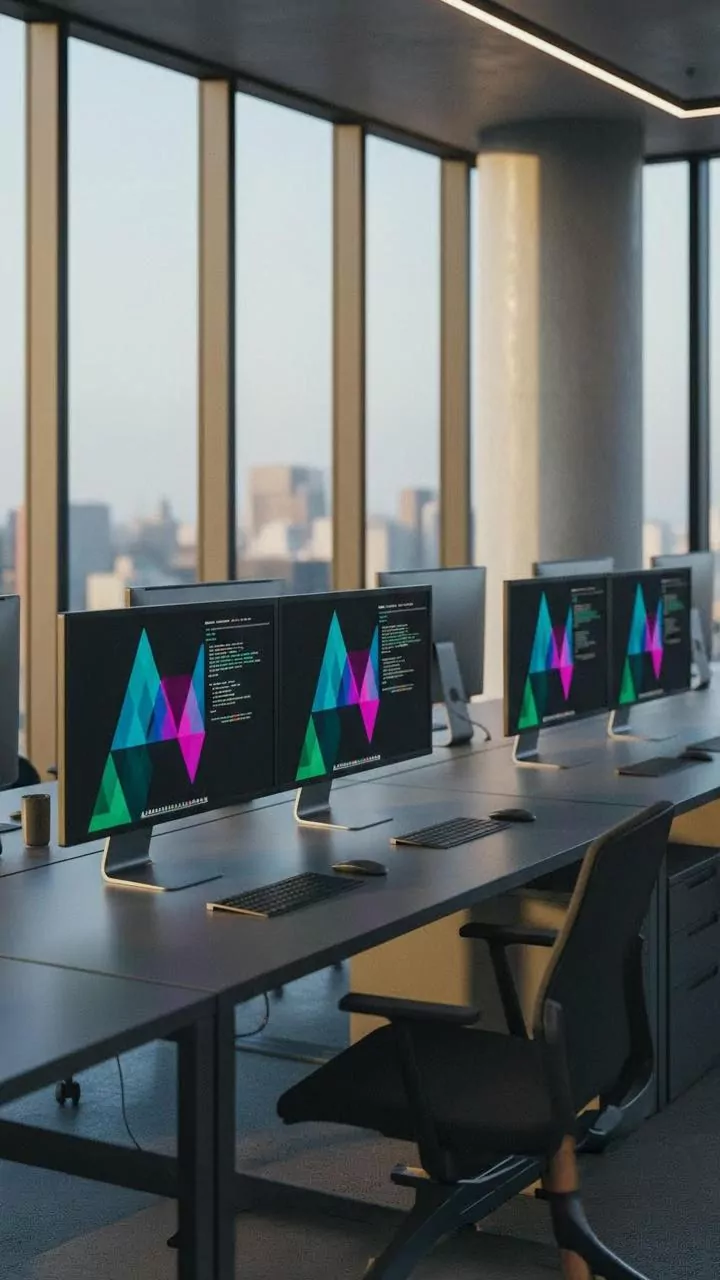
Enter SeaNav, a cutting-edge platform developed by researchers at the Indian Institute of Technology (IIT) Madras's Department of Ocean Engineering. SeaNav is a real-time 'digital twin' simulator, designed to create a highly realistic virtual maritime world. Think of it as an incredibly advanced video game for artificial intelligence. Instead of testing an AI captain on the open water, developers can put it through its paces within SeaNav's controlled environment. This digital sandbox allows for the rigorous testing, validation, and training of autonomous navigation systems without any real-world risk. The project, led by Associate Professor Dr. Suresh Rajendran, represents a major leap forward in making autonomous shipping a viable reality.
How It Replicates the High Seas
The power of SeaNav lies in its fidelity. Built on the popular Unity3D engine, the platform doesn't just simulate a flat blue expanse. It creates a dynamic digital twin of the ocean, complete with realistic wave patterns, vessel movements, and complex navigation environments. Developers can simulate a wide range of scenarios, from routine voyages in calm weather to crowded shipping lanes and unexpected emergencies. The system integrates key technologies like AI, advanced sensor fusion, and virtual reality to mimic the data an actual ship would receive from its instruments. To ensure the simulation's accuracy, the IIT Madras team calibrated SeaNav using a benchmark model of a 320-meter-long tanker, allowing virtual results to closely mirror the behaviour of a real commercial vessel.
Why Virtual Testing is a Game-Changer
The primary benefit of a platform like SeaNav is the ability to test for failure safely. An autonomous system can be subjected to thousands of hours of virtual sailing and countless challenging scenarios to see how it performs. Developers can test its ability to obey maritime 'rules of the road' (COLREGs), avoid collisions, and react to equipment malfunctions or sudden changes in weather—all without endangering a single real vessel or crew member. This virtual training ground is crucial for building trust in autonomous technology. Before any shipping company or regulatory body approves a self-driving ship, they need to be confident it can handle the worst-case scenarios. SeaNav provides the environment to build that confidence.
A Boost for India's Maritime Vision
SeaNav is more than just an academic project; it aligns directly with India's strategic goals. The platform supports the government's 'Sagarmala Programme' and 'Maritime India Vision 2030', both of which emphasize the need for smart ports and digital technologies to modernize the nation's maritime sector. The immediate applications are clear: SeaNav can be used to develop and refine AI-assisted navigation systems that could soon enhance safety at major Indian ports, including Chennai, Mumbai, Visakhapatnam, and Kochi. Beyond commercial shipping, the technology's multi-vessel simulation capabilities make it valuable for coastal surveillance, search-and rescue planning, and maritime defence applications.