







What Are the New Warning Symbols?
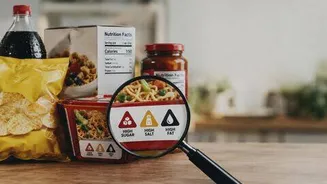
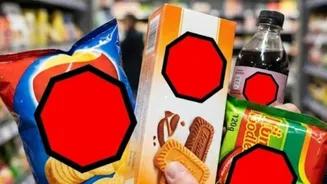
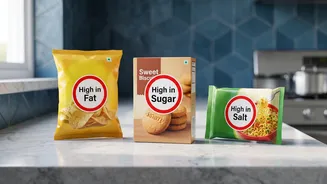
Soon, you may see a distinct red hexagon on the front of many packaged food items. Following extensive debate and direction from the Supreme Court, the FSSAI has proposed these symbols as a form of Front-of-Pack Labelling (FOPL). The design is simple
and direct: a red hexagon on a white background, placed on the top left of the package. Inside the hexagon, text will clearly state if the product is “HIGH IN SUGAR,” “HIGH IN FAT,” or “HIGH IN SALT.” If a product exceeds the threshold for even one of these nutrients, it will carry the warning. This single-phase rollout is a shift from an earlier, more lenient proposal, reflecting a stronger stance on public health.
Why India Needs These Warning Labels
For years, shoppers have had to decipher complex nutritional tables on the back of packages, a task that is difficult during a quick grocery trip. These new front-of-pack labels are designed to reduce that burden and provide an at-a-glance warning. The move comes as India faces a significant rise in non-communicable diseases (NCDs) like diabetes, hypertension, and heart conditions, which are closely linked to diets high in processed foods. Studies have shown that the consumption of sugar, salt, and fat in India has increased significantly over the past two decades. The Supreme Court has underscored that the right to health is a constitutional one, pushing for clearer labelling to help citizens make informed choices.
Decoding the Warnings: Fat, Sugar, and Salt
The warnings target three key nutrients of concern. The thresholds for what constitutes 'high' levels are based on the 2024 Dietary Guidelines for Indians from the Indian Council of Medical Research-National Institute of Nutrition (ICMR-NIN). The labels specifically refer to 'added' sugar and 'added' fat, distinguishing them from sugars and fats that occur naturally in ingredients like fruit or milk. This is crucial because it's the excess added components in ultra-processed foods that are a primary health concern. Additionally, products containing non-caloric or artificial sweeteners will be required to display a separate warning on the front, stating, 'CONTAINS NON CALORIC SWEETENER'. This ensures transparency about all types of sweeteners used.
The Journey to Your Grocery Shelf
The road to implementing these labels has been long. The FSSAI's latest proposal, submitted to the Supreme Court in September 2026, outlines a clear path forward. The regulator has requested about four months to finalize the draft regulations, which will then be open for public and stakeholder comments for 60 days. After the rules are officially notified, food companies will have a voluntary implementation period of 365 days to update their packaging. This transition period is meant to prevent commercial losses from existing packaging stock. The food industry has raised some concerns, particularly that the red colour could be confused with the existing red dot for non-vegetarian food, but FSSAI has stated the hexagonal design is distinct.
How to Use These Labels for Better Health
When these labels appear, they are not a ban on any food. Instead, they are a tool to help you make more informed decisions. For example, when choosing between two brands of breakfast cereal or biscuits, a quick glance can tell you if one is significantly higher in sugar or fat. This doesn't mean you can never eat a product with a warning label, but it encourages moderation and awareness. The goal is to shift consumer preference and, in turn, encourage food manufacturers to reformulate their products to be healthier. Similar labelling systems in other countries have successfully led to reductions in the purchase of unhealthy items and prompted companies to lower sugar and salt content. By paying attention to these symbols, you can take a simple but powerful step towards managing your and your family's health.