



A Digital Nutrition Label
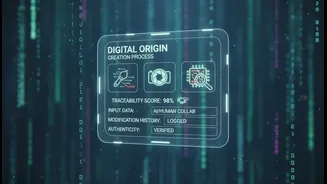
Think of Content Credentials as a 'digital nutrition label' for photos, videos, audio files, and even documents. It’s a secure, tamper-evident record that gets attached to a file when it's created and stays with it as it’s edited and shared. This technology
is the result of a massive industry collaboration called the Coalition for Content Provenance and Authenticity (C2PA), which includes major players like Adobe, Microsoft, Google, and the BBC. Their goal isn’t to build a 'fake detector' but to create a transparent, verifiable history—or provenance—for digital media, allowing anyone to see where a file came from and what has happened to it since its creation. The information is cryptographically signed, meaning if someone tries to alter the file or its history without using a compliant tool, the digital seal is broken and the tampering becomes visible.
How the Journey Is Tracked
The process begins at the point of creation. When a photographer uses a C2PA-enabled camera or an artist uses a compatible version of a program like Adobe Photoshop, they can opt-in to attach Content Credentials. This initial credential acts as a birth certificate, noting the device or software used and the time of creation. From there, every time the file is opened and modified in another compliant tool, a new layer of information is added to the history. For example, a credential might show that a photo was captured on a Sony camera, had its colours adjusted in Adobe Lightroom, and then had text added in a different program. If a generative AI tool was used, that information is also recorded in the file’s history. This creates an additive chain of custody that provides a detailed log of the file's journey.
What the Label Actually Tells You
When you inspect a file's Content Credentials, you get specific, factual information. You can see who created the content, though creators can choose to remain anonymous for privacy. You can see the tool used for creation, distinguishing between a photo from a camera and an image from an AI generator. You can also see a summary of subsequent edits, like changes to colour, cropping, or the combining of multiple images. The system is designed to be an open standard, meaning anyone can check the credentials for free using tools like the 'Verify' website. This transparency is a significant step forward, giving consumers, journalists, and researchers a baseline of facts about a piece of media they might otherwise have to take at face value.
The Critical Honesty Gap
Herein lies the most important distinction: Content Credentials verify provenance, not truth. They make no value judgment on whether the content is good, bad, or honest. A photograph can have a perfect, unbroken Content Credential showing it was taken by a real photographer on a real camera, but that doesn't tell you if the scene was staged. An image of a protest could be authentically captured, but used with a misleading caption to suggest it happened in a different city or year. Likewise, an image can be clearly marked as 'created with AI', but still be designed to provoke an unwarranted emotional reaction or spread a false narrative. The technology proves what the asset is and where it has been; it cannot interpret the intent behind its creation or use. The final, crucial step of judging honesty and context still falls to the person viewing it.
A Tool, Not a Silver Bullet
Content Credentials face practical hurdles. The metadata can be deliberately or unintentionally stripped from a file. Simply taking a screenshot of an AI-generated image creates a brand-new file with no history. Many social media platforms and messaging apps historically compress images and strip out metadata to save space, breaking the chain of provenance. Furthermore, with billions of digital files already in existence without credentials, the absence of a label doesn't mean a file is fake. Proponents argue that as adoption grows, these issues will lessen. But for now, the technology is best seen as a powerful tool for adding a layer of trust and accountability, not as a cure-all for misinformation. It provides more information to work with, but it does not remove the need for critical thinking.