

An International Team for a Critical Task
The duo at the center of this milestone represents the collaborative spirit of modern space exploration. Dr. Anil Menon, a NASA astronaut of Indian and Ukrainian heritage, has a decorated background as a flight surgeon for both NASA and SpaceX. He was
SpaceX's first flight surgeon, helping launch the company's first human spaceflight, and is an experienced emergency physician who has served in conflict zones and disaster areas. Working alongside him was Sophie Adenot, an astronaut with the European Space Agency (ESA). A Colonel in the French Air and Space Force and an accomplished helicopter test pilot, Adenot became the first French woman to perform a spacewalk during a previous excursion on August 18. This recent spacewalk was the third for Menon and the second for Adenot.
The Mission: A High-Stakes Antenna Swap
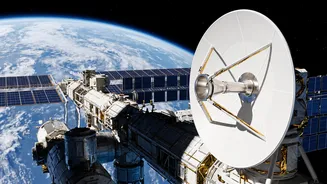
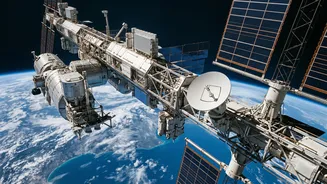
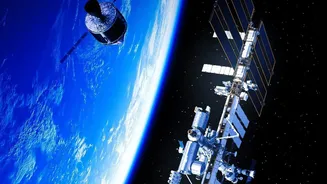
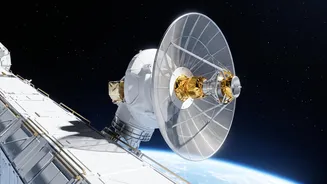
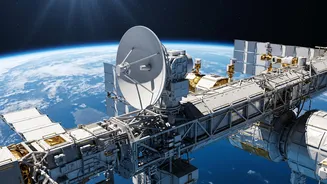
Their primary goal was to install a replacement Space-to-Ground Ku-band antenna. This piece of hardware is not just an accessory; it is a critical communications link that enables high-speed data transmission between the ISS and Mission Control in Houston. The original antenna had failed, prompting a two-part repair mission. On August 18, Menon and Adenot successfully removed the faulty unit but ran out of time to install its replacement. This follow-up spacewalk, officially designated as the 283rd in support of station assembly and maintenance, was dedicated to finishing the job. The astronauts carefully maneuvered the new antenna into place on the station's Z1 truss segment, making the precise connections needed for activation.
A Choreographed Spacewalk
Over the course of six and a half hours, Menon and Adenot worked methodically in the harsh vacuum of space. The operation was a complex ballet of human skill and robotic assistance. From inside the station, NASA astronauts Jack Hathaway and Jessica Meir provided crucial support. Hathaway operated the Canadarm2 robotic arm, which carefully guided Menon toward the worksite. Meanwhile, Adenot remained tethered to the truss, preparing the area and assisting with the intricate installation. After bolting the new antenna in place, the team moved the failed unit to a long-term storage platform, clearing the way for the station's upgraded capabilities. Initial checks from the ground confirmed that the new antenna was receiving power and transmitting data successfully.
Why This Upgrade Matters
This high-speed antenna is essential for the future of the ISS and beyond. As the orbiting laboratory hosts increasingly complex scientific experiments, the volume of data generated grows exponentially. Doubling the station's data downlink rate from 300 Mbps to 600 Mbps allows scientists on Earth to receive more high-definition video and research data faster than ever before. This enhanced communication pipeline is not just about convenience; it's about enabling a new generation of science that requires massive data transfer. Furthermore, these upgrades serve as a vital testbed for technologies that will be used for future missions, including NASA's Artemis program to establish a sustainable presence on the Moon and eventual missions to Mars. A robust and high-speed communication network is the backbone of deep-space exploration.