

A Messenger to a Mysterious World
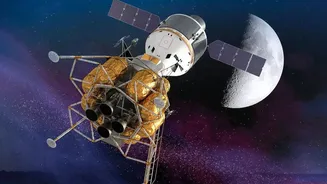
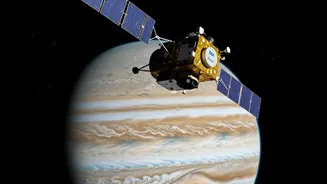
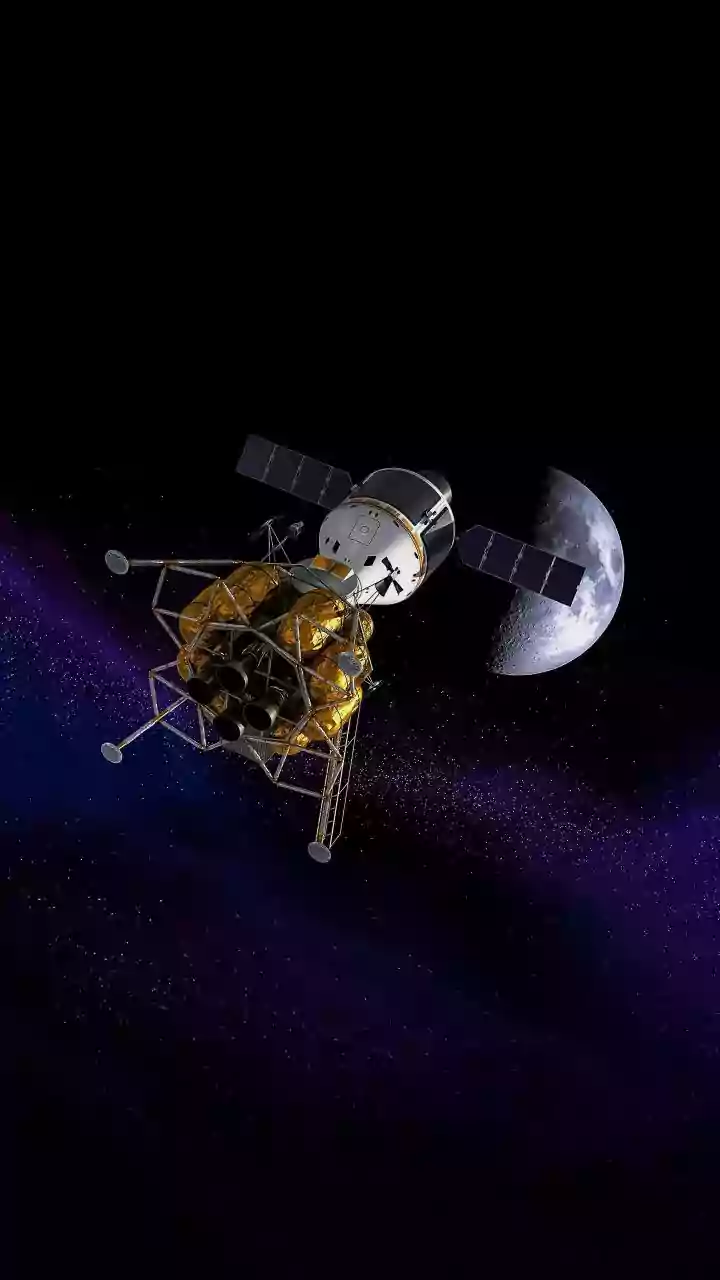
Launched in October 2024, the Europa Clipper spacecraft is undertaking a long and complex journey spanning 2.9 billion kilometers to reach the Jupiter system. Its arrival is anticipated in April 2030. Unlike a direct orbit around the moon itself—which
would expose it to Jupiter's fatally intense radiation—Clipper will enter a long, looping orbit around the gas giant. This clever trajectory will allow it to perform dozens of close flybys of Europa, some as low as 25 kilometers above the surface, to gather data before retreating to safety. Over several years, these repeated passes will allow the spacecraft to study nearly the entire moon in detail, piecing together a global picture of this potential ocean world.
The Allure of a Hidden Ocean
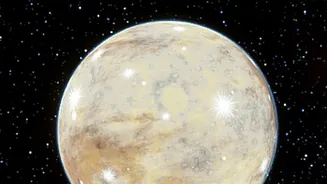
So, why Europa? For astrobiologists, the moon is one of the most promising places to search for life beyond Earth. Decades of observations, most notably from the Galileo spacecraft, provide strong evidence that a global ocean of salty liquid water is churning beneath an ice shell that could be anywhere from 3 to 40 kilometers thick. This ocean may contain more than twice the amount of water found in all of Earth's oceans combined. Scientists believe three key ingredients are necessary for life as we know it: liquid water, essential chemical elements, and an energy source. Europa appears to have all three. Its vast ocean provides the water, while interactions with a rocky seafloor could supply chemical nutrients, and tidal forces from Jupiter's immense gravity could generate enough heat to keep the ocean liquid and possibly power hydrothermal vents, similar to those found in Earth's deepest, darkest seas.
Searching for the Ingredients of Life
It’s important to note that Europa Clipper is not a life-detection mission; it doesn't carry instruments designed to find living organisms. Instead, its primary objective is to determine if Europa has the potential for life. To do this, it carries a powerful suite of nine science instruments. An ice-penetrating radar called REASON will map the ice shell's thickness and search for pockets of water or even the ocean itself. Spectrometers will analyze the chemical composition of the surface, looking for salts and organic molecules that might have bubbled up from below. Magnetometers will measure the magnetic field around Europa, which can confirm the existence, depth, and saltiness of the ocean. By studying these factors, scientists can build a comprehensive model of Europa as a habitable system.
A Mirror to Our Own Deep Seas
The exploration of Europa holds profound implications for how we understand life on our own planet. The discovery of hydrothermal vents on Earth's ocean floors in 1979 revolutionized biology, revealing thriving ecosystems that exist without sunlight, drawing energy from chemical reactions fueled by heat from the planet's interior. This discovery opened our minds to the possibility that life could originate and survive in similar extreme environments elsewhere. Europa's ocean, shielded from the sun by a thick layer of ice, could be a perfect analog. Studying the chemistry and geology of Europa will provide invaluable data for scientists researching Earth's own deep-sea microbial life and the origins of life itself. A better understanding of Europa’s potential habitats will help scientists on Earth refine their search for life in our planet’s most inaccessible environments.
Beyond Europa: The Bigger Picture
The findings from Europa Clipper will extend far beyond just one moon. They will inform our entire strategy for searching for life on other ocean worlds in our solar system, such as Saturn's moons Enceladus and Titan, which also show evidence of subsurface oceans. By characterizing Europa's habitability, the mission will provide a crucial roadmap for future exploration, potentially paving the way for a future lander that could one day drill through the ice. This mission represents a pivotal step in moving from simply asking "Are we alone?" to actively gathering the specific data needed to answer that question. It shifts the focus from a broad search for any habitable planet to a detailed investigation of a world right in our cosmic backyard that could have the right conditions for life, right now.