



The Challenge of a Cloudy Day
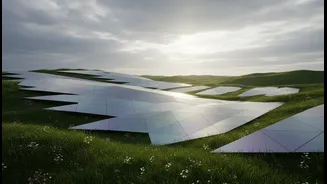
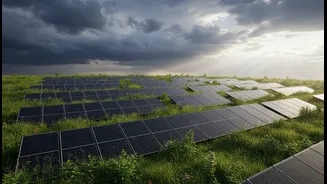
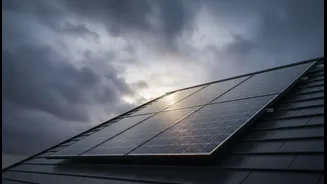
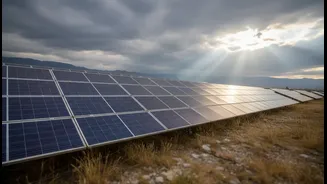
Traditional solar panels have a clear preference: direct, intense sunlight. Their entire structure is built to capture photons from the sun and convert them into electricity. On a bright, clear day, they perform at their peak. But when clouds roll in,
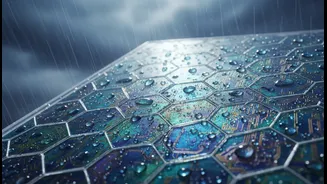
their output drops significantly. Even on an overcast day, a conventional solar panel might only produce 10% to 25% of its rated capacity. This happens because clouds scatter sunlight, creating what's known as diffuse light. While standard panels can capture some of this, they are far less efficient at it, making them less reliable in climates with frequent cloud cover, such as during India's monsoon season.
A New Generation of Materials
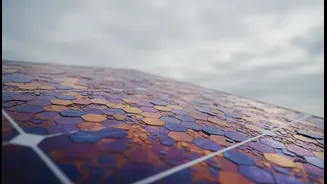
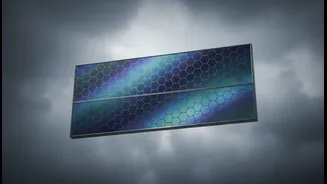
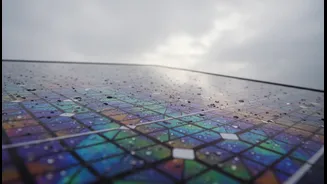
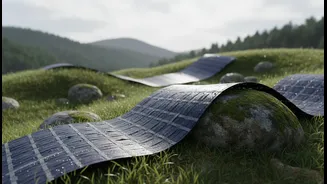
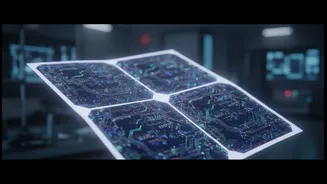
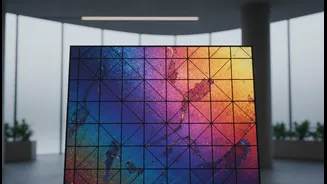
The secret to unlocking low-light solar power lies in moving beyond traditional silicon. Scientists are developing 'solar sheets' using new materials that are much better at harvesting electricity from a wider range of light conditions. The two most promising stars of this new generation are Perovskite solar cells (PSCs) and Organic Photovoltaics (OPVs). Unlike rigid silicon panels, these materials can often be formulated into inks and printed onto flexible, lightweight sheets. This not only makes them adaptable for different surfaces but also changes the fundamental way they interact with light.
Capturing a Broader Spectrum of Light
So how do these materials work their magic on a gloomy day? It’s all about the spectrum. Sunlight contains more than just the bright, visible light we see. Perovskite and organic cells are specifically engineered to be highly sensitive to a broader range of light wavelengths. They can efficiently absorb the blue and red light that still penetrates through clouds. Some advanced organic cells are so effective in low-light that they can even generate power from ambient indoor lighting, producing efficiencies of over 20% under a standard lamp. This exceptional ability to convert diffuse and low-intensity light means they keep generating a useful amount of electricity long after traditional panels have slowed down.
Flexible Sheets for New Possibilities
The term 'solar sheets' isn't just a gimmick. Because materials like OPVs are essentially carbon-based polymers, they can be printed onto thin, flexible films using roll-to-roll manufacturing, similar to printing a newspaper. This opens up a world of applications that are impossible for heavy, rigid silicon panels. Imagine solar-powered window films that are semi-transparent, electronic devices with integrated power sources, or temporary power covers for disaster relief. These lightweight sheets could be integrated into building facades, vehicle roofs, or even clothing, turning almost any surface into a power generator.
A Game-Changer for India's Energy Goals
For a country like India, with ambitious solar targets but also a pronounced monsoon season, this technology is particularly revolutionary. The ability to generate consistent power during cloudy and rainy months addresses a key vulnerability in a solar-dependent grid. While a traditional system's output drops sharply during the monsoon, advanced solar sheets could provide a more stable and predictable power supply year-round. This makes solar a more viable and resilient option for critical infrastructure, off-grid rural communities, and businesses in high-rainfall states, ensuring that the nation's push for green energy doesn't have to pause for bad weather.
The Road Ahead
Despite the immense promise, these advanced solar sheets are not yet everywhere. The main hurdles are durability and scale. Perovskite cells, while highly efficient, have historically struggled with degradation when exposed to moisture and heat—though recent research is rapidly overcoming these issues. Organic photovoltaics are more stable but currently offer lower overall efficiency than perovskites or silicon in direct sun. As researchers continue to refine the chemistry and manufacturing processes, the cost will come down and lifespans will increase, paving the way for these technologies to move from the lab to rooftops and beyond.