






A Moon by Any Other Name
First, let's clear up the name. The Strawberry Moon has nothing to do with its colour. The term originates with the Algonquin tribes of North America, who named June's full moon after the short season for harvesting wild strawberries. In Europe, it was
sometimes called the Rose Moon or Honey Moon, tying it to the sights and sweetness of early summer. This year, the moon reached its peak illumination early in the morning on June 30 in India, but the best time for viewing was moonrise on the evening of June 29. Because it occurs near the summer solstice, it takes a uniquely low path across the sky, often appearing larger and more golden near the horizon due to atmospheric effects.
The Great Indian Cloud Cover
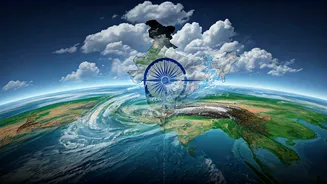
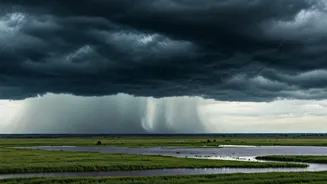
Here's the reality check. Late June is peak monsoon season for much of India. While astronomy offers a predictable calendar of celestial events, meteorology is a far more immediate and disruptive force. This year, the monsoon's advance has been particularly sluggish and erratic, but by the final week of June, cloud cover became a significant issue. Satellite imagery from mid-to-late June showed a worrying lack of the dense, rain-bearing cloud systems typical for this time of year, indicating a stalled monsoon. However, for skywatchers, even a weak or delayed monsoon brings clouds. Cities like Mumbai were forecast to have thunderstorms and heavy rain, with a 90% chance of precipitation at night, making any glimpse of the moon virtually impossible. Similar cloudy and rainy conditions were predicted across vast swathes of the country where the monsoon had made its presence felt.
A Tale of Two Skies
Visibility across India was a game of meteorological roulette. The entire western coast, from Kerala up through Goa and Maharashtra, was firmly in the monsoon's grip, with heavy cloud and rain obscuring the sky. The same was true for the northeastern states, which were forecast to receive heavy to very heavy rainfall. Hopefuls in Delhi faced hot and humid conditions with a forecast for thunderstorms. The chances of a clear view were slim. The best prospects, as is often the case, were in regions where the monsoon arrives later or is less intense. Parts of the arid northwest, like Rajasthan, or high-altitude locations in the Himalayas, such as Ladakh or Spiti Valley, may have offered clearer skies. Yet for the vast majority of the population living in the monsoon's path, the night of the Strawberry Moon was destined to be a cloudy one.
The View from the Ground
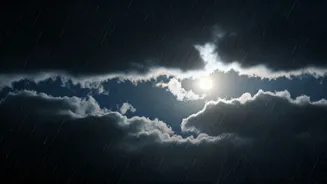
Social media feeds, usually flooded with stunning lunar photography after such an event, told a different story this year. While there were pockets of success, many posts from across India expressed a familiar frustration: endless clouds. Hopeful photographers from Mumbai to Kolkata shared images of overcast skies, their plans thwarted by the weather. The collective digital sigh was a testament to the monsoon's power to overshadow even the most anticipated celestial moments. It's a classic Indian trade-off: the life-giving rains that the country desperately needs are the same ones that block our view of the cosmos. Every year, skywatchers hope for a lucky break in the clouds, a brief window to witness events like the Strawberry Moon, but nature often has other plans.
More Than Just a Spectacle
For those who missed the view, the Strawberry Moon still offers a moment for reflection. Its spiritual meaning across many cultures is tied to abundance, gratitude, and seeing the 'fruits of your labour' ripen. Coming near the summer solstice, it's a marker of peak natural energy. Perhaps the lesson this year wasn't about seeing the moon itself, but about acknowledging the bigger picture. The very clouds that blocked the view were part of a much larger, more critical natural event for the subcontinent: the monsoon. While a golden moon on the horizon is a beautiful sight, the arrival of rain after a scorching summer is a far more vital spectacle for millions.