




A Dish Forged in Fire and Conquest
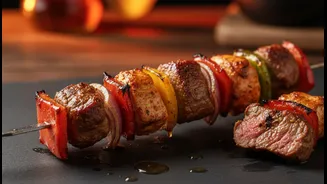
The kebab's journey to India is a tale of warriors and kings. Its origins trace back to Turkish and Persian soldiers who grilled meat on their swords over open fires. This practical method of cooking arrived in India with the armies of the Delhi Sultanate
and, later, the Mughals. What started as simple, rustic fare for soldiers on the move was destined for a grand transformation. In the royal kitchens of the Mughal emperors, the kebab was elevated from a mere meal to an art form. Emperors like Akbar and Jahangir, known for their lavish tastes, patronised chefs who developed complex marinades using yogurt, rare spices, and ghee, forever changing the destiny of the kebab in India.
The Legend of the Toothless Nawab
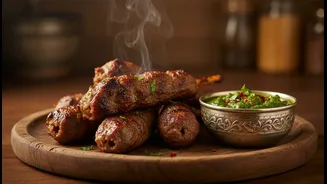
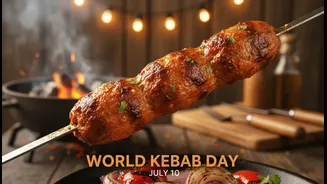
No story of Indian kebabs is complete without the legend of the Galouti Kebab. The tale comes from 18th-century Lucknow, where the ruling Nawab, Asaf-ud-Daula, was an avid food connoisseur. In his old age, the Nawab lost his teeth but not his appetite for rich, meaty delicacies. He issued a challenge to his royal chefs: create a kebab so soft it would require no chewing. The result was the Galouti Kebab, a masterpiece of culinary innovation. The name itself, derived from 'gala' meaning throat, describes a kebab so tender it was meant to melt in the mouth. The secret lay in finely mincing the meat and using raw papaya as a natural tenderiser, creating a texture that was silky, smooth, and unforgettable.
A Kebab for Every Kingdom
As the influence of the Mughals spread, the kebab travelled across the subcontinent, with each region adding its own unique signature. In Lucknow's Awadhi kitchens, refinement was key, leading to delicate creations like the Kakori Kebab, another melt-in-your-mouth marvel born from a nobleman's desire for the softest seekh kebab. In Hyderabad, the land of the Nizams, kebabs became spicier and more robust, with dishes like the Shikampuri Kebab featuring a flavourful filling. The North-West frontier and Punjab gave us the smoky, hearty flavours of the tandoor with the iconic Seekh Kebab and the flat, rustic Chapli Kebab. Meanwhile, southern and coastal regions adapted the form using local seafood and spices like curry leaves and coconut. This incredible diversity showcases India's true genius: the ability to adopt, adapt, and ultimately, perfect.
From Royal Courts to Roadside Stalls
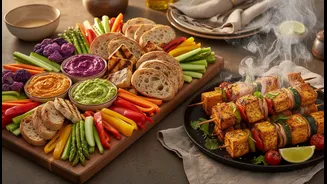
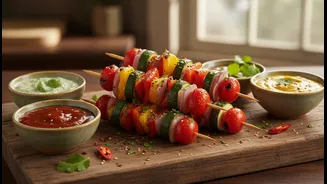
While born in royal kitchens, the kebab found its true home in the hearts and streets of India. Legendary establishments like Tunday Kababi in Lucknow, founded in 1905 by Haji Murad Ali, a one-armed culinary genius, brought the royal Galouti Kebab to the common person. Today, kebabs are a democratic delight. They are enjoyed in the bustling lanes of Old Delhi, at celebratory dinners, and in fine-dining restaurants across the country. The evolution continues, with vegetarian versions made from paneer, dahi, and soya gaining immense popularity, proving the kebab's versatile and ever-changing nature. It’s a dish that has moved with the times while holding onto its rich past.