





A Seat at the Lunar Table: The Artemis Accords
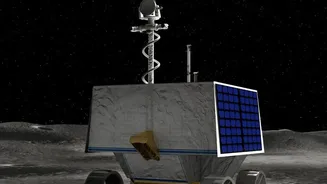
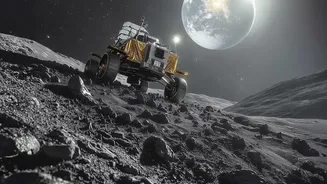
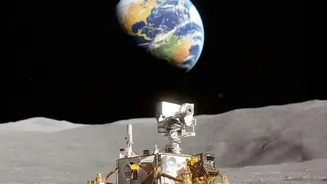
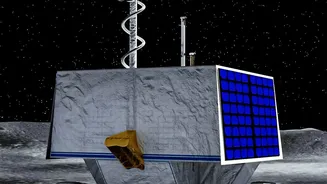
One of the most significant recent developments is India's decision to join the Artemis Accords. These are a set of principles led by the United States to guide cooperation in space exploration, particularly for missions to the Moon and beyond. By signing
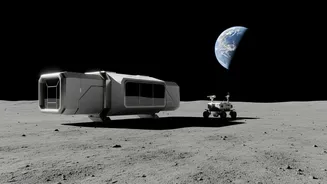
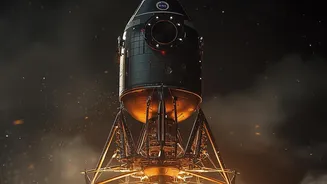
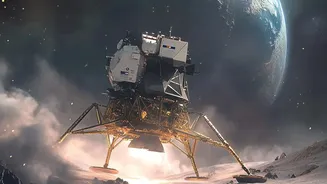
on, India has moved from a stance of independent exploration to one of collaborative engagement, ensuring it is not technologically isolated. This is more than a symbolic gesture; it aligns India with a global framework for peaceful and transparent space activity. More concretely, this partnership provides ISRO with access to valuable data and best practices from NASA's Artemis program, which aims to establish a sustainable human presence on the Moon. The learnings from missions like Artemis II, the first crewed lunar flight in over 50 years, will directly benefit India's own ambitious Gaganyaan human spaceflight program. In early August 2026, this partnership deepened significantly when NASA formally invited ISRO to join its planned Moon Base program, an ambitious effort to build a permanent outpost near the lunar south pole. This invitation builds on the groundwork laid by the Accords and recognizes India's proven capabilities, demonstrated by the successful Chandrayaan-3 landing in the same lunar region.
NISAR: A Joint Eye on Planet Earth
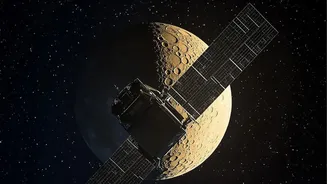
Perhaps the most concrete example of the Indo-US space partnership is the NISAR (NASA-ISRO Synthetic Aperture Radar) mission. This state-of-the-art Earth observation satellite is a true joint effort, featuring an L-band radar from NASA and an S-band radar from ISRO. Launched in mid-2025, NISAR is designed to monitor our planet's complex processes with unprecedented detail, scanning nearly all of Earth's land and ice surfaces twice every 12 days. In July 2026, provisional data from the satellite was made publicly available, marking a major milestone. The mission provides crucial data for managing natural disasters like earthquakes and landslides, monitoring climate change by tracking glaciers and ecosystems, and supporting agriculture. For India, a country highly vulnerable to climate shifts and geological events, NISAR's insights are invaluable. The satellite was launched from ISRO's own Satish Dhawan Space Centre, a testament to India's integral role in the mission from start to finish.
Human Spaceflight and the Commercial Frontier
The collaboration extends to human spaceflight as well. In a landmark moment, Indian astronaut Shubhanshu Shukla flew to the International Space Station (ISS) in mid-2025 as part of a privately operated mission. This mission, facilitated by NASA, was designed to provide crucial experience for India's upcoming Gaganyaan missions. This reflects another major trend at NASA: the increasing reliance on commercial partners like SpaceX for routine operations, such as transporting astronauts to the ISS. This model of public-private partnership is something India's own burgeoning private space sector is watching closely. As companies like Axiom Space build commercial modules for the ISS, and NASA fosters a new economy in low-Earth orbit, it creates a template and potential opportunities for Indian startups to participate in the global space supply chain. The invitation to join the Moon Base could further accelerate opportunities for India's private space ecosystem, which could contribute engineering, technology, and cost-effective solutions to the lunar effort.
Beyond the Moon: Mars and Shared Ambitions
While the Moon is the current focus, both NASA and ISRO have their sights set on Mars. NASA is deep into planning its ambitious Mars Sample Return mission, a complex endeavor to bring Martian rocks and soil back to Earth. India, with its hugely successful Mangalyaan mission, has already proven its capability in interplanetary exploration. The Artemis Accords also cover future missions to Mars, laying the groundwork for potential collaboration on this front as well. ISRO has spoken of its long-term goal for a Mars lander and even a mission to bring back samples. As both nations push the boundaries of robotic and, eventually, human exploration of the Red Planet, the cooperative framework being built today around the Moon will be essential. The shared principles of data sharing and interoperability will prevent a duplication of efforts and accelerate humanity's collective journey into the solar system.