







What Are Critical Minerals?
Critical minerals are elements essential for modern technologies, economic development, and national security, but whose supply chains are vulnerable to disruption. In 2023, India identified a list of 30 such minerals, including lithium, cobalt, nickel,
graphite, and rare earth elements. These are the building blocks of everything from electric vehicle (EV) batteries and solar panels to semiconductors and defence equipment. With limited domestic reserves of key minerals like lithium and cobalt, India relies heavily on imports, exposing it to price volatility and geopolitical risks. Securing a stable supply is therefore not just an economic goal but a strategic imperative for achieving 'Atmanirbhar Bharat' (self-reliant India).
A Primer on Battery Chemistry
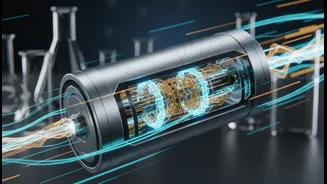
At its heart, a lithium-ion battery—the kind in your phone and in an EV—is like a sophisticated mineral sandwich. It has two electrodes: a cathode (positive) and an anode (negative), separated by a liquid electrolyte. When you charge the battery, lithium ions travel from the cathode to the anode. When you use it, they travel back, releasing energy. The cathode is where many critical minerals come into play. It's typically a mix of lithium with other metals like cobalt, nickel, and manganese, which determine the battery's performance, capacity, and lifespan. The anode is usually graphite. Recycling aims to break down spent batteries and recover these valuable materials, turning waste into a resource.
India's E-Waste Challenge as an Opportunity
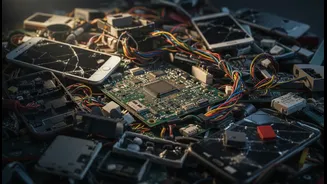
India is the world's third-largest producer of electronic waste (e-waste), generating over 3.2 million tonnes annually. A significant portion of this is spent batteries. Historically, most of this waste has been handled by the informal sector, where unsafe methods lead to pollution and low recovery rates of valuable materials. However, this mountain of e-waste is increasingly viewed as an "urban mine." A single tonne of e-waste can contain more gold than 17 tonnes of raw ore. Similarly, spent batteries are a rich source of cobalt, lithium, and nickel. The government's push for formalisation, through policies like the Battery Waste Management Rules, is designed to transform this environmental hazard into a strategic economic asset.
Process Engineering: How Recycling Works
Once collected and sorted, batteries undergo a multi-step recycling process. There are two primary engineering approaches: pyrometallurgy and hydrometallurgy. Pyrometallurgy is a heat-based process. Batteries are smelted at very high temperatures (over 1200°C) to burn away plastics and separate metals into an alloy. While effective for recovering cobalt and nickel, it is energy-intensive and fails to recover lithium, which is lost in the slag. Hydrometallurgy is a chemical process. After shredding the batteries to create a powder called 'black mass', acids and other liquids are used to selectively dissolve and precipitate the individual metals. This method has higher recovery rates for more elements, including lithium (over 95% for key metals), consumes less energy, and is considered more environmentally friendly, making it the preferred route for modern lithium-ion battery recycling.
The Policy Push for a Circular Economy
The Indian government has created a strong policy framework to build a domestic recycling ecosystem. The Battery Waste Management Rules, updated through 2026, are based on the principle of Extended Producer Responsibility (EPR). This makes producers and importers financially and logistically responsible for collecting and recycling their products at the end of their life. The rules mandate strict recovery targets for specific minerals, such as 70% for lithium and 90% for cobalt. Further boosting this is the National Critical Mineral Mission, which includes a ₹1,500 crore incentive scheme to promote recycling capacity. Recent reports show that commitments under this scheme have already far surpassed initial targets, indicating strong industry momentum.
Challenges on the Road Ahead
Despite the progress, significant hurdles remain. A key challenge is the logistics of waste collection; many batteries are still improperly discarded or enter the informal sector. Building out the formal collection and sorting infrastructure across a vast country is a major task. The high initial cost of setting up advanced hydrometallurgical plants is another barrier. While policy is in place, consistent enforcement and bridging the gap between regulations and on-ground implementation are critical for success. Success will require sustained collaboration between the government, industry, and consumers to create an efficient and truly circular economy.