





A Celestial Double Feature
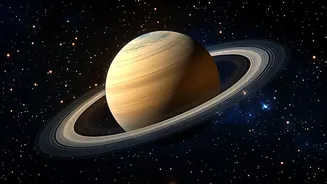
This autumn is a particularly special time for sky-watchers in India. Both Jupiter and Saturn are putting on a show, and you have a front-row seat. Saturn reaches its annual opposition on October 4, 2026. Opposition is an astronomical term meaning the
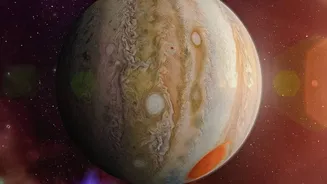
planet is directly opposite the Sun from our viewpoint on Earth. This makes it appear at its biggest and brightest for the year, rising in the east around sunset and remaining visible all night long. The weeks surrounding this date are nearly as good, offering a fantastic window to spot the famous ringed planet. It will be a bright, yellowish point of light, holding steady in the sky. Jupiter, the king of the planets, is also a prominent feature. Though its own opposition isn't until early 2027, it will be a brilliant, white light dominating the pre-dawn eastern sky throughout September and October. You can spot it rising a few hours before the Sun, making it a great target for early risers.
Your Pocket Planetarium
The biggest challenge for any city dweller is light pollution. The constant glow from streetlights, buildings, and traffic can wash out all but the brightest stars. But planets are a different story. Their brightness often allows them to cut through the haze, making them perfect targets for urban astronomy. The easiest way to find them is by turning your smartphone into a powerful celestial guide. Modern stargazing apps use your phone's location and internal sensors to create a real-time map of the sky. Simply point your device upwards, and the app will identify exactly what you're looking at, from constellations to satellites and, most importantly, planets. It’s like having an astronomy expert right there with you, making the vastness of space suddenly accessible and easy to navigate.
The Best Apps for the Job
With dozens of apps available, choosing one can be daunting. Here are a few reliable and user-friendly options popular in India that are perfect for beginners: SkyView Lite (iOS & Android): One of the most intuitive apps available. Its augmented reality (AR) overlay is fantastic. You just point your phone at the sky, and it shows you the names of stars, planets, and constellations in real-time. It’s free and incredibly easy for a first-timer. Star Walk 2 (iOS & Android): Known for its beautiful graphics and polished interface, Star Walk 2 is another excellent choice for beginners. It has a free version with ads that offers a rich visual experience and plenty of information about the celestial bodies you find. Its built-in calendar of astronomical events is also a great feature. * Stellarium Mobile (iOS & Android): For those wanting a bit more detail, Stellarium is a fantastic option. The free version provides a clean, realistic view of the night sky and has a massive catalogue of stars and deep-sky objects. It's widely regarded as one of the best all-around free stargazing tools.
Simple Tips for City Stargazing
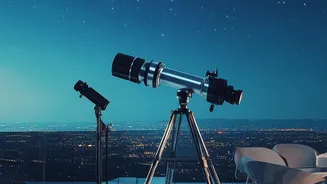
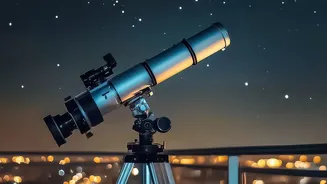
An app will point you in the right direction, but a few extra steps can dramatically improve your viewing experience. First, find the darkest spot you can. A park, a high rooftop, or even a balcony that is shielded from direct streetlights can make a big difference. Turn off any lights in your immediate vicinity. Second, give your eyes time to adapt. It takes at least 20 minutes for your eyes to fully adjust to the darkness, allowing you to see fainter objects. Avoid looking at your bright phone screen during this time; many apps have a red-light mode to help preserve your night vision. Finally, be patient and manage your expectations. While you can easily spot Jupiter and Saturn as bright, star-like points, you will need a telescope to see Saturn’s rings or Jupiter's moons. The thrill, however, comes from successfully finding another world with your own eyes.