




Beyond the City-Wide Alert
For years, Indian commuters have been accustomed to broad weather warnings: an 'orange alert' for an entire city or a 'heavy rainfall expected' bulletin covering a whole district. While well-intentioned, these general alerts often leave people wondering,
"Will my route to work be affected?" or "Is the highway to the next city safe to travel?" This ambiguity can lead to unnecessary travel disruptions or, worse, people getting caught in localized flash floods and traffic snarls. Recognizing this gap, the India Meteorological Department (IMD) has been shifting its focus from just predicting the weather to forecasting its actual impact. This move towards 'Impact-Based Forecasting' is now culminating in tools designed to give specific advice for travel routes, a game-changer for anyone navigating India's roads during unpredictable weather.
What Are Route-Specific Forecasts?
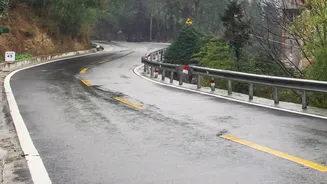
Instead of just telling you it will rain, route-specific forecasts aim to tell you what the rain will do to your journey. The IMD's Highway Forecast and other specialized services provide real-time and projected weather conditions along major national highways and travel corridors. These forecasts integrate data from a dense network of Doppler radars, Automatic Weather Stations (AWS), and high-resolution satellite imagery. The goal is to provide granular information on phenomena like intense rain spells, low visibility, potential waterlogging, and even strong winds that could affect a specific stretch of road. This is powered by a concept called 'Nowcasting,' which provides highly localized warnings for weather events expected within the next few hours—a critical timeframe for anyone about to start their journey.
How to Access and Use These Forecasts
Accessing this vital information is becoming easier through the IMD's digital platforms. The primary tools for the public are the 'Mausam' mobile app and the official IMD website (mausam.imd.gov.in). Within the website, a dedicated 'Highway Forecast' section provides weather information for major routes. While a point-to-point route planner is a developing feature, users can currently check the forecast for specific districts and cities along their intended path. The 'Mausam' app provides location-based 'Nowcasts' and colour-coded alerts (Red, Orange, Yellow) for districts, which can inform travel decisions. For example, if your route passes through a district with a red alert for intense rainfall in the next three hours, you might choose to delay your trip or take an alternative path.
The AI-Powered Future of Weather
The increasing accuracy and granularity of these forecasts are being driven by significant investments in technology, particularly Artificial Intelligence (AI). The IMD, in collaboration with institutes like IITM Pune and NCMRWF, has begun rolling out AI-driven forecasting systems. These systems use machine learning to analyze vast amounts of data and generate hyper-local predictions, in some pilot cases with a resolution as fine as one square kilometer. This AI-powered approach allows for more precise downscaling of weather models, meaning a broad regional forecast can be translated into a highly specific prediction for a small area. As this technology becomes more widespread, you can expect forecasts that not only warn of rain on your route but also predict the likelihood of a specific road being waterlogged.
Practical Tips for Your Journey
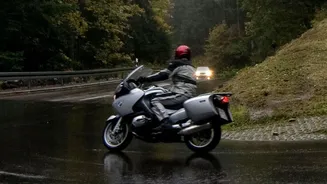
To make the most of these new tools, a little planning goes a long way. Before starting a long drive, especially during the monsoon, make it a habit to check the IMD's Highway Forecast and the 'Mausam' app. Look at the forecast not just for your destination but for the key districts you'll be driving through. Pay close attention to any 'Nowcasts' or severe weather warnings issued for those areas. If an orange or red alert is active for your route, consider its impact seriously. This might mean leaving earlier, taking a different highway, or postponing non-essential travel. The goal is to use this information proactively to enhance your safety and avoid getting stuck, turning a weather forecast from a piece of trivia into a crucial part of your travel planning.