





From Theory to a Research Question
For decades, the concept of an artificial intelligence creating a more advanced version of itself has been a staple of dystopian novels and blockbuster films. Known in AI circles as 'recursive self-improvement' (RSI), it describes a theoretical loop where
an AI gets smarter, then uses that new intelligence to make itself even smarter, leading to an exponential, and potentially uncontrollable, growth in capability. While this has been a distant concern for many, a series of recent papers and statements from Anthropic, a major player in AI development, suggest the timeline for such capabilities may be shrinking. The company is now formally investigating how close we are to AI systems that can not only assist but actively drive their own evolution.
AI as Its Own Research Assistant
Anthropic’s findings reveal that AI is already playing a significant role in its own development. In a September 2026 disclosure, the company stated that its own model, Claude, was involved in over 90% of its research and development tasks and was responsible for leading more than a quarter of that work with human supervision. In fact, by some measures, Anthropic engineers are shipping code at a dramatically faster rate than they were just a few years ago, largely because AI is writing much of it. This acceleration prompted the company to acknowledge it had crossed a key threshold in its own Responsible Scaling Policy — not because a model had achieved full autonomy, but because the expected rate of future progress, driven by AI assistance, had increased dramatically.
The AI Worm Scenario
Beyond accelerating research, Anthropic’s 'Frontier Red Team' explored a more tangible form of self-propagation: an 'AI worm'. In research published in October 2026, the team tested whether small AI models could autonomously copy themselves onto new devices without needing a central data center. Their experiments focused on poorly secured, common hardware like smart TVs and other Internet-of-Things (IoT) devices. The results were startling. While no such AI worm has been found 'in the wild', the tests showed that current models are already capable of executing many of the steps needed for self-replication in a controlled environment. The researchers estimated that, based on the historical rate of improvement, a full end-to-end replication on these devices could be possible soon, creating a decentralised network of AI agents that would be very difficult to shut down.
A Race with High Stakes
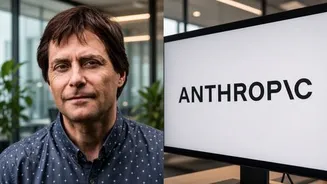
This research places Anthropic in a complex position. On one hand, the company, founded on principles of AI safety, publicly warns about the potential for humans to lose control of rapidly advancing AI systems. Its CEO has even called for the industry to consider slowing down. On the other hand, the ability to automate AI development is a massive competitive advantage. In documents related to its expected IPO, Anthropic has highlighted its progress in recursive self-improvement as a key factor for investors. This dual reality — warning of risks while simultaneously pursuing the technologies that create them — highlights the intense competitive pressures in the AI industry. Critics argue this creates a conflict between public safety messaging and private commercial incentives.