




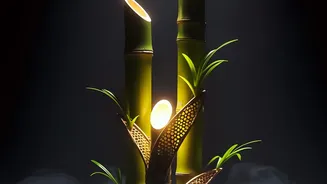
The Dawn of Living Light
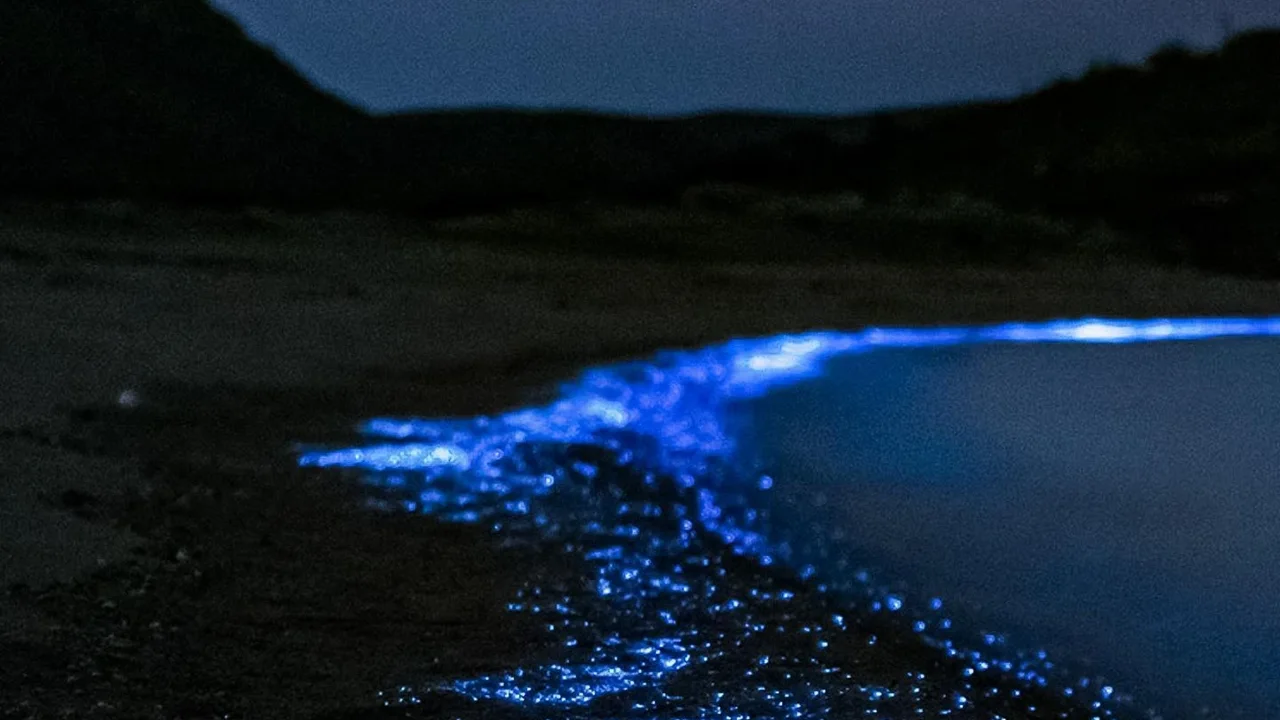
The concept of using living organisms for light, known as bioluminescence, has captivated scientists for decades. Early experiments involved inserting genes from fireflies or jellyfish into plants, but these efforts produced a very faint glow and often
required external chemicals to work. The vision has always been ambitious: to create self-sustaining, living lights that could one day reduce our reliance on the electrical grid. Today, that vision is inching closer to reality, moving from university labs and niche startups into the mainstream, sparked by significant breakthroughs in genetic engineering.
How Science Creates a Glow
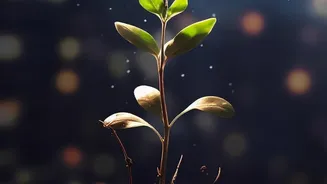
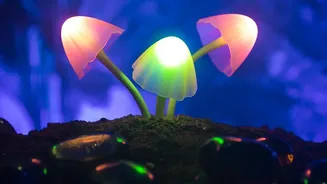
The most successful recent advancements come not from fireflies, but from fungi. Scientists identified the genes responsible for the sustained glow in mushrooms like Neonothopanus nambi. They discovered that the fungal bioluminescence pathway cleverly recycles a molecule that plants already produce: caffeic acid. By inserting a handful of genes from these mushrooms into a plant's DNA, they enable the plant to convert that acid into luciferin, the light-emitting compound, and then create a self-sustaining loop. The plant essentially powers its own glow through its normal metabolic processes. This method is a major improvement because it creates a continuous light that doesn't fade and requires no external chemical assistance.
From Lab to Living Room
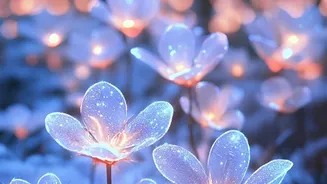
The most prominent example of this technology in action is the Firefly Petunia, developed by the biotechnology company Light Bio. In 2024, it made headlines after gaining approval from the U.S. Department of Agriculture (USDA), making it one of the first commercially available glowing ornamental plants. While you can now buy a petunia that emits a soft, moonlight-like glow for your home, the light is still relatively gentle and best viewed in near-complete darkness. It marks a crucial first step: proving the technology is viable and can be safely brought to market. Researchers in China have also announced similar successes, bioengineering over twenty different species of glowing plants, from orchids to sunflowers, with an eye toward tourism and public parks.
The Promise for Greener Cities
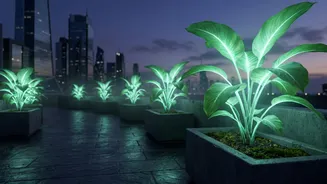
The ultimate goal extends far beyond decorative houseplants. Proponents envision entire avenues lined with bioluminescent trees, acting as self-powered, carbon-capturing streetlights. The potential benefits for municipalities are enormous. Such a solution would drastically cut electricity consumption, which for many cities represents a significant portion of their budget and carbon footprint. Living streetlights would not require a complex grid, could potentially self-repair, and would contribute to urban greenery. Furthermore, the soft, natural light could help reduce the harshness of urban light pollution, which negatively impacts both wildlife and human health.
Hurdles on the Horizon
Despite the excitement, a city lit by glowing trees is still a long way off. The primary challenge is brightness. The glow from current plants is far too dim to replace the safety and visibility provided by modern LED streetlights. Scientists at companies like Light Bio and research institutions like MIT are actively working to increase the light output. Beyond intensity, there are practical considerations of durability, lifespan, and resistance to weather and pests. There is also the significant challenge of public acceptance. While a glowing petunia in a pot is a novelty, deploying genetically modified trees on a massive scale in public spaces will undoubtedly require extensive regulatory review and a broad public conversation about ecological impact and safety.