





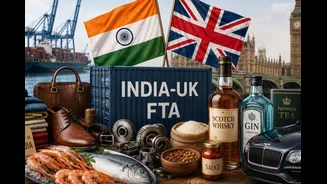


The Big Picture: A Landmark Agreement
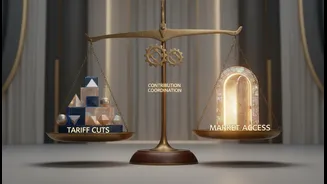
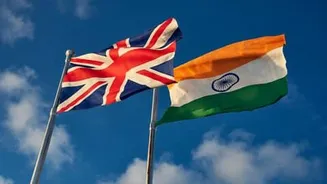
The India-UK Comprehensive Economic and Trade Agreement (CETA) is one of India's most significant trade pacts in recent years. It aims to eliminate or sharply reduce tariffs on a vast array of goods, with the goal of nearly doubling bilateral trade to $100
billion by 2030. For India, the deal unlocks duty-free access for almost 99% of its exports to the UK. This includes major gains for labour-intensive sectors like textiles, leather goods, footwear, and processed foods, where UK duties previously ranged from 4% to 16%. In return, India will gradually reduce tariffs on UK goods, including whisky, cars, and machinery. The agreement, finalised after 14 rounds of negotiations, is designed to be a win-win, boosting exports and giving consumers access to a wider range of goods.
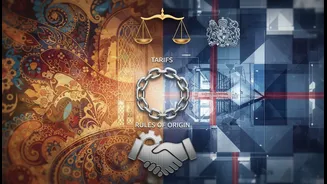
Decoding Eligibility: The Rules of Origin
The key to unlocking the deal's benefits lies in proving a product is 'eligible'. This is determined by what trade experts call 'Rules of Origin' (RoO). These rules ensure that benefits only go to goods genuinely produced in India or the UK, preventing products from other countries from simply being rerouted to escape tariffs. To qualify for preferential (lower or zero) duty, an Indian exporter must prove their product was either wholly obtained in India or underwent a substantial transformation here. For many products, this involves meeting a specific Regional Value Content (RVC) threshold, which is typically around 40% but varies by product. For steel, for instance, a 'melt and pour' rule means the metal must be melted and poured in India to qualify. Failing to meet these origin requirements means standard tariffs apply, erasing the FTA's advantage.
Meeting UK Standards: A Critical Hurdle
Beyond origin, Indian goods must meet the UK's rigorous product standards. This includes safety, labelling, and certification requirements. For many products, compliance with UKCA (UK Conformity Assessed) marking is mandatory. This marking is a manufacturer's declaration that the product meets all relevant UK regulations. To obtain it, exporters often need to create extensive technical files and a formal Declaration of Conformity. For agricultural and food products, additional health or phytosanitary certificates are required to prove they are free from pests and diseases. While the trade agreement aims to streamline processes, navigating these different standards—which can include everything from general product safety to specific chemical regulations—remains a significant challenge that requires careful attention from exporters.
The Paper Trail: Mastering Export Documentation
Finally, all of this compliance must be meticulously documented. The most crucial document is the Certificate of Origin (CoO), which is the official proof submitted to customs to claim preferential tariff rates. Indian exporters can apply for this certificate through the DGFT's online portal. The application requires a commercial invoice, packing list, bill of lading, and a declaration about the product's manufacturing process. Errors or inconsistencies in this paperwork can lead to costly delays, rejection of the preferential tariff claim, or even penalties. Under the CETA, customs processes are being digitised with electronic documents and signatures to speed things up, but the responsibility for accurate and complete documentation remains squarely on the exporter. Keeping detailed records for at least five years is also a requirement.