





What is the Hemis Festival?
Held annually at the historic Hemis Monastery, just 45 kilometres from Leh, the Hemis Festival is Ladakh's most famous and grandest monastic festival. This two-day event, scheduled for June 16th and 17th this year, marks the birth anniversary of Guru
Padmasambhava (also known as Guru Rinpoche), the 8th-century sage credited with establishing Tibetan Buddhism. The festival is a profound cultural and spiritual gathering that draws locals and travellers from across the globe. The monastery's vast courtyard transforms into an open-air stage where centuries-old rituals unfold against a backdrop of breathtaking mountain scenery. It’s more than a celebration; it's a living, breathing exhibition of Himalayan Buddhist culture.
The Spectacle of the Cham Dances
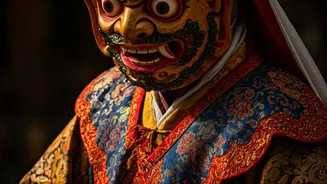
The undeniable highlight of the Hemis Festival is the 'Cham'—a series of sacred masked dances performed by the lamas (monks) of the monastery. These are not mere performances; they are deep meditative rituals. Dressed in elaborate silk costumes and wearing larger-than-life, often fearsome-looking masks, the monks channel deities and demons from Buddhist lore. Each movement is symbolic, depicting the eternal triumph of good over evil and the destruction of negative forces. The masks themselves are works of art, representing different figures from the pantheon—from protector deities to historical figures. Accompanied by the haunting sounds of long horns (dungchen), drums, and cymbals, the slow, deliberate, and powerful dance steps create a hypnotic spectacle that transports you to another world.
The Story at the Heart of the Festival
To truly appreciate the Cham dance, you need to understand the story it tells. The festival venerates Guru Padmasambhava, the figure who vanquished demons and dark spirits to spread Buddhism throughout the Himalayas. The dances are a narrative tool, recounting his life and teachings. The central theme is the liberation of the soul and the victory of compassion and wisdom over ignorance and malevolence. By watching these dances, devotees believe they are cleansed of negative karma and are guided towards enlightenment. It’s a powerful reminder that the festival is, at its core, a profound act of faith and a reaffirmation of the spiritual path.
Beyond the Masks: Sights and Sounds
While the Cham dances are the main attraction, the entire monastery buzzes with activity. The air is thick with the scent of burning juniper and incense. You'll see locals dressed in their finest traditional attire, adding to the festive kaleidoscope of colours. A special feature of the festival is the display of religious artifacts and 'thangkas' (intricate silk paintings). Every 12 years, on the year of the Monkey in the Tibetan calendar, a gigantic thangka of Guru Padmasambhava, stretching several stories high, is unfurled for public viewing—a truly rare and auspicious sight. Even in other years, the festival offers a rich sensory experience, with makeshift stalls selling local handicrafts, food, and tea, making it a vibrant community affair.
A Traveller’s Guide to Attending
Planning a trip to Hemis requires a bit of preparation. The festival takes place at Hemis Gompa, which is an easy day trip from Leh by taxi or local bus. Since it's a major event, expect large crowds; it's wise to arrive early to find a good vantage point. Remember that Ladakh is at a high altitude, so acclimatise in Leh for at least a couple of days before heading out. Dress in layers, as the weather can change quickly from sunny and warm to chilly. Most importantly, be a respectful observer. This is a sacred religious event. Dress modestly (covering shoulders and knees), follow instructions from organisers, and ask for permission before taking close-up photos of monks or devotees. Let your experience be one of quiet appreciation rather than intrusive tourism.