






The Harvard Study's Alarming Findings
New research from Harvard University has put a startling number on the environmental footprint of America's largest computing facilities. The study, published in Nature Sustainability, provides one of the first detailed, facility-level estimates of the electricity
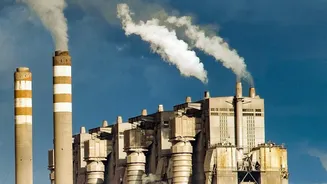
use and carbon dioxide emissions from US 'hyperscale' data centers since the rise of AI. Researchers analyzed 403 of these massive facilities between May 2024 and April 2025, finding they consumed as much electricity as some entire US states and produced an estimated 25.7 million metric tons of CO2. To put that in perspective, this is roughly the annual carbon emissions of the entire nation of Denmark. Alarmingly, the report found that more than half (about 54%) of the electricity powering these hubs came from fossil fuels, primarily natural gas and coal.
Why Data Centers Are So Power Hungry
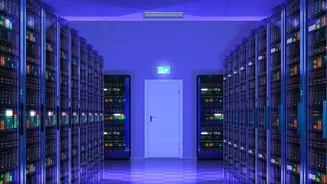
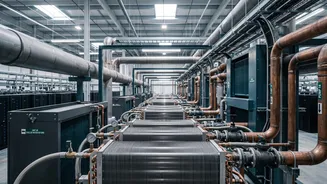
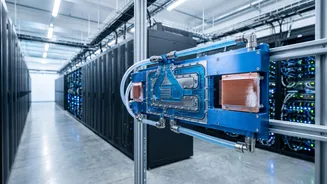
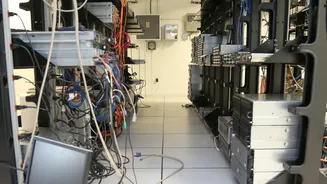
Data centers are the physical backbone of the internet, housing millions of computer servers that store, process, and move data 24/7. This constant operation requires an immense and uninterrupted supply of electricity. A significant portion of this energy, often up to 40%, is not even used for computing itself but for cooling. The densely packed servers generate tremendous heat, and sophisticated air conditioning and liquid cooling systems must run continuously to prevent them from overheating. Furthermore, these facilities rely on backup power systems, often diesel generators, to ensure they never go offline, which adds to their environmental impact even when used for routine testing. The combination of massive processing demands and the energy needed for cooling makes these buildings some of the most intensive energy users in the commercial sector.
America's 'Data Center Alley'
While data centers are spread across the country, they are heavily concentrated in specific areas. Northern Virginia, often called 'Data Center Alley', is the largest data center market in the world. The Harvard study identified 142 hyperscale facilities in Virginia, the most of any state. These centers were responsible for about a quarter of the total electricity used by all data centers in the study and a third of their carbon emissions. This concentration is driven by factors like proximity to government agencies, a robust fiber optic network, and historically cheaper land and power. However, this boom has strained local power grids, with data centers in 2023 consuming about 26% of Virginia's entire electricity supply. This immense demand is projected to drive up utility bills for all residents in the state.
The AI Boom Is Pouring Fuel on the Fire
The primary driver behind this explosive growth in energy consumption is the global race to develop and deploy artificial intelligence. Training and running large AI models are incredibly compute-intensive tasks that require even more powerful, and therefore more power-hungry, servers. Global data center electricity consumption is projected to more than double by 2030, with AI being the main catalyst for this growth. According to Gartner, a research firm, AI-optimized servers are expected to account for nearly a third of data center power consumption in 2026. This surge in demand is happening so quickly that in many major markets, the availability of electricity—not funding or construction time—has become the main bottleneck for building new data centers.
The Search for Greener Computing
The Harvard study highlights a critical point: the environmental impact is not inevitable. Geography and energy sources matter immensely. A data center in a region powered by renewables like hydropower has a much smaller carbon footprint than one on a coal-heavy grid. In response, the tech industry is becoming the largest corporate buyer of renewable energy globally. Beyond cleaner power sources, companies are investing heavily in efficiency. Innovations include advanced liquid cooling techniques that are more efficient than traditional air conditioning, using AI to optimize energy consumption in real-time, and designing data centers to reuse waste heat for other purposes, such as heating nearby buildings. The goal is to improve Power Usage Effectiveness (PUE), a measure of how efficiently a data center uses energy. However, while facilities are becoming more efficient, the sheer scale of industry growth means overall energy use continues to climb.