



Why Gentleness is Key
Every pull, snag, and aggressive tug on a knot can cause irreversible damage to your hair strands. This leads to breakage, split ends, and frizz, undermining the health and beauty of your long locks. Adopting a gentle detangling philosophy is about shifting
your focus from fighting tangles to preventing them. Hair is especially vulnerable when wet, as it can stretch and snap more easily. By treating your hair with patience and using the right methods, you protect its integrity, ensuring it stays strong, smooth, and manageable for any style you choose. This preventative care is the foundation of any successful long-hair routine.
Your Essential Detangling Toolkit
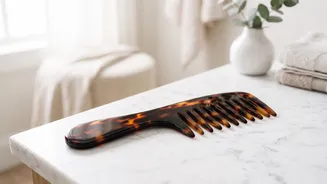
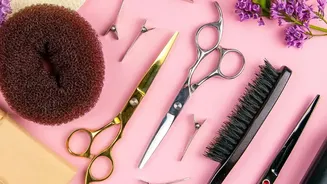
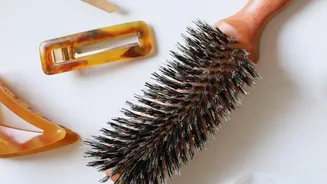
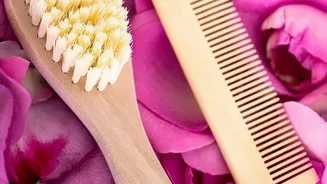
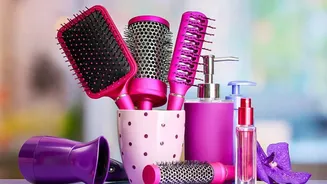
The right tools are non-negotiable for gentle detangling. Start with a wide-tooth comb, which is perfect for use on wet or damp hair, especially after applying conditioner. For dry hair or for more thorough work, a specialized detangling brush is a game-changer. Look for brushes with flexible bristles or teeth that bend when they meet resistance, which helps to tease knots open rather than ripping through them. Brushes with widely spaced, smooth-tipped fingers or bristles are ideal because they reduce tension and glide through hair with less snagging. Some people find success with mixed-bristle brushes that combine flexible nylon for detangling with boar bristles for smoothing and adding shine.
The Power of Products
Never detangle your hair when it's completely dry and without product. Applying a detangling spray, leave-in conditioner, or a light hair oil provides necessary 'slip,' allowing knots to loosen more easily. These products coat the hair shaft, reducing friction and helping your comb or brush glide through with minimal resistance. For those with very dry or thick hair, a good moisturizing conditioner used in the shower is your first line of defense. Look for detanglers with ingredients like aloe vera, sea buckthorn, or nourishing oils that not only help with knots but also hydrate and protect your hair.
The Gentle Detangling Technique
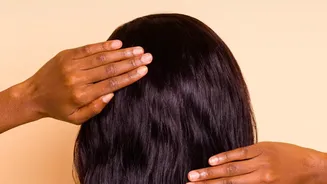
The golden rule of detangling is to always start from the bottom and work your way up. First, divide your hair into manageable sections. Take one section and hold it firmly a few inches from the end. Gently brush or comb out the tangles in those last few inches. Once the ends are clear, move your grip higher and work on the next section above it, repeating until you reach the roots. This method prevents you from pushing small knots down into a larger, more stubborn one. If you encounter a tough knot, stop. Gently separate it with your fingers before trying again with your tool. Patience is the most important part of this process; rushing will only lead to breakage.
Protective Styles to Prevent Tangles
Once your hair is beautifully detangled, the right hairstyle can keep it that way. Protective styles minimize friction between strands and against clothing. Simple, loose braids are a fantastic option for both day and night. A low, loose ponytail or a soft bun secured at the nape of the neck also keeps hair contained and polished without causing stress or breakage. For sleeping, consider loosely braiding your hair or pulling it into a high, loose bun on top of your head, often called a 'pineapple'. Using silk or satin scrunchies and sleeping on a satin pillowcase can further reduce friction and prevent new tangles from forming overnight.