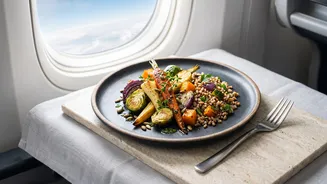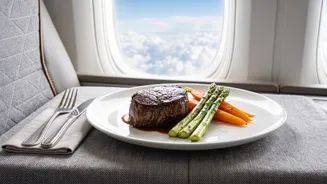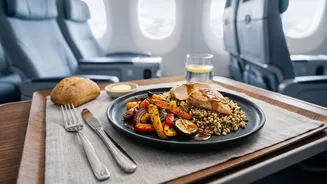








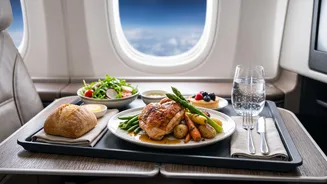
The First Culprit: Desert-Like Dryness
The primary offender in this sensory assault is the bone-dry air inside the cabin. At cruising altitude, humidity levels can plummet to below 12%, which is drier than most deserts. This arid environment has a profound effect on your sense of smell. Flavor
is a combination of taste and aroma, with smell accounting for as much as 80% of what we perceive as taste. Your olfactory receptors, located in your nasal passages, need moisture to function effectively. As the cabin air dries out your nose, your ability to detect the subtle aromas that give food its character is significantly diminished. Without those aromatic compounds reaching your receptors, even a well-seasoned dish can taste flat and uninspired.
The Accomplice: Pressure and Altitude
Working in tandem with the dry air is the lower cabin pressure. While modern aircraft are pressurized, it’s not to sea-level pressure. Instead, the cabin is typically pressurized to an equivalent of 6,000 to 8,000 feet in altitude. This change in pressure reduces the oxygen saturation in your blood, which can slightly numb the sensitivity of your taste buds. Seminal research commissioned by Lufthansa found that this combination of low pressure and dryness can reduce the perception of salty and sweet flavors by as much as 30 percent. So, it’s not that the food lacks salt or sugar; it’s that your ability to taste them has been temporarily handicapped.
The Unlikely Survivor: Umami
While sweet and salty flavors take a nosedive, not all tastes suffer equally. The same research that identified the drop in sweetness and saltiness found that our perception of sour, bitter, and spicy foods remains largely stable. Even more interesting is the resilience of umami, the fifth taste often described as savory or meaty. Umami perception is barely affected by altitude and can even be enhanced by the background engine noise, according to some studies. This explains the enduring popularity of tomato juice and Bloody Marys on flights; tomatoes are packed with the glutamates that trigger the umami taste, making them one of the few things that can taste richer and more satisfying in the air.
How Airlines Fight Back with Flavor
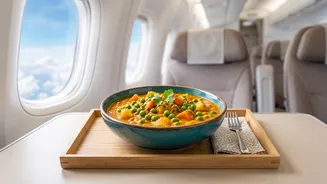
Airlines and their caterers are well aware of this sensory sabotage and have developed culinary strategies to compensate. You can’t just add 30% more salt and sugar, so chefs get creative. They design menus that lean heavily on ingredients naturally rich in umami, such as tomatoes, mushrooms, parmesan cheese, and soy-based sauces. They also use spices and aromatic herbs like ginger and lemongrass that are robust enough to cut through the sensory fog. Curries, for example, are a popular and reliable choice for in_flight meals because their complex and potent spice blends hold up well at altitude. Some airlines even test their recipes in simulated cabin environments to ensure the flavors are properly balanced for 35,000 feet.