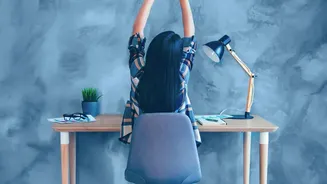




Why Your Desk Is Working Against You
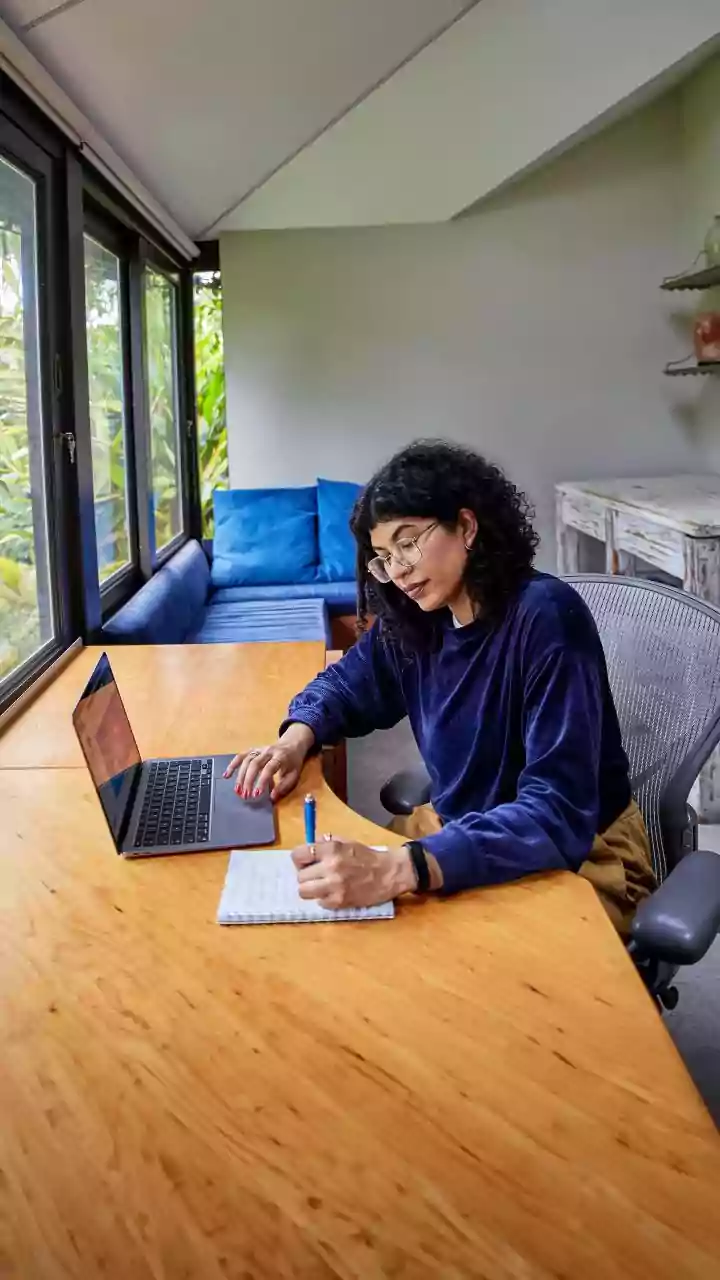
Hours spent hunched over a keyboard can lead to a condition some call 'desk bod'. Prolonged sitting causes certain muscles, like your hip flexors and chest, to tighten, while others, like your core and glutes, weaken. This imbalance pulls your spine out
of its natural alignment, causing your head to drift forward and your shoulders to round. This poor posture puts significant strain on your neck, upper back, and lower back, leading to chronic aches, stiffness, and even headaches. The good news is that taking short, frequent breaks for targeted stretches can counteract these effects, improve circulation, and boost your energy levels.
Seated Cat-Cow Stretch
This classic yoga movement is perfect for waking up your spine and can be done easily in your chair. Sit at the edge of your seat with your feet flat on the floor and your hands resting on your knees. On an inhale, arch your back, push your chest forward, and look up toward the ceiling, creating a 'cow' pose. On an exhale, round your spine, tuck your chin to your chest, and let your shoulders curl forward into a 'cat' pose. Flow between these two positions for five to ten breaths to gently mobilize your spine and relieve tension in your torso.
Gentle Neck Rolls and Tilts
To directly address neck strain, start with slow, mindful movements. Sit tall and gently drop your chin to your chest. Slowly roll your right ear toward your right shoulder, hold for a breath, and then roll back through the center and over to the left side. Avoid rolling your head all the way back, as this can compress your cervical spine. After a few rolls, try a gentle tilt by bringing your right ear toward your right shoulder and placing your right hand lightly on your head for a deeper stretch. Hold for 3-4 breaths and repeat on the other side. This helps release tension in the trapezius muscles, which often carry stress.
Seated Spinal Twist
A twist is a great way to re-energize your spine and aid digestion, which can become sluggish from sitting. Sit tall and turn your torso to the right, placing your left hand on the outside of your right knee and your right hand on the back or armrest of your chair for support. Use your breath: inhale to lengthen your spine, and exhale to gently deepen the twist. Hold for 3-5 breaths, looking over your right shoulder. Slowly return to the center and repeat on the left side. This movement improves spinal mobility and can relieve lower back discomfort.
Eagle Arms for Shoulder Relief
Typing and mousing can create immense tension between the shoulder blades. The Eagle Arms pose is a fantastic way to release it. Stretch your arms straight out in front of you. Cross your right arm under your left, bend your elbows, and try to bring your palms to touch. If your palms don't meet, press the backs of your hands together instead. Lift your elbows to shoulder height while drawing your shoulders down, away from your ears. You should feel a deep stretch across your upper back. Hold for 4-5 deep breaths, then unwind and repeat with the left arm under the right.
Chair Figure-Four Stretch
Don't forget your hips! Tight hips can contribute to lower back pain. To perform this stretch, sit at the edge of your chair and place your right ankle on your left knee, keeping your right foot flexed to protect the knee joint. Sit up straight and, if you feel a good stretch, stay here. For a deeper stretch, gently hinge forward from your hips, maintaining a flat back. This pose, also known as Chair Pigeon, opens the outer hip and glute muscles. Hold for several breaths before switching to the other side.