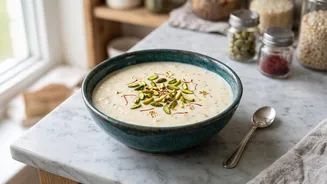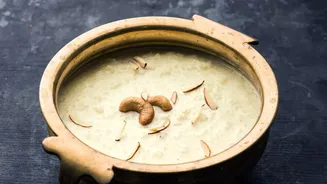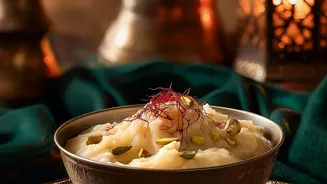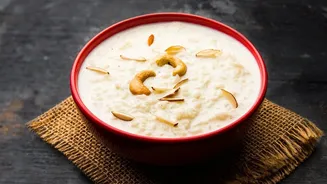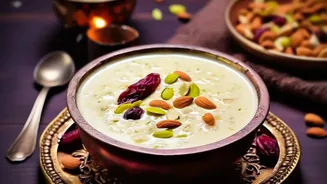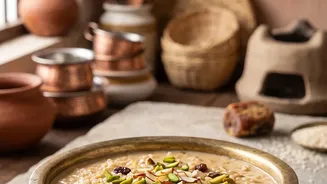






Imagine a dessert that's both decadently creamy and refreshingly fruity. That's the magic of Sitaphal Phirni, a seasonal twist on a classic Indian pudding that transforms a few simple ingredients into a truly memorable treat.
Understanding Phirni's Charm
Before diving into the recipe,
it’s worth knowing what makes phirni so special. Phirni is a beloved North Indian dessert, with roots often traced back to Mughal and even Persian cuisine. It's a type of rice pudding, but with a key difference that sets it apart from its close cousin, kheer. While kheer is made with whole grains of rice, phirni is always made with ground rice. This is crucial. The rice is typically soaked, dried, and then ground to a coarse, semolina-like texture. When slow-cooked in milk, this ground rice creates a pudding that is exceptionally smooth, thick, and creamy, rather than porridge-like. Traditionally, it's served chilled in small earthenware bowls called 'shikoras' or 'matkas', which help absorb excess moisture and impart a subtle, earthy aroma.
The Seasonal Star: Sitaphal
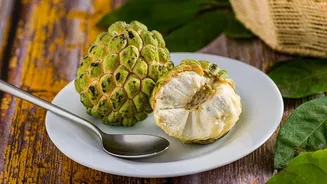
Sitaphal, or custard apple, is the ingredient that elevates this phirni from classic to extraordinary. This sweet, fragrant fruit with its creamy, pulpy flesh is a seasonal delight in India. Its unique flavour, which is a delicate blend of sweet and tropical notes, pairs beautifully with the simple richness of the milk and rice base. The process of preparing the sitaphal is straightforward but requires a little patience: you must carefully scoop out the pulp and meticulously remove each black seed. The reward is a luscious, naturally sweet puree that, when folded into the cooled phirni, creates pockets of fruity flavour and a more complex texture. It's a combination that feels both traditional and refreshingly modern.
The Foundation: Rice and Milk
The success of any phirni rests on two pillars: rice and milk. For the best flavour and aroma, long-grain basmati rice is the preferred choice. After rinsing the rice thoroughly, it needs to be soaked for at least 30 minutes. This step is vital as it helps soften the grains, ensuring they cook evenly and contribute to a creamier final product. After soaking and draining, the rice is ground into a coarse powder—not a fine flour. For the milk, full-fat is non-negotiable. It provides the necessary richness and creaminess that is the hallmark of a good phirni. The milk is simmered slowly, allowing it to reduce and thicken naturally, which concentrates its flavour.
A Step-byStep Guide
To begin, bring about a litre of full_fat milk to a boil in a heavy_bottomed pan, which prevents scorching. As it heats, keep stirring to prevent a skin from forming. Once it boils, reduce the heat to a low simmer. Now, add your coarsely ground rice paste, stirring continuously and vigorously for the first few minutes to prevent any lumps from forming. Cook on low heat, stirring frequently, for about 15_20 minutes. You’ll know it’s working when the mixture thickens and the rice granules are soft and fully cooked. Now, add sugar to your desired sweetness, along with flavourings like cardamom powder or a few strands of saffron. Cook for another 5 minutes until the sugar dissolves completely. Remember, the phirni will thicken significantly as it cools.
Bringing It All Together
Once your phirni base is cooked, turn off the heat and let it cool down slightly. It is crucial not to add the sitaphal pulp while the phirni is hot, as it can alter the texture and flavour. Let the mixture become warm, not hot. Gently fold in your prepared custard apple pulp, mixing until it is just combined. Pour the finished Sitaphal Phirni into your serving bowls—earthen 'shikoras' if you have them. Garnish with slivered pistachios and almonds for a lovely crunch and a pop of colour. The final, and perhaps most important, step is to chill the phirni. It needs to be refrigerated for at least four hours, or preferably overnight. This allows the dessert to set properly and the flavours to meld into a perfectly creamy, fragrant, and fruity masterpiece.