






The Rise of the Robotic CV
Let's be honest: writing a CV can be a grind. Staring at a blank page, trying to translate years of hard work into a few powerful bullet points, is a challenge for anyone. It's no surprise that job seekers are turning to artificial intelligence for help.
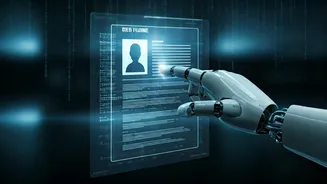
These tools are masters of efficiency, capable of analysing job descriptions, suggesting keywords, and formatting your experience in seconds. They promise to help your application get past the initial screening by Applicant Tracking Systems (ATS), which many large companies use to filter candidates. The allure is clear: a perfectly optimised, professional-looking CV without the usual headache. But this convenience comes with a significant risk.
The Problem with Perfection
Hiring managers are starting to notice a problem: a sea of sameness. When everyone uses the same tools, they start to sound the same. AI-generated resumes often lean on generic, overused phrases like "results-driven professional" or "spearheaded initiatives," which lack the specific context that makes an applicant memorable. Recruiters report that this homogenisation makes it difficult to distinguish between candidates. More importantly, AI cannot understand your career story—the 'why' behind your decisions, the passion for your field, or the unique context of your achievements. A CV is not just a list of skills; it’s a personal branding document. Relying solely on AI risks stripping out the very thing that makes you unique: your authentic voice.
Use AI as Your Brainstorming Partner
Instead of asking AI to write your CV from scratch, use it as a brilliant brainstorming partner. Start by writing down your own raw experiences: the problems you solved, the projects you're proud of, and the results you delivered. Once you have this foundation, you can use AI strategically. Paste in a job description and ask an AI tool to identify the key skills and keywords you might have missed. Use it to suggest stronger action verbs or to rephrase a bullet point for better impact. Think of it as a collaborator that can offer different perspectives on your own story, rather than an author creating a new one.
Let AI Be Your Editor, Not Your Author
One of the best uses for AI is in the final stages of writing: editing and polishing. Once you’ve drafted a CV that reflects your true experience and personality, let an AI tool check it for grammar, spelling, and consistency. This is where automation shines, catching small errors that can undermine your professionalism. You can also ask it to make a specific section more concise or to check if the tone is appropriate for the industry you're targeting. The crucial difference is that you are starting with your own authentic content. The AI is simply refining your message, not creating it. This ensures the final document is both polished and personal.
The Final Step: The Human Review
Before you hit send, the most important step is a thorough human review. Read your CV out loud. Does it sound like you? Does it accurately represent your accomplishments? AI can sometimes “hallucinate” or invent details, so fact-checking is essential. Have a friend or mentor read it over to see if it captures your personality and strengths. This final, human-centric step ensures that your CV tells a compelling story. Remember, the goal of a CV is to get you an interview where you'll have to speak confidently about your experience. Your resume should be an authentic preview of the professional they will meet.