






A Rising Tide Against History
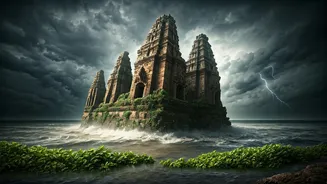
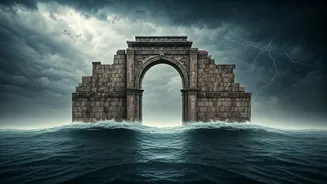
Many of humanity’s most significant historical sites are found along coastlines, where ancient civilizations thrived on maritime trade and resources. Today, these locations are on the front lines of a battle against rising sea levels and intensifying
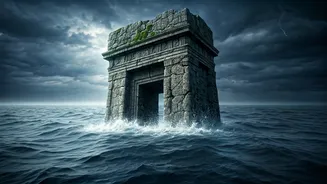
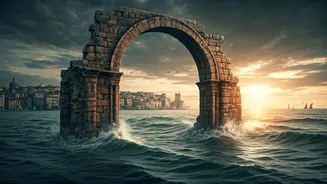
storms. Coastal erosion is relentlessly eating away at irreplaceable heritage. The iconic Moai statues of Rapa Nui (Easter Island), for example, are threatened by coastal damage. In the United States, one study focusing on the Atlantic and Gulf coasts projected that a sea-level rise of just one metre could lead to the loss of over 13,000 recorded archaeological sites. In Scotland and Australia's Torres Strait Islands, ancient shell middens, burial grounds, and rock art are being washed away by increasingly volatile seas, taking with them the stories of early human settlement. This isn't a distant problem; it is an active, ongoing loss of our collective past.
From Melting Ice to Scorching Heat
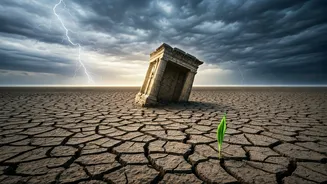
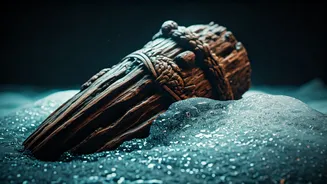
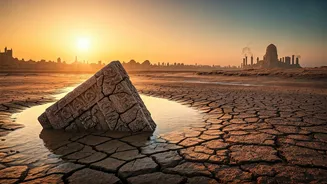
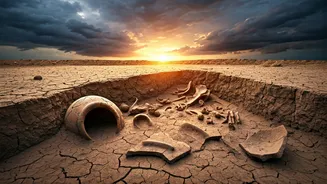
The threat isn't confined to the coasts. In the Arctic, a region warming much faster than the global average, thawing permafrost poses a unique and devastating risk. For millennia, the frozen ground has acted as a natural time capsule, preserving organic materials like wood, bone, textiles, and even human remains in extraordinary condition. As the permafrost melts, these artifacts are exposed to oxygen and microbes, causing them to decompose with shocking speed. An estimated 180,000 archaeological sites in the Arctic are at risk. Paradoxically, melting ice can also reveal new sites, but this creates a frantic race for archaeologists to excavate and document finds before they decay forever. On the other end of the spectrum, extreme heat and drought are wreaking havoc in arid regions. Structures made of stone or mud-brick, like those at the ancient city of Chan Chan in Peru, are cracking and eroding under fluctuating temperatures and altered rainfall patterns.
Tourism in the Crosshairs
The degradation of these sites directly impacts travel. The very monuments people journey across the globe to see are becoming less accessible or are disappearing entirely. Extreme heatwaves have already forced temporary closures of world-famous sites like the Acropolis in Greece to protect visitors. This is a pattern likely to become more common, disrupting travel plans and local economies that depend on tourism revenue. Moreover, the infrastructure of tourism itself faces threats. The city of Venice, a World Heritage site celebrated for its canals, is facing a dual threat of rising sea levels and subsidence, which damages its historic buildings and makes it more vulnerable to flooding. This creates a difficult cycle: as some sites become more endangered, a phenomenon of 'last-chance tourism' can emerge, where a surge of visitors hoping to see a place before it's gone can add further stress to the fragile location and its infrastructure.
A Race Against Time
In response, archaeologists and conservationists are in a desperate race against time. The traditional principle of preserving sites in situ—leaving them undisturbed in the ground—is becoming untenable in many places. The focus is shifting to urgent documentation, rescue excavation, and mitigation. Researchers are using advanced tools like satellite imagery and 3D laser scanning to create detailed digital records of sites before they are lost. At the same time, organisations like UNESCO are pushing for climate action to be integrated into heritage protection policies. They stress that reducing global emissions is vital to saving these irreplaceable links to our past. However, many of the nations richest in cultural heritage lack the resources for large-scale preservation efforts, highlighting a global disparity in the fight to save our shared history. The loss is not just about ancient stones and artifacts; it's about the erosion of cultural identity, knowledge, and the tangible connections to the generations that came before us.