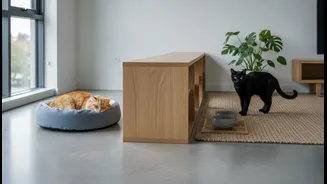









Prepare Your Base Camp
Before your new cat arrives, designate a separate, secure room for them. This will be their 'base camp' for at least the first week. In a tiny flat, this might be a bedroom or even a bathroom. Equip it with everything they need: a litter box, food and
water bowls, a comfortable bed, and a few toys. The key is complete separation. The goal is to let your new cat acclimate to the new environment without the immediate stress of facing the resident cat. Your existing cat will know something is up, but this physical barrier is the first and most critical step in managing the introduction process smoothly. Place a towel under the door to prevent any premature visual or physical contact.
The Power of Scent Swapping
Cats understand the world primarily through smell. A few days before any face-to-face meeting, start introducing them to each other's scent. Take a clean, soft cloth or sock and gently rub it on your new cat’s cheeks and head to collect their pheromones. Place this cloth in your resident cat’s area, perhaps near their food bowl to create a positive association. Do the same for your new cat, giving them a cloth with the resident cat’s scent. At first, you might see some hissing or avoidance, which is normal. Continue swapping scents daily until both cats can smell the other’s scent without a negative reaction. This helps them get used to the idea of another cat before they ever lay eyes on each other.
Site Swapping and First Sights
Once both cats are calm about each other's scent, it's time for them to explore each other's territory. Keeping the cats physically apart, let your resident cat into the new cat's base camp, and allow the new cat to explore the rest of the flat. This lets them gather information and get used to the other's presence without direct confrontation. After a few days of successful site swapping, you can begin very brief, supervised visual introductions. Use a baby gate or crack the door just enough for them to see each other but not touch. Keep these sessions short and sweet, ending on a positive note with treats or praise. The barrier provides security, letting them observe each other from a safe distance.
Managing Shared Space in a Tiny Flat
In a small apartment, maximising space is key to minimising conflict. Cats think vertically, so introducing cat trees, wall shelves, and window perches can effectively double your flat's territory in their eyes. This allows them to create distance when needed and avoid feeling cornered. Ensure you have multiple, separate resources. The general rule is one litter box per cat, plus one extra, placed in different locations. Have separate feeding stations as well; cats can be stressed by having to compete for food. By providing choices, you reduce the potential for territorial squabbles over essential resources, which is especially important in a compact home.
Understanding Cat Conversations
As you move to supervised, barrier-free interactions, it’s crucial to understand their body language. Not every hiss or swat is a declaration of war. Playful cats can hiss and bat at each other. The signs of true stress or aggression to watch for are a puffed-up tail, flattened ears, intense staring, growling, and a rigid body posture. If you see this, calmly and immediately separate them without drama and go back a step in the introduction process. The goal is to always end interactions on a neutral or positive note, before tension escalates. Keeping sessions short and rewarding calm behaviour with treats will teach them that being in the same room can be a good experience.