





The Celestial Main Event
All through August, Saturn will be a prominent and beautiful object in our sky. This is because the planet is heading towards an event called opposition, which will occur on October 4, 2026. Opposition is when Earth passes directly between the Sun and an outer
planet like Saturn. Think of it as a celestial alignment that puts Saturn on the opposite side of the sky from the Sun. As a result, the planet rises in the east around sunset, remains visible all night long, and sets in the west around sunrise. This alignment also means Saturn is at its closest point to Earth for the year, making it appear larger and significantly brighter than usual. August is the perfect time to start tracking it as it puts on its slow, grand display.
When and Where to Look
Saturn is the star of the late-night and early-morning sky this month. In early August, you will find it rising in the east around 11 p.m. local time, but it will rise earlier each night, appearing by 9 p.m. towards the end of the month. The planet will be located in the constellation Pisces, the Fish. To find it, look for a bright, steady, yellowish point of light that doesn't twinkle like a star. By the early hours before dawn, Saturn will be high in the southern sky. On the nights of August 3 and 31, the Moon will pass close to Saturn, making the planet exceptionally easy to locate. Stargazing apps on your smartphone can also point you directly to it.
Naked Eye, Binoculars, or Telescope?
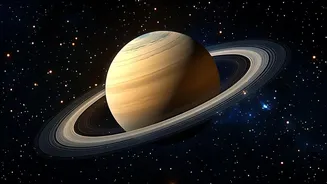
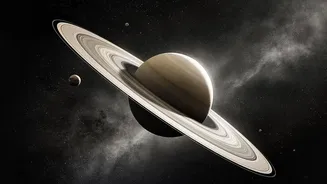
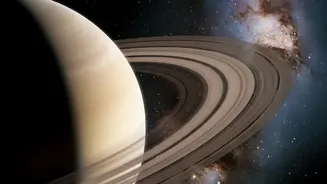
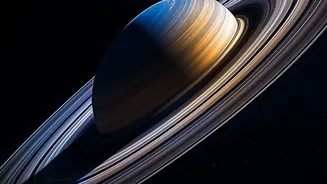
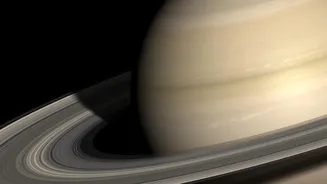
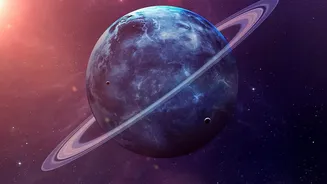
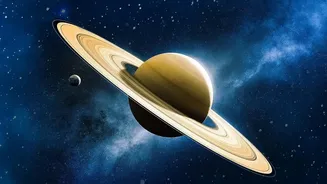
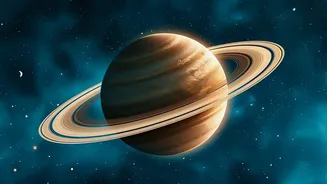
The beauty of this event is that everyone can participate. With just your naked eyes, Saturn is easily visible as one of the brightest objects in the night sky, appearing like a non-twinkling star. If you have a pair of binoculars, you might be able to notice that the planet is not perfectly round, but a slightly elongated oval – the first hint of its famous rings. However, to truly witness the spectacle of the rings, you will need a telescope. Even a small beginner's telescope with a magnification of 30x or more can reveal the rings as a distinct structure separate from the planet's disk. With larger amateur telescopes, you might even glimpse the Cassini Division—the dark gap between the main A and B rings—and Saturn's largest moon, Titan, appearing as a tiny star-like point of light nearby.
Tips for the Best View in India
To make the most of your Saturn-gazing experience, a few simple steps can make a huge difference. The biggest challenge in India, especially in urban areas, is light and air pollution, which washes out the sky. If possible, try to find a location away from city lights, like a rural area, a park, or a high-altitude spot. The post-monsoon period often brings clearer skies after the rain has washed dust from the atmosphere, so take advantage of any clear nights you get. Once you're at your viewing spot, give your eyes about 20-30 minutes to fully adapt to the darkness. During this time, avoid looking at bright phone screens, as it will reset your night vision. Finally, be patient. Observing a planet is not a fleeting glance but a chance to sit and truly appreciate the vastness of our solar system.