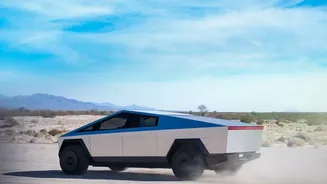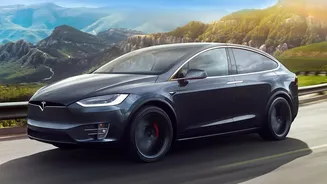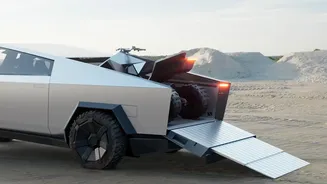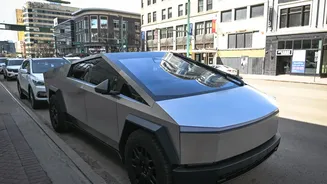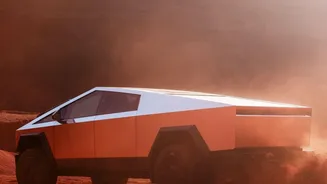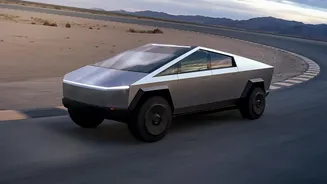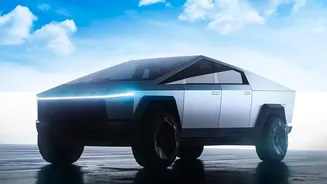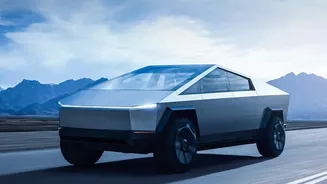





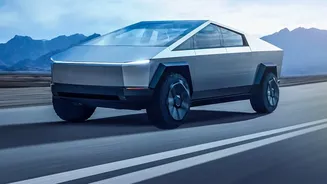
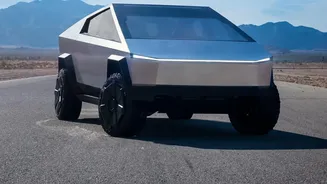
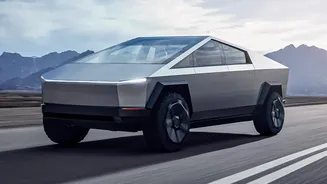
It was billed as the future of the pickup truck, but Tesla's Cybertruck is now facing a future that is anything but certain. Following a shock announcement, a look at what's really going on with the sci-fi-inspired vehicle.
An Abrupt End to an Era?
In a surprise announcement on
November 6, 2026, Elon Musk stated that Tesla would be 'winding down production of the Cybertruck at Gigafactory Texas around the middle of next year'. The stated reason was to free up factory space for the company's autonomous 'Cybercab' project. The move stunned fans and analysts alike, especially as the Texas facility is the only plant equipped to build the vehicle. While Musk did not clarify if production would cease entirely or move elsewhere, the announcement effectively signals a major pivot away from the polarising pickup, which has been plagued by production delays, quality control issues, and sales that fell dramatically short of initial, lofty projections.
Sales Never Met the Hype
When the Cybertruck was unveiled in 2019, Musk suggested Tesla could eventually sell 250,000 to 500,000 units annually. The reality has been starkly different. After its first full year of sales in 2024, estimates from Kelley Blue Book showed around 38,965 units sold in the US. That figure plummeted by nearly 48% to just 20,237 units in 2025. The sales decline continued into 2026. The truck's radical, unpainted stainless-steel design alienated many traditional pickup buyers, and its premium pricing, which ended up being significantly higher than initial promises, further dampened mass-market appeal. The vehicle was also hit with numerous recalls since its launch, which did little to build consumer confidence.
A Uniquely Difficult Design
From the beginning, Musk acknowledged the immense challenge of bringing the Cybertruck to mass production, at one point stating, 'We dug our own grave with Cybertruck'. The core of the problem lies in its radical design. The body is made of an ultra-hard, cold-rolled stainless-steel exoskeleton, a material notoriously difficult to work with in an automotive setting. The flat panels and sharp angles require incredible precision to avoid visible gaps and alignment issues, a problem the auto industry has historically avoided by using more malleable materials and curved designs. This difficult manufacturing process contributed to the slow production ramp-up and numerous quality concerns reported by early owners, including issues with rust and misaligned panels.
The Strategic Shift to Autonomy
The decision to wind down Cybertruck production is not happening in a vacuum. It is part of a broader strategic shift at Tesla towards autonomous vehicles. Musk has made the Cybercab, a two-seater vehicle with no steering wheel or pedals, central to Tesla's future. By freeing up production capacity at Gigafactory Texas, Tesla is betting that its future profits lie not in selling niche pickups, but in operating a massive fleet of self driving taxis. While the lead engineer for the Cybertruck noted its technology would live on through the Cybercab, it is a clear signal that the company is sacrificing a struggling product line to chase the potentially larger prize of mass market autonomy.
The Battery Equation
Another critical piece of the puzzle is Tesla's proprietary 4680 battery cells, which are essential for several next generation vehicles, including the Cybercab and the Tesla Semi. Ramping up production of these cells has been a significant hurdle. Recent announcements indicate a massive expansion of 4680 production at Giga Texas, with the facility poised to become the largest battery cell plant in North America. This focus on battery production is crucial for the Cybercab and Semi ramps. With battery availability cited as a limiting factor for vehicle production, dedicating more factory resources to the high volume, autonomy focused projects appears to be Tesla's new priority.