





A Celestial Sanctuary in the Cold Desert
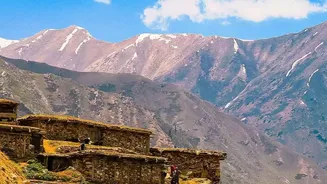
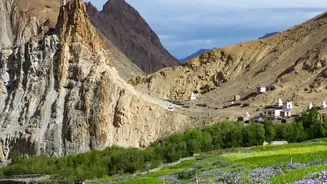
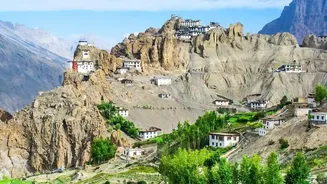
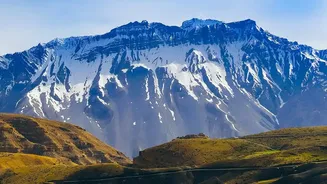
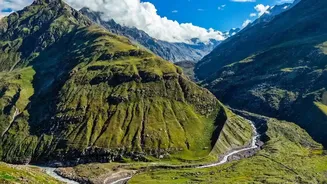
Perched at an astonishing altitude of over 14,000 feet, Langza has long been a destination for intrepid travelers. Known as the 'Fossil Village' of Spiti, its barren landscape holds remnants of a time millions of years ago when the Himalayas were submerged
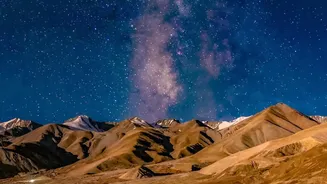
under the Tethys Sea. A majestic, thousand-year-old statue of the Maitreya Buddha watches over the small settlement, a powerful symbol of tranquility in this high-altitude desert. But beyond its geological and spiritual significance, Langza’s greatest asset reveals itself after sunset. Its remote location, thin atmosphere, and almost complete absence of artificial light make it one of the best places on Earth for stargazing.
The Dark Sky Movement
As urbanisation spreads, so does light pollution, erasing the stars from our nightly view. It's estimated that a vast majority of people can no longer see the Milky Way from their homes. In response, a global movement to preserve natural darkness has led to the creation of 'Dark Sky Places'. These are parks or communities certified for their exceptionally starry nights and their commitment to protecting them through responsible lighting. These reserves are not just for astronomers; they protect nocturnal ecosystems, conserve energy, and preserve a crucial part of our shared human heritage. While India's first official Dark Sky Reserve is in Hanle, Ladakh, the initiative in Spiti Valley follows this growing appreciation for pristine skies.
Spiti's Community-Led Astro-Tourism
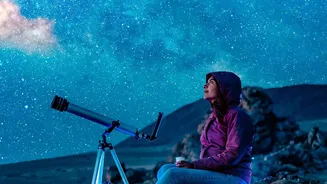
The development in Spiti is a grassroots effort to blend science, tourism, and local empowerment. In July 2025, the Himachal Pradesh government officially launched an astro-tourism initiative in the region, centred around Kaza, the valley's main town. The project, driven by the Himachal Pradesh Council for Science, Technology & Environment (HIMCOSTE), involves training local youth and homestay owners from villages like Langza, Kaza, and Rangrik to become astro-guides. High-powered computerized telescopes have been distributed to community members, enabling them to offer guided night-sky observation sessions to tourists. This turns the cosmos into a sustainable source of livelihood, ensuring the economic benefits of tourism reach the local population directly.
What You Can See in the Spitian Sky
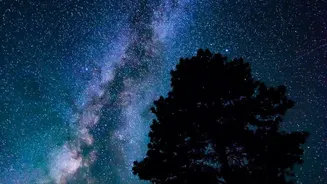
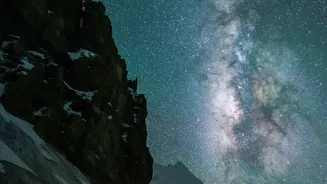
The view from Langza is nothing short of spectacular. On a clear, moonless night, the Milky Way arches across the sky not as a faint smudge, but as a brilliant, textured river of light, bright enough to cast a faint shadow on the ground. With the naked eye, visitors can spot constellations, planets, and countless shooting stars. Through the newly provided telescopes, the experience deepens, revealing distant nebulae, star clusters, and the craters of the moon in stunning detail. The dry, cold air and high altitude result in what astronomers call 'good seeing,' offering a clarity rarely found elsewhere. For photographers, it’s a paradise, with the iconic Buddha statue providing a perfect foreground for capturing the galaxy's majestic arc.
Planning Your Celestial Pilgrimage
A journey to Langza requires planning. The Spiti Valley is remote, and the journey is as much a part of the adventure as the destination itself. The best time to visit for stargazing is between May and October, when the roads are accessible and the skies are generally clear. Reaching Langza involves a drive from either Manali or Shimla, followed by a local journey from Kaza. Acclimatization is crucial, as the altitude can pose a challenge for many travelers. Visitors typically stay in local homestays, offering an authentic experience of Spitian culture and hospitality. These homestays are now becoming the epicenters of this new astro-tourism drive, making your celestial adventure a truly immersive cultural experience.