





The Creeping Threat of Erosion
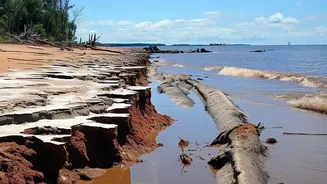
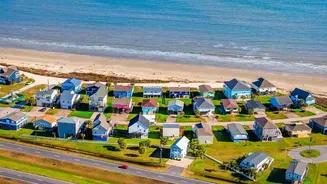
For countless communities along the Bay of Bengal, coastal erosion is not an abstract concept—it's a daily reality. Driven by rising sea levels, frequent cyclones, and strong tidal forces, the land is steadily being claimed by the sea. This relentless
process threatens homes, agricultural fields, and critical infrastructure, making livelihoods increasingly uncertain. In states like Odisha, Andhra Pradesh, and Tamil Nadu, the impacts are profound, shrinking fish breeding habitats and leaving farmland saline and unusable after storm surges. For generations, the question has been how to hold the line against the encroaching water, and the most effective answer is proving to be one that comes from nature itself.
Nature’s Resilient Engineers
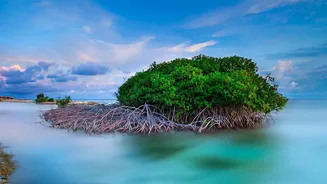
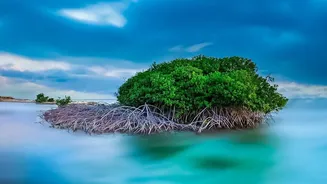
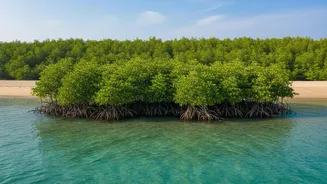
Enter the mangrove, a remarkable tree that thrives in the harsh, salty environment where land and sea meet. Mangroves are nature's own coastal engineers. Their dense, tangled root systems act as a natural breakwater, dissipating the energy of waves before they can crash against the shore. This intricate network of roots traps and holds sediment, gradually building up the land and stabilizing the coastline. This process not only counters erosion but can even reclaim land from the sea. By forming a living, self-repairing barrier—a 'bio-shield'—these forests provide a frontline defense against storm surges and cyclones, a function proven effective in areas like Odisha during near-annual cyclones.
The Power of Local Hands
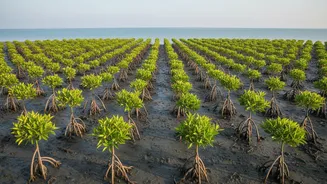
Across India's eastern coast, the most successful mangrove restoration projects are not top-down government mandates, but grassroots initiatives driven by the communities themselves. From Odisha to Tamil Nadu, local villagers, particularly women, are becoming the primary guardians of these vital ecosystems. In villages like Bichitrapur in Balasore, Odisha, community members have transformed degraded coastal land into a thriving mangrove forest. These initiatives often begin with creating local nurseries to cultivate saplings. Community members, leveraging their deep, traditional knowledge of the local ecology, then organize planting drives, carefully selecting sites and species best suited to the local soil and tidal conditions. This community ownership is the secret to their success; because their livelihoods are directly linked to the health of the coast, they have a profound stake in ensuring the forests survive and thrive.
More Than Just a Barrier
The benefits of these community-led projects extend far beyond erosion control. Mangrove forests are biodiversity hotspots, acting as crucial nursery grounds for countless species of fish, crabs, and shrimp. This directly supports local fisheries, enhancing food security and providing sustainable income. Furthermore, these initiatives are creating new economic opportunities. Women's self-help groups are often at the forefront, managing nurseries, planting saplings, and even developing related livelihoods like crab farming or honey collection from mangrove blossoms. This work provides direct wages, fosters financial independence, and elevates the role of women as leaders in community decision-making and climate adaptation.
Challenges and the Path Forward
Despite the inspiring success stories, the path to restoring India's coastal green shield is not without obstacles. Ensuring high survival rates for planted saplings requires ongoing monitoring and protection from grazing animals. Site-specific planning is crucial, as a one-size-fits-all approach doesn't work across the diverse ecologies of the east coast. Continued support from government agencies and NGOs is vital for providing technical guidance, resources, and linking these local efforts to broader climate resilience strategies. The success in states like Odisha, where mangrove cover has seen significant growth, shows what is possible when community action is backed by scientific planning and institutional support. Scaling up these models is the next critical step in safeguarding India's coast for generations to come.