
The Sun’s Puzzling Gale
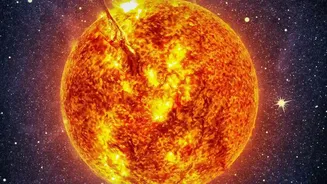
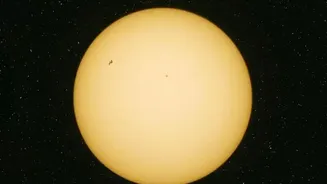
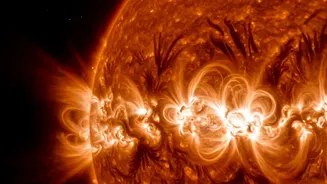
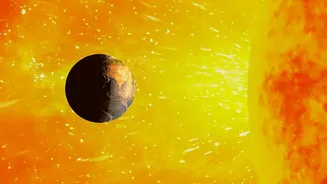
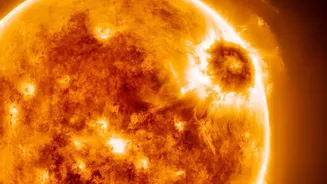
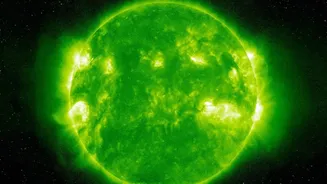
For decades, scientists have grappled with a solar paradox. The Sun's visible surface, the photosphere, is a scorching 5,500 degrees Celsius. Yet, its outer atmosphere, the corona, sizzles at over a million degrees. This super-heating is believed to power
the solar wind, a continuous stream of protons and electrons flowing from the Sun. This wind travels at incredible speeds, sometimes gusting up to millions of kilometres per hour. Understanding the precise mechanism that gives the solar wind this phenomenal kick-start—its 'extreme acceleration'—is one of the biggest unsolved mysteries in heliophysics. Figuring it out is not just an academic exercise; this solar gale shapes the space environment around Earth and can have major impacts on our technology.
India’s Unique Vantage Point
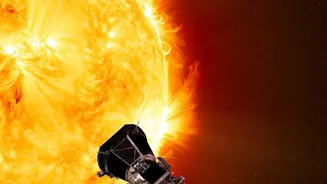
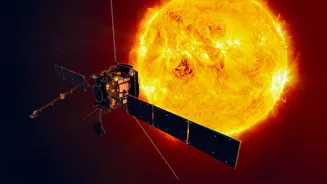
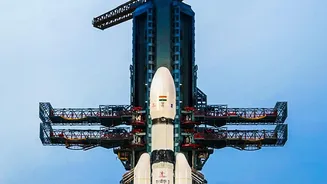
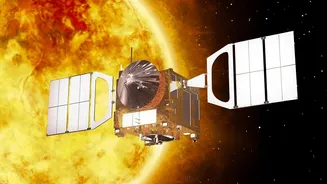
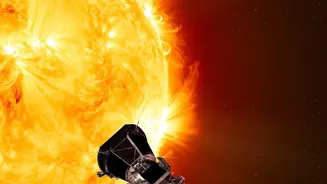
Enter Aditya-L1, the Indian Space Research Organisation’s (ISRO) first dedicated solar observatory. Launched in September 2023, the spacecraft is strategically positioned at Lagrange Point 1 (L1), about 1.5 million kilometres from Earth. This unique spot allows it to have a continuous, uninterrupted view of the Sun, free from eclipses or occultations. Aditya-L1 is equipped with seven sophisticated instruments designed to observe the Sun's various layers and the surrounding environment. Four payloads are dedicated to remote sensing of the Sun, while three conduct 'in-situ' studies, directly sampling the solar wind and magnetic field at the L1 point. This dual capability is crucial for connecting events on the Sun with their effects in interplanetary space.
The ASPEX and PAPA Payloads
Two key instrument suites on Aditya-L1 are at the heart of its solar wind discoveries: the Aditya Solar wind Particle EXperiment (ASPEX) and the Plasma Analyser Package for Aditya (PAPA). ASPEX includes the Solar Wind Ion Spectrometer (SWIS) and the SupraThermal and Energetic Particle Spectrometer (STEPS), which measure the direction, energy, and composition of solar wind ions. PAPA, meanwhile, measures the electrons and ions to understand their energy distribution and composition. Together, these instruments function like advanced weather stations in space, providing detailed data on the solar wind's properties long before it reaches Earth. They can distinguish between different particles, like protons and alpha particles, and measure their characteristics with high precision.
Decoding Solar Eruptions
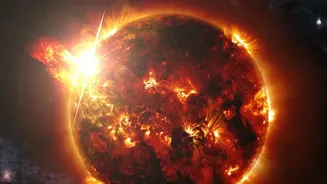
Recent findings from Aditya-L1, published in prestigious scientific journals, have begun to shed light on the complex behaviour of solar wind. By observing powerful solar storms and Coronal Mass Ejections (CMEs) that occurred during the peak of Solar Cycle 25 in 2024, scientists have been able to link solar events directly to their impact on Earth's magnetic field. Data from the ASPEX instrument during a storm in October 2024 was crucial in identifying a turbulent region of the solar storm that severely compressed Earth's magnetic shield. This allowed scientists to confirm that a sudden drop in solar wind pressure, directly measured by Aditya-L1, was responsible for unusual magnetic disturbances seen on the ground. This provides a direct causal link between the solar wind's characteristics and its geomagnetic impact.
A Global Effort for Space Weather
The data isn't just a national achievement; it's a global contribution. By providing early and detailed measurements of the solar wind, Aditya-L1 enhances the world's ability to forecast space weather. Extreme solar events can disrupt satellite operations, damage power grids, and interfere with GPS and communication systems. Recent analysis combined data from Aditya-L1's VELC instrument with Europe's Proba-3 mission, allowing for a more complete view of CMEs as they erupt from the Sun. This international collaboration, powered by Indian data, helps build more accurate models for predicting how solar storms travel through space and what their impact will be. It moves the world closer to reliable flare forecasting, which is essential for protecting our increasingly technology-dependent society.